

Breeders’ Cup Fantastic Finishes: Enable Makes History at Churchill
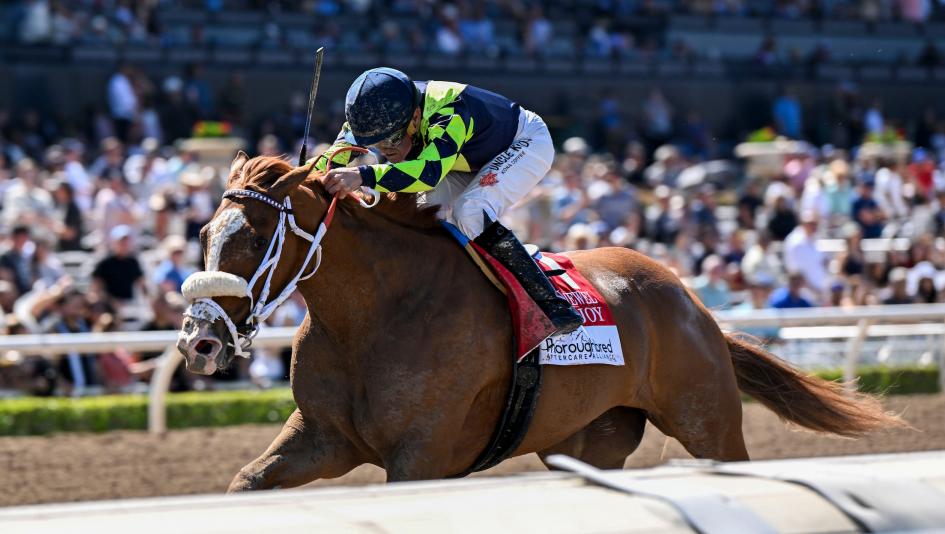
Horse racing fans get to unwrap one final Christmas gift every year when California racing celebrates opening day at Santa Anita Park. The post-holiday kickoff marks the start of the winter-spring “Classic” meet at one of the country’s premier venues. Santa Anita’s traditional opening day for winter and spring racing is Dec. 26, right after the holiday, but this year the track will delay its launch until Sunday, Dec. 28, due to a forecast of heavy rain in the region during Christmas week.
The Classic Meet at “The Great Race Place” will continue on a mostly three-day-a-week basis — Fridays through Sundays plus holidays — until April 5. Racing at Santa Anita will then take a short break and continue with its spring “Hollywood” racing season from April 17 until June 14.
Santa Anita plans to host 78 race dates, including the April to June part of the schedule. Some of the highlights of the meets will be the running of the Grade 1 Santa Anita Handicap Presented by Yaamava’ Resort & Casino at San Manuel on March 7 and the Grade 1 Santa Anita Derby on April 4. In all, the track will host a total of 81 stakes races worth $11.75 million in purse money.
Leading Santa Anita Jockeys
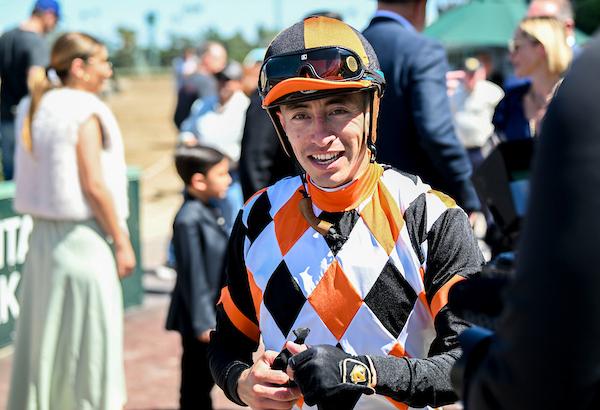
The favorite to win the Santa Anita Classic Meet (Dec. 28, 2025 through April 5, 2026) jockey title is Juan Hernandez, who has won the last four winter titles including 53 wins (23%) last year. Those stats were nearly identical to his Santa Anita jockey title two years ago when he also won 53 races (22%). He was the runaway leading jockey at the 2022-’23 and 2021-’22 Santa Anita winter meets, including a 63-win season (25%) three years ago.
The springtime Hollywood Meet (April 17 to June 14, 2026) is a different story from the Classic Meet. After falling just one win short of unseating Hernandez as leading rider in 2024, Antonio Fresu wrested the jockey title away from Hernandez in 2025 with 35 wins from 152 mounts (23%). Fresu was fifth-leading rider at last year’s Classic Meet with 29 wins (14%), and he seems set for a big upcoming season after a late-2025 stint riding in the Middle East.
Several changes are expected this season in the SoCal jockey colony as some of the top riders from recent years are opting to ride elsewhere this season. Last year’s second-leading rider, Flavien Prat, will instead be based in New York this winter, and last winter’s 10th-leading rider, Assael Espinoza, is moving his tack to Oaklawn Park. Veteran Frankie Dettori is retiring.
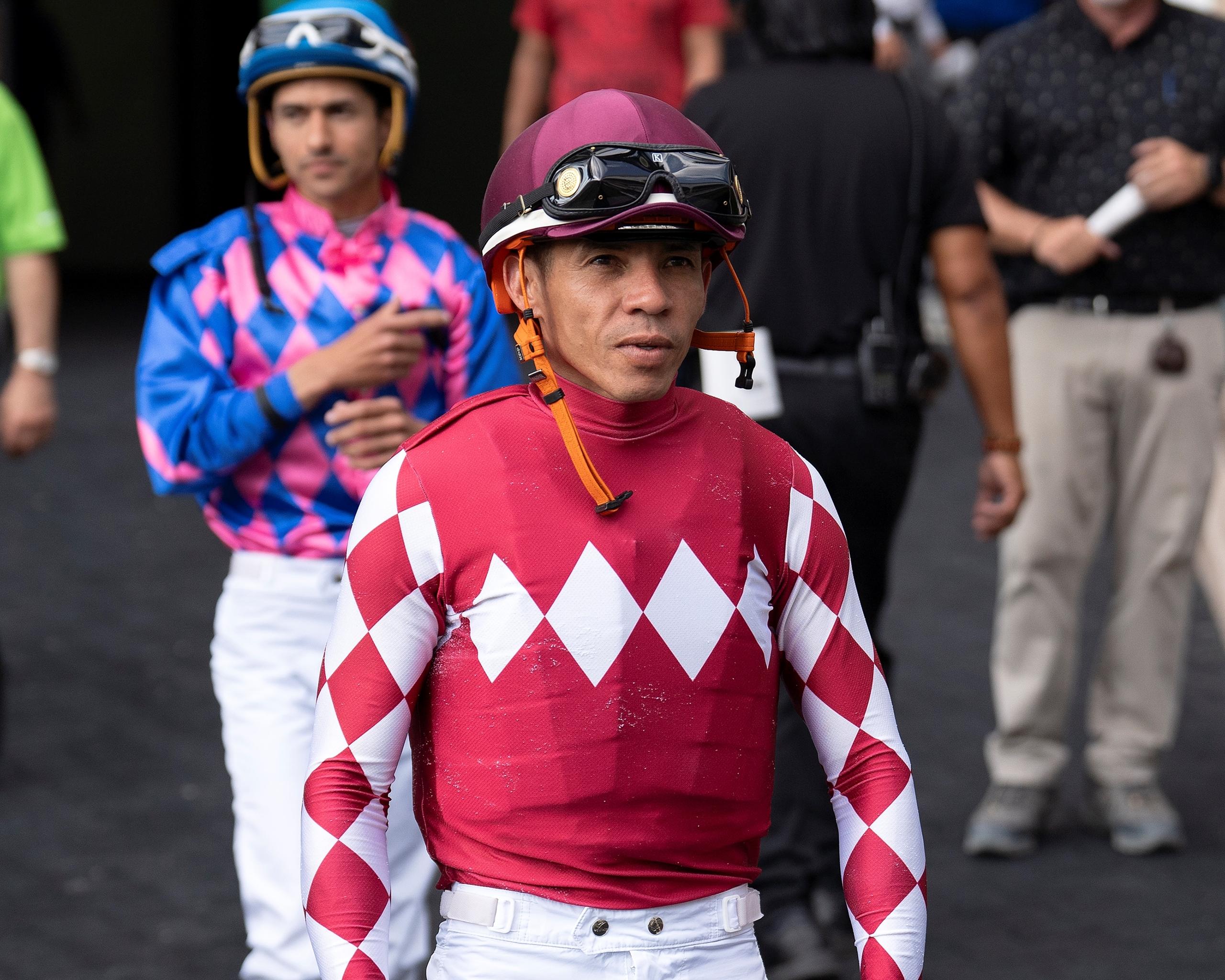
One jockey moving in the opposite direction and filling some of the void this season at Santa Anita will be Emisael Jaramillo, who has been based at Gulfstream Park, where he was second-leading rider at the spring-summer meet and third-leading rider at the fall meet through Nov. 23.
The other big-name rider you will see a lot of in the Santa Anita entries is Umberto Rispoli, who tied for third at last year’s winter meet with 37 wins (20%) and is coming off a jockey title at Del Mar’s fall meet where he led all riders with 17 wins (22%).
More prominent jockeys you will see with regularity at Santa Anita include Hectos Berrios, who tied Rispoli last year with 37 wins (23%). Also fighting for spot in the top 10 in the standings will be Kyle Frey (28 wins, 13% at last year’s Classic Meet), Kazushi Kimura (10 wins, 11%), Tiago Pereira (28 wins, 15%), Armando Ayuso (26 wins, 14%), and Edwin Maldonado (19 wins, 17%). Mike Smith rode only 54 mounts, including many of the stakes, and won seven times for 13%. Also, Italian jockey Mirco Demuro came to SoCal and made quite a splash in the second half of 2025, especially at the fall meet at Del Mar where he finished with 12 wins from 49 starters for 24%.
Santa Anita Top Trainers

In the trainer’s standings, Mark Glatt ascended to the top spot to win the training title at last year’s meet with 31 wins from 122 starters for 25%. Glatt had finished second on the leaderboard two years ago when he won 29 races and posted a big 28% win percentage after he won 23 races (21%) the year before that.
Two years ago, at the Classic Meet, the training title went to Doug O’Neill with 31 wins from 163 starters for 19%. O’Neill was down to fifth in the standings last year with 20 wins (12%). Phil D’Amato was the previous leading trainer with three straight titles at the Classic Meet from 2020-’21 through 2022-’23. D’Amato was all the way down to eighth in the standings last year with 13 wins (10%).
Bob Baffert has been about as consistent as you could possibly be the last three years at this winter Santa Anita meet and certainly will contend for the training title as he always does despite having fewer starters than many of the other top trainers. Baffert racked up a big 30% win percentage last year when second in the standings with 26 wins from 87 starters. Two years ago, he won 24 races from 89 starters (27%), and three years ago he won 27 races from 99 starters at the Classic Meet, also for 27%.
Other Santa Anita top winter trainers should include Michael McCarthy (24 wins, 22% at last year’s Classic Meet), Jeff Mullins (23 wins, 32%), Richard Baltas (16 wins, 18%), Robert Hess Jr. (15 wins, 18%), John Sadler (13 wins, 13%), and Mike Puype (13 wins, 20%), who all finished in last year’s top 10. More high percentage trainers that bettors can focus on include Richard Mandella (9 wins, 18%), Jonathan Thomas (9 wins, 23%), Dean Pederson (10 wins, 34%), and Dan Blacker, who last year managed to win with 7 of his 13 starters at the meet for 54%.
Santa Anita Main Track Trends
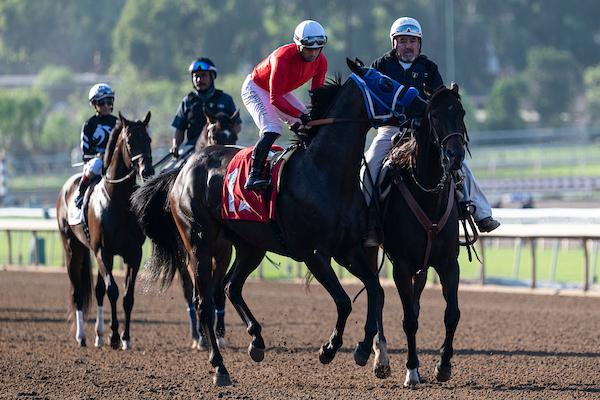
Let’s get to know “The Great Race Place” by taking a quick look at some prevailing biases at Santa Anita in various kinds of races based on the statistics from the same Santa Anita Classic and Hollywood Meets last year encompassing Dec. 26, 2024 to June 15, 2025.
In terms of running-style preferences and the winning track profile on the main track, it is extremely difficult for closers to win sprint races. Closers coming from four or more lengths off the pace won only 23 of the 268 sprints run at last year’s meets to account for only 9% of the wins. By far the best running style for success in Santa Anita sprints is early speed. Front-runners on or close to the pace (within a length of the lead) won 151 of the 268 sprints to account for wins in more than half of the races (56%). Post positions played fairly.
The statistics at the most commonly run dirt sprint distances of 5 ½ furlongs, 6 furlongs, 6 ½ furlongs were similar. There were only 11 races run at 7 furlongs at last year’s meets and those were even more speed favoring with seven of the winners racing on or close to the lead. None of the seven-furlong races was won by closers.
Santa Anita Dirt Route Trends
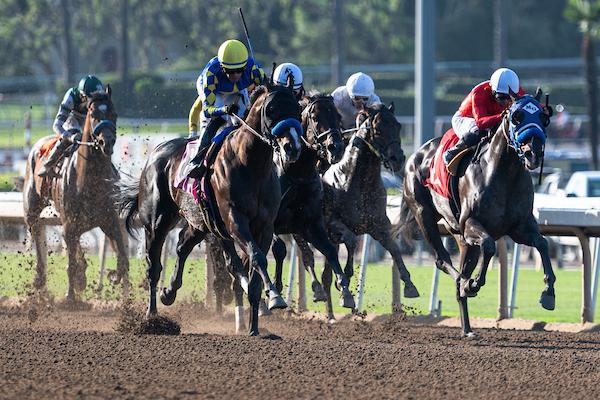 The stretch run of a 2025 dirt route race (Eclipse Sportswire)
Most of Santa Anita’s dirt route races are run at a mile. There were 132 routes run at last year’s Classic and Hollywood Meets and 112 of them were at a mile with only 15 races run at the second-most-common distance of 1 1/16 miles. With an average field size of 6.89 horses per race, post positions played fairly to inside, middle, and outside posts.
The running style advantage in Santa Anita’s dirt routes last season also went to the speedsters, who won 67 of the 132 races for 51%. Stalkers racing between 1-4 lengths off the pace won 48 of the 132 races for 36%. Similar to sprint race trends, closers had a tough time winning routes with just 17 victories in the 132 routes to account for only 13% of the races.
Santa Anita Turf Route Tips
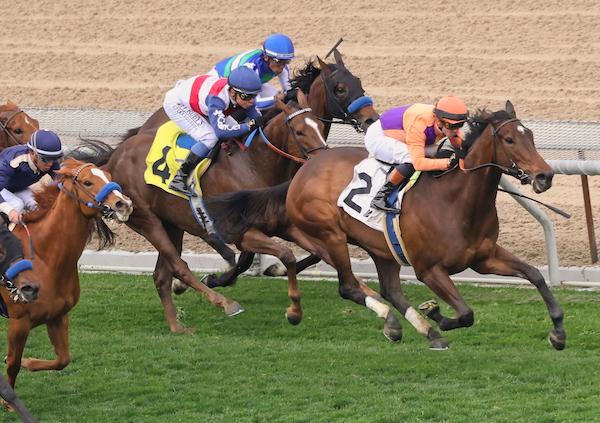 Horses race on the turf course at Santa Anita (Eclipse Sportswire)
When it comes to grass racing, Santa Anita’s turf course is home to some of the country’s best grass racing during the winter. There were 181 flat turf route races run at last year’s meets, including 146 races at one mile and 35 races run at 1 1/8 miles. Occasionally, longer turf routes are run starting at various points on the downhill portion of the course. The Santa Anita flat turf course in general tends to play fairly in terms of running styles and post positions, but there are differences between one mile and 1 1/8 miles that are worth mentioning.
In Santa Anita turf routes at the most common distance of one mile, the average field size was nearly eight horses (7.94 horses per race), and post positions played fair. The biggest bias in these races last year was a disadvantage for closers, who won 28 of the 146 turf miles for only 19%. Early speed horses as a group and stalkers as a group did much better.
In turf routes at 1 1/8 miles, the preferred running styles played totally different and outside post positions were much more of a disadvantage. Closers did well at 1 1/8 miles with 12 wins in the 35 races to account for 34% of the wins. If there was a disadvantage in these races in terms of running styles it was against speed horses on or close to the pace, who had the worst winning percentage amongst the various running styles with wins in just 23% of the races (8-for-35). When it comes to post positions, horses drawn anywhere outside post-position No. 6 won just five of the 35 races to account for just 14% of the wins.
Santa Anita Turf Sprints
Santa Anita runs turf sprints at 6 ½ furlongs on its signature downhill course, as well as flat turf sprints from its newer backstretch turf sprint chute, mostly at 6 furlongs plus a few races at 6 ½ furlongs and some rare five-furlong dashes. The flat turf sprints starting on the backstretch played fairly to all in terms of post positions and running styles last season, with the exception of a disadvantage for closers coming from more than four lengths off the pace, who won only 31 of last season’s 140 races to account for just 22% of the winners.
In the downhill turf sprints, the course is used much less often than it used to be and there were only 30 downhill turf sprints run at last year’s corresponding Santa Anita meets. These downhill sprints usually are fair to all running styles but played more favorably to speed horses and stalkers last year when speedsters won 12 times and stalkers won 12 times. Closers won just six times. Data collected over many years and decades shows that Santa Anita downhill turf sprints with large fields favor horses with middle and outside posts. It can be tough to win those races from post positions 1-2-3 in big fields.
Have a great season at “The Great Race Place.” Best of luck and enjoy Santa Anita!

Silver Charm: As Tenacious as They Come