


August Belmont II: The Man Who Bred Man o’ War

The reopening of the new Belmont Park finally arrives on Friday, Sept. 18, and excitement, enthusiasm, and anticipation are in the air for both horsemen and horseplayers. Top horses, jockeys, and trainers will all converge on Belmont Park as racing and wagering returns to the rebuilt New York track for its first live racing season since the spring of 2023.
The last races run at Belmont Park were in 2023, but the last time Belmont Park actually hosted its fall meet was five years ago way back in 2021. It’s hard to believe it has been that long. Belmont Park now reopens with a new four-racecourse layout that includes Belmont’s signature 1 ½-mile main dirt track, two turf courses, and a new one-mile Tapeta all-weather inner track to be used mainly for winter racing and off-the-turf races.
Important fall racing at Belmont will waste no time getting into high gear with the $1 million, Grade 1 Jockey Club Gold Cup headlining opening day. In all, Belmont’s extensive fall stakes schedule will encompass 72 stakes races, including 32 graded stakes, worth $17.7 million in purses with preps for every Breeders’ Cup race including seven races that are Breeders’ Cup Challenge Series “Win and You’re In” events.
ABR will be on-site at Belmont Park for “Belmont Park Opening Day Livestream” covering the races and what promises to be an exciting social scene as the historic racetrack starts a new era. The show will be hosted by John Franklin, Alexa Zepp, Matthew DeSantis, and Kaylie Shapiro, and presented by NYRA Bets and Blue Note Bourbon. “Belmont Park Opening Day Livestream” starts at 3 p.m. ET and will stream on ABR’s Facebook, X, and YouTube channels.
For horseplayers, the Belmont fall season will be about much more than just stakes races. Day-to-day fall racing in New York measures up with the best when it comes to top turf racing and top 2-year-olds in addition to all those stakes races. Let’s take a closer look at what handicappers can expect at Belmont Park. In case you have forgotten, here is a brief refresher.
Belmont Park Dirt Track Trends

Belmont runs almost exclusively one-turn races on dirt at all distances, ranging from five furlongs to 1 1/8 miles. Belmont 1 ¼-mile races and 1 ½-mile dirt races are rare except for some key stakes races; therefore a horse’s two-turn record is not as important as its one-turn record for the purposes of evaluating Belmont’s main track route races. Also, with almost no two-turn races, there is little advantage to be gained by horses “saving ground” at Belmont on the main track. Gathering and maintaining momentum is more important, even if it is on the outside. Veteran jockeys will know this while some of the younger guys may need some time to adapt.
In terms of running styles, always assume the prevailing main track bias at Belmont will favor speed horses and front-runners or pace pressers. The preferred running style favors horses able to stay within 2 ½ lengths of the early pace in sprints, and within four lengths of the early pace in routes. Six-furlong races and shorter are most likely to favor inside posts at Belmont, with a lesser inside preference also at 6 ½ furlongs. The inside post advantage tends to diminish beyond that.
The Belmont main track is very different than either Saratoga Race Course or the now-closed Aqueduct – certain horses will love it and others won’t. Unfortunately, we won’t know who these horses are until they start accumulating some results and establishing themselves as horses for the course. Most horses currently in training have never before raced at Belmont Park.
Belmont Park Turf Tips
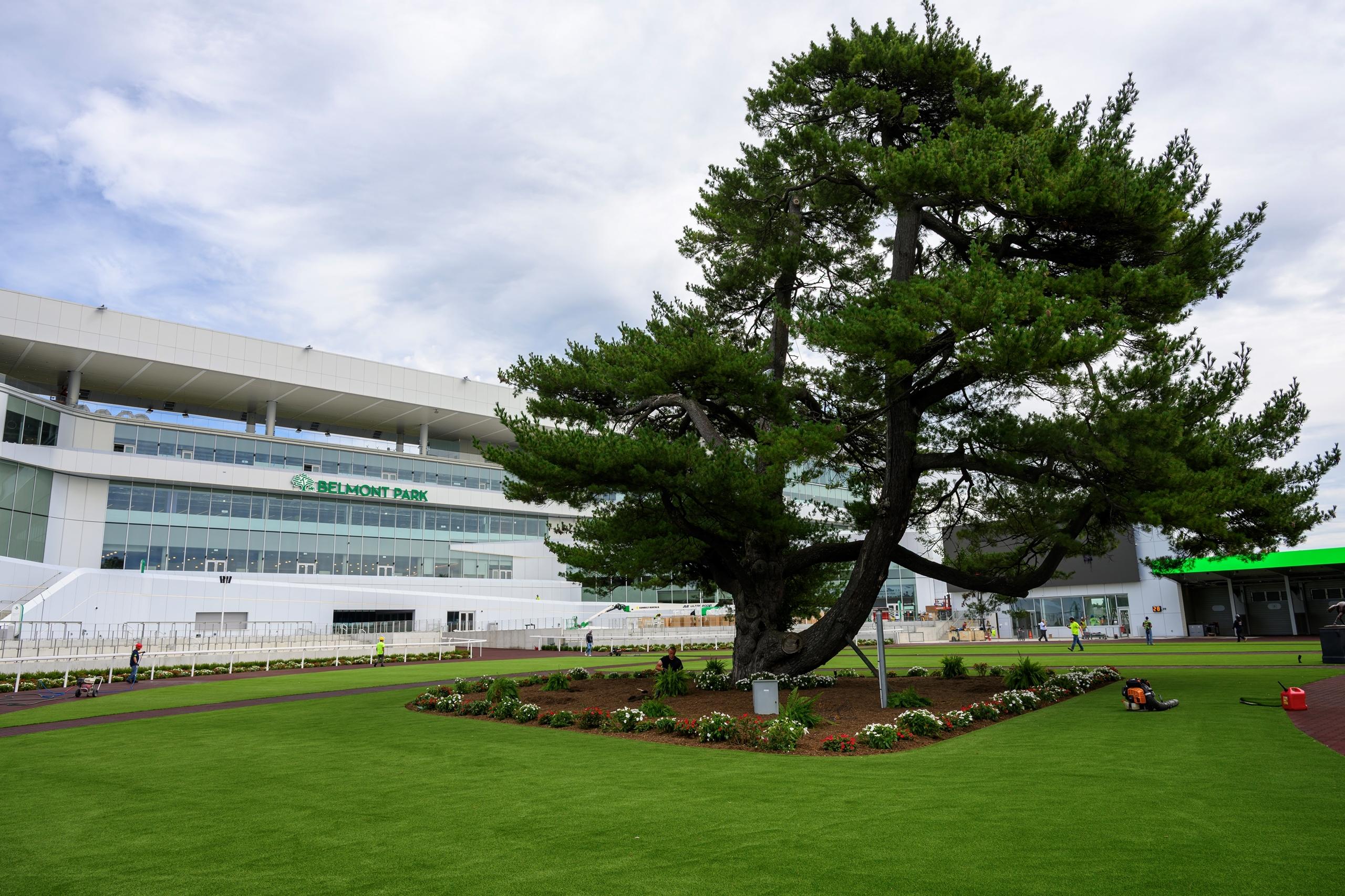 The new paddock at Belmont. (Adam Coglianese/NYRA)
On the Belmont turf, both the inner turf and the outer turf courses are big, wide, fair courses that have been rebuilt with slightly shorter stretch runs. We’ll have to see if this impacts running style preferences by working against deep closers.
Outside turf posts at Belmont Park are a concern in races anywhere between one mile and 1 1/8 miles, but less so at other longer or shorter distances. Horses breaking from the far outside at a mile or 1 1/16 miles can be most negatively affected by outside posts. Horses drawn in the inside four posts win at the best percentages in routes on both Belmont turf courses. Downgrade horses from posts 9-12 on the Widener (outside) turf course. On the inner turf course, downgrade horses from posts 8 and outward in races at 1 1/16 miles and 1 1/8 miles.
Belmont’s six furlong and seven-furlong turf sprints are a whole different ballgame than turf sprints at Saratoga. Speed horses that were successful in Saratoga’s 5 ½-furlong turf sprints often underperform at the Belmont fall meet at low prices. Closers, stalkers, and pressers, meanwhile, have an opportunity to do much better at Belmont, especially if they draw post positions toward the outside. Many of these horses didn’t have enough real estate to work with at Saratoga. Also, many runners who found a mile at Saratoga too far will get the opportunity to turn things around on the grass at Belmont at seven furlongs. Turf sprint post positions are important too. The outside turf sprint posts are generally better than inside draws at Belmont.
Top Trainers at Belmont Park
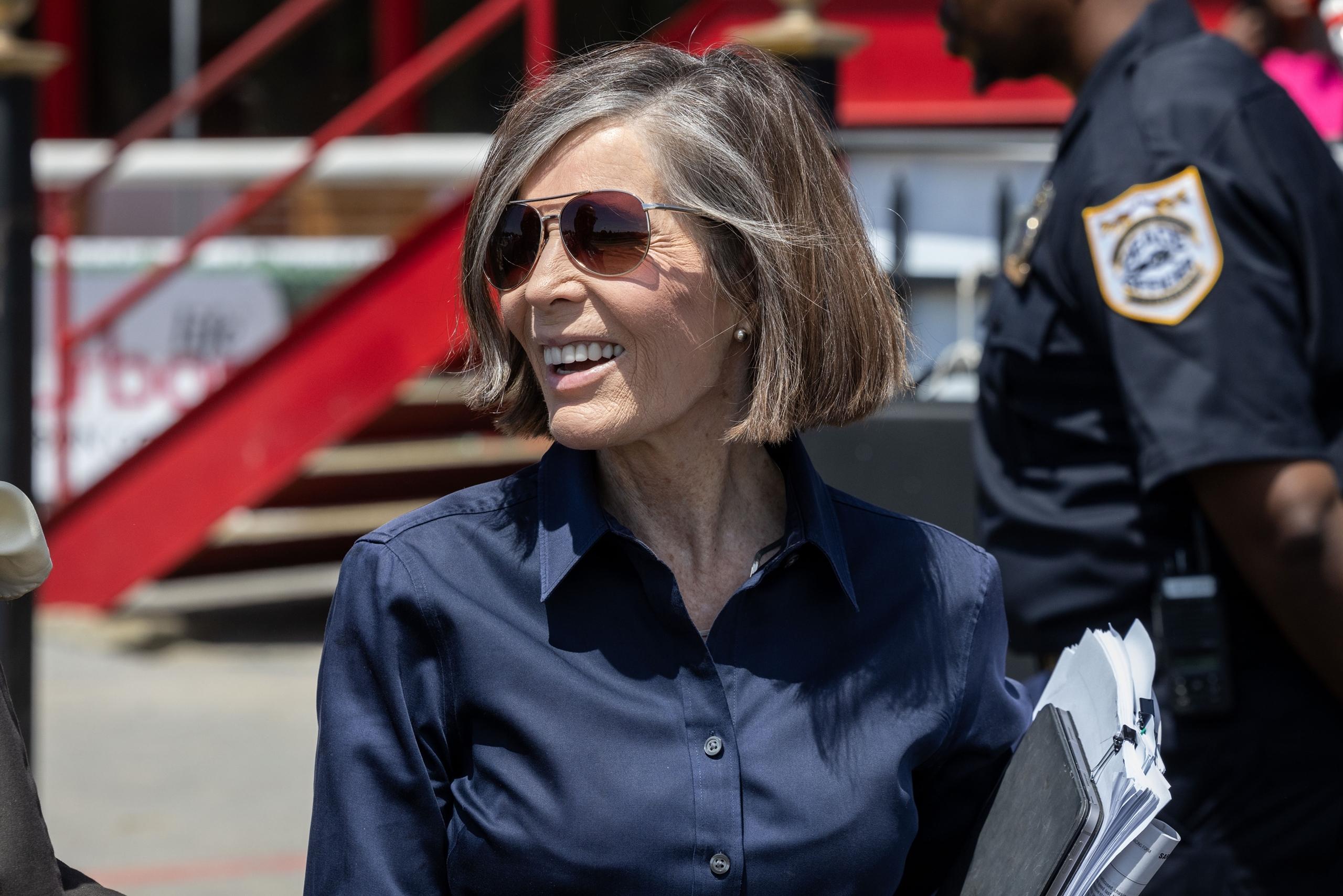 Linda Rice (Walter Wlodarczyk/NYRA)
Chad Brown won his ninth career Saratoga training title this summer with 42 victories for a two-win advantage over the runner-up on the trainer’s leaderboard, Linda Rice, who overcame a very slow start to the summer meet to win 40 races. Rice’s win total was her career-best at Saratoga, and the Brown and Rice rivalry is expected to carry over to the fall season at Belmont Park where they should again lead the standings. At the corresponding fall meet last year (Belmont at the Big A), Brown led trainers with 32 wins and Rice was second with 26 wins.
The rest of the top five in the trainer’s standings at Saratoga this summer were led by Brad Cox in third with 23 wins from 94 starters for a strong 24.5% win percentage. Todd Pletcher was fourth with 22 wins (17.5%) and Steve Asmussen was fifth with 18 wins (23.1%). Based on last fall’s results from New York, however, horses trained by Cox and Asmussen will mostly move to Kentucky for their next starts except for horses pointed to Belmont stakes races. Pletcher should remain very active all through the fall season, but his win percentage typically drops off in the fall after he throws everything and the kitchen sink from his barn into his summer efforts at Saratoga.
Who will replace trainers like Cox and Asmussen at the top of the Belmont Park training standings this fall? Let’s look at Saratoga’s meet this summer as well as the corresponding Belmont at the Big A 2025 fall meet for clues.
Behind Brown and Rice, the rest of last fall’s top five in New York was Mike Maker (20-for-82, 24%), Rudy Rodriguez (14-for-76, 18%), and George Weaver (10-for-54, 19%). Weaver finished seventh at Saratoga this year with 14 wins, and Maker tied for tenth with 11 wins. Rodriguez won five times at the Spa.
More trainers to be on the lookout for at Belmont based on this summer and last fall are led by Miguel Clement, who won 17 races at Saratoga this season and still has plenty of high-quality grass horses pointed to Belmont. Michelle Nevin had a tremendous Saratoga meet with seven wins from 27 starters for 26%. Philip Antonacci continued his high-percentage winning ways in New York with a record of 5-for-20 (25%). He should be an excellent bet at Belmont based on his strong record from last fall when his barn went 4-for-9 (44%).
Belmont Park Leading Jockeys
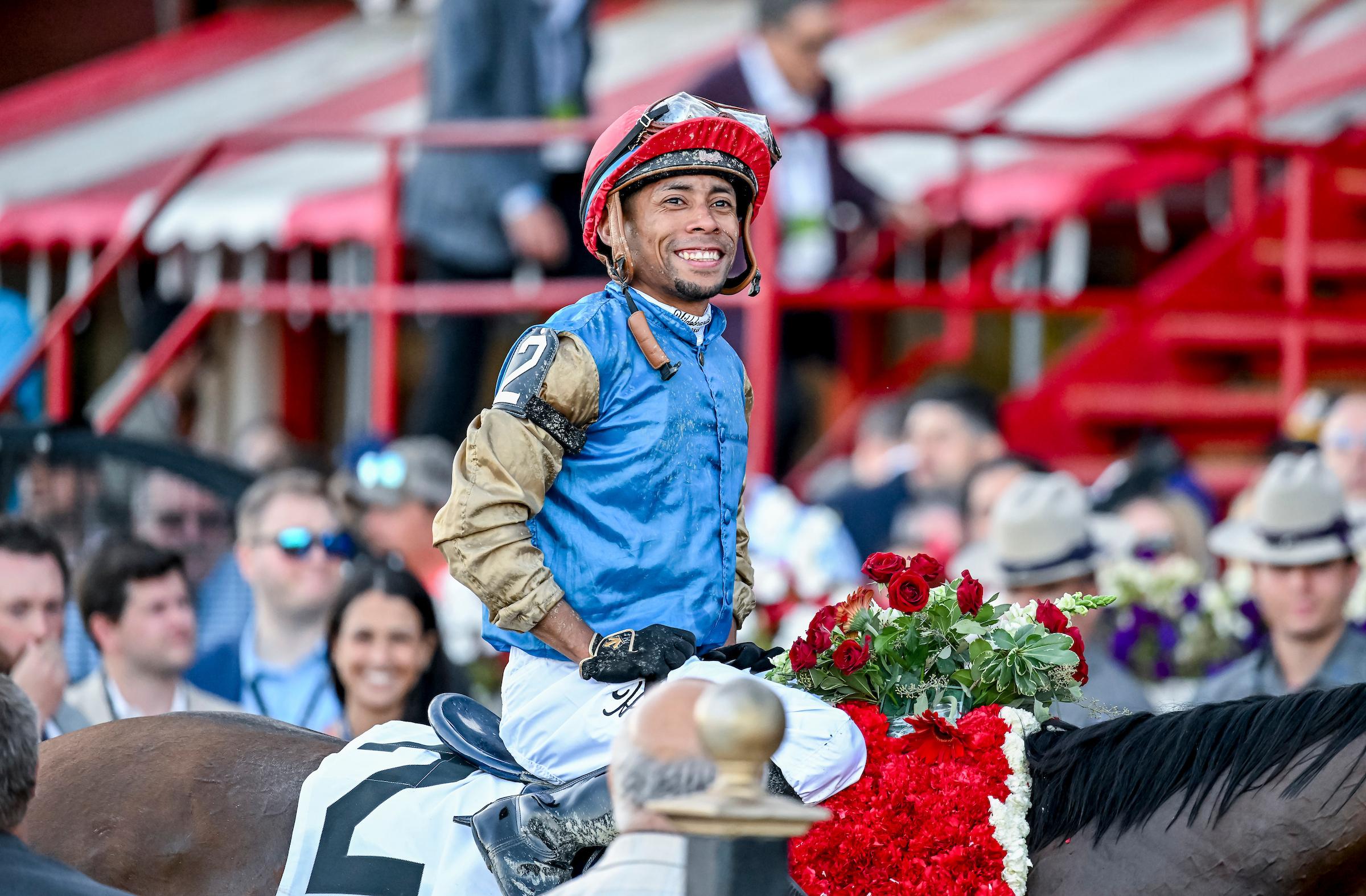 Manny Franco (Eclipse Sportswire)
The Belmont Park jockey colony will be led by many of the same top jockeys who did well at last year’s corresponding fall season at Belmont at the Big A and at the recently concluded Saratoga summer meet. The big story is Manny Franco who is coming off an historic year at Saratoga, which was nicknamed “The Summer of Manny” by NYRA television commentators. Franco won his first-ever Saratoga jockey title and set a new record for wins at the Spa meet with 73 victories (19.7%). Franco has won five of the last six New York jockey titles including last fall’s Belmont at the Big A meet with 39 wins. He will be favored to win his first-ever jockey title at Belmont Park this season.
Former perennial leading riders at Belmont Park, Irad Ortiz Jr. and Jose Ortiz, will both ride only sporadically at Belmont this season while otherwise concentrating their efforts at Churchill Downs and Keeneland. Therefore, the two main challengers to Franco atop the Belmont jockey standings should be Flavien Prat and Ricardo Santana Jr., who both tied for second at last year’s fall meet with 33 wins apiece. Prat finished second this summer at Saratoga with 67 wins in a tremendous season overshadowed only by Franco. Santana won 45 times this season at the Spa.
The rest of the Belmont top jockeys should include names like Kendrick Carmouche (29 wins, 16% last fall), Dylan Davis (26 wins, 15%), Junior Alvarado (13 wins, 16%), Javier Castellano (12 wins, 12%) and John Velazquez (8 wins, 15%). New additions to the New York jock’s room will include Antonio Fresu, who moves his tack from Southern California, where his credentials included Santa Anita Park summer (Hollywood) meet jockey titles in both 2025 and 2026, and Samuel Marin, who was runaway leading rider this year at Tampa Bay Downs and second-leading rider at Colonial Downs this summer.
Saratoga vs. Belmont: Fall Handicapping Angles
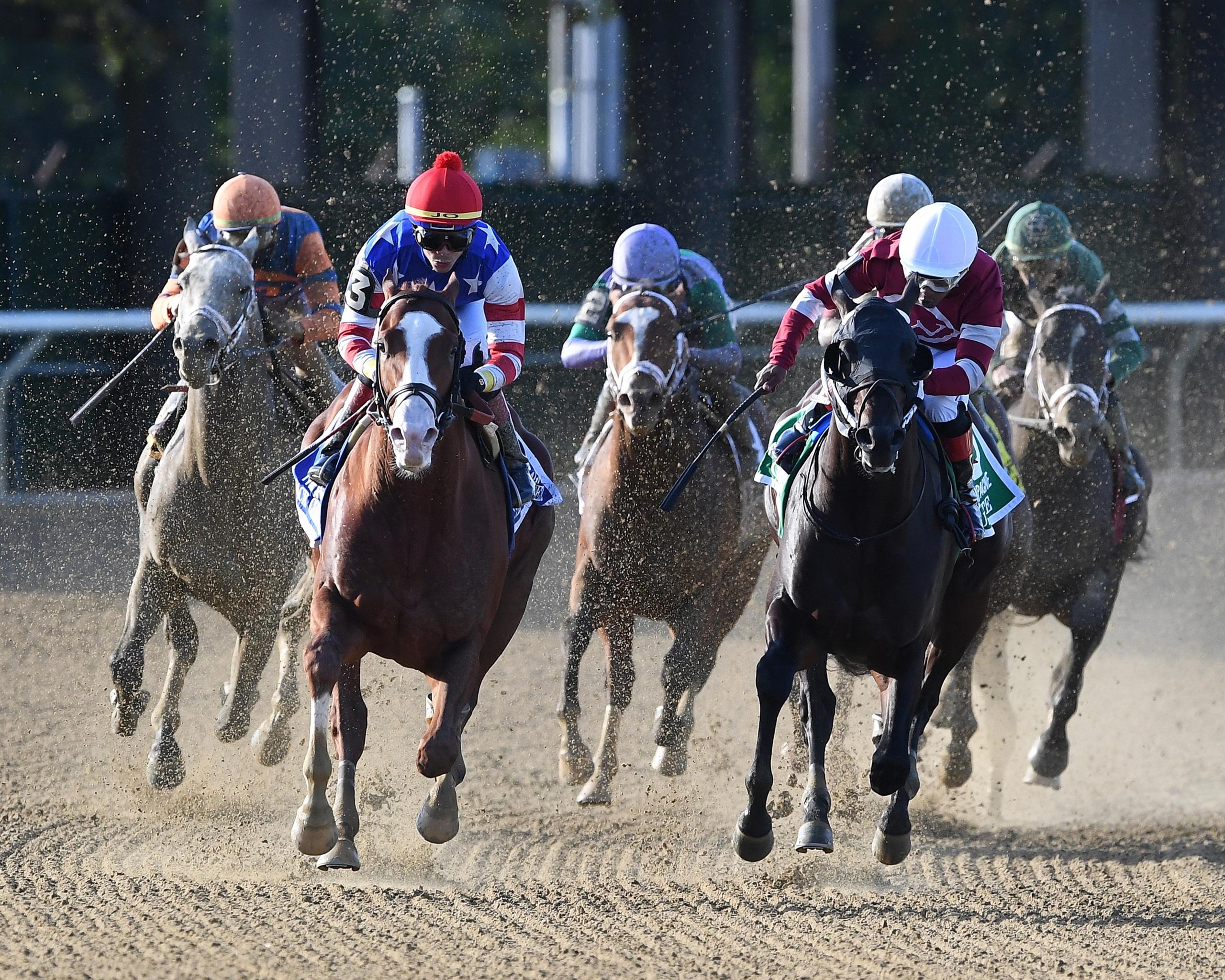 Dirt racing over Big Sandy. (Dom Napolitano/NYRA)
Most of the horses running at the 2026 Belmont fall meet will be exiting their most recent starts at Saratoga. Recent form is key to handicapping at the meet, but many other factors may come into play for horses making the switch from Saratoga’s traditional track layout when they arrive to race at Belmont Park’s unique 1 ½-mile oval.
Evaluating horses when they make the Saratoga-to-Belmont switch is one of the keys to handicapping the Belmont fall meet, because the horses who’ve excelled at Saratoga are not necessarily the horses you want to bet at Belmont. As noted above, the last time Belmont Park hosted a fall live racing season was 2021, and many bettors will no longer be aware of key factors and angles that affect handicapping at the meet. Winners from the recently concluded Spa meet will often be favored, but sometimes it is horses that were losers at Saratoga, or out-of-town invaders, or New York horses that skipped the Saratoga meet, that are the better bets at better prices at Belmont for a variety of reasons.
One of the reasons for Saratoga-to-Belmont form reversals is that horses with the best form up at Saratoga are horses that were excelling, in part, thanks to their preference for two-turn dirt route races, particularly at 1 1/8 miles. This factor flip-flops at Belmont where one-turn specialists turn the tables on the horses that beat them at Saratoga. Also, horses that prefer one mile and 1 1/16 miles have better chances to win at Belmont versus the horses who liked the 1 1/8-mile dirt routes run at Saratoga.
At Saratoga, because of the track layout, there are no 1 1/16-mile races on dirt. This creates lots of problems for horses whose best distances are a one-turn mile or 1 1/16 miles. At Saratoga, those horses must either stretch out to 1 1/8 miles (perhaps too long), run a mile around a turn and a half, or cutback entirely to seven furlongs (too short). When those one-turn mile or 1 1/16-mile specialist horses return to Belmont in the fall, they often come off a bad recent race or two at Saratoga and are ready for a positive turnaround, often at a good price, back at their preferred trip at Belmont.
Also, watch for the horses returning from layoffs during Saratoga who never left to go upstate. The majority of the horses racing in New York are still stabled at Belmont Park (the barn area and training track never closed during renovations). Many of those runners pass up making trips to Saratoga due to distance preferences or the fact that races that suit them are not carded at Saratoga. These short layoff horses are often rested and ready to roll and have been pointed to races in the Belmont Park condition book all along, particularly at the start of the fall meet.
Saratoga vs. Belmont: On the Turf
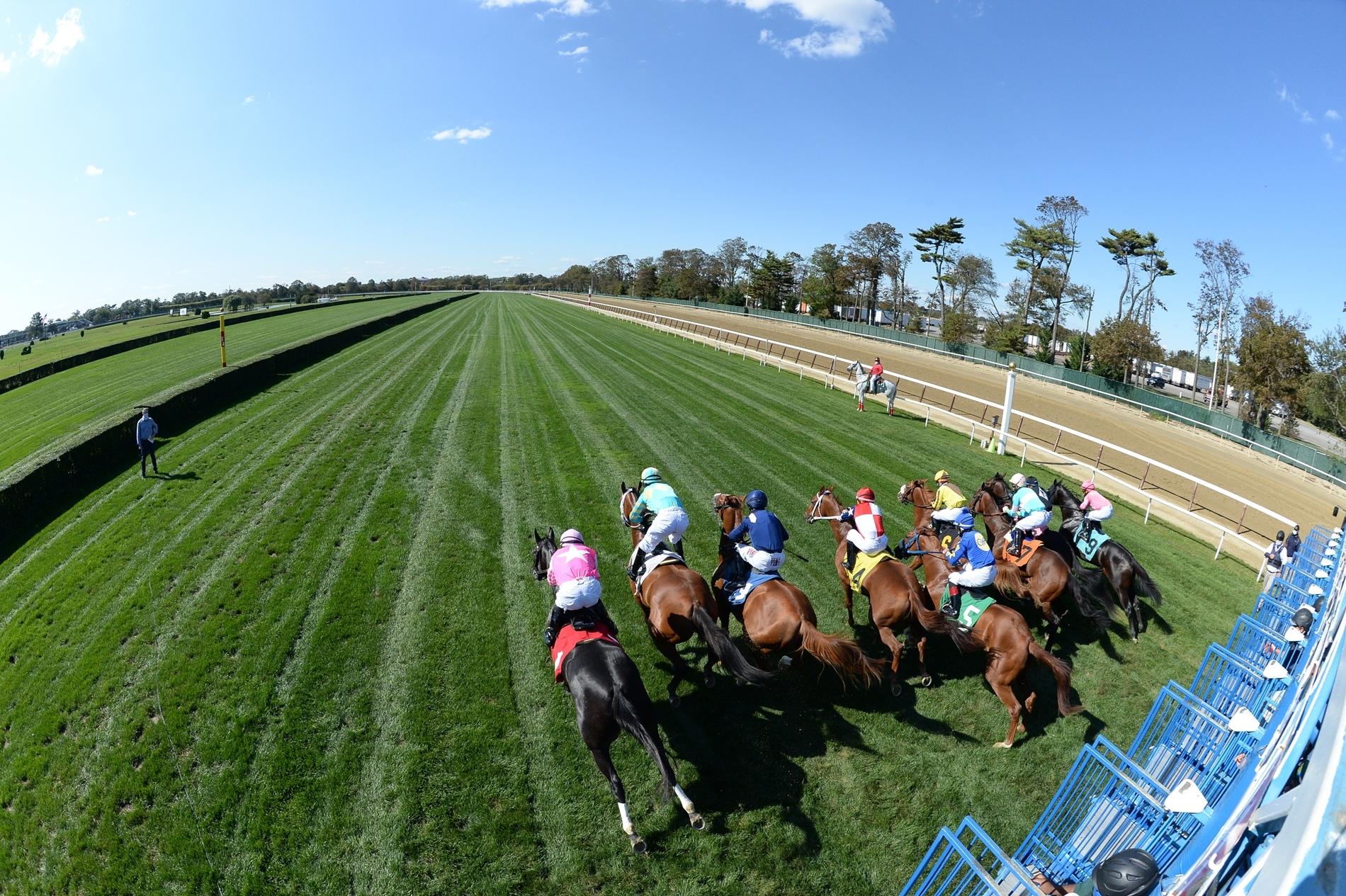 The start of a Belmont turf sprint. (Adam Coglianese/NYRA)
There are also some Belmont angles on the turf at this time of year. Let’s start with post positions. When you see horses exiting turf route losses on either course at Saratoga from posts 7-12, upgrade those horses at Belmont if they draw a better post. Horses from posts 7-12 won only nine of the 41 outer turf course routes at the 2026 Spa meet (22% of the races) and won only 22 of the 96 inner turf races (23%). When only horses from posts 9-12 at Saratoga are considered, the statistics got even worse.
There is also a Belmont handicapping angle for horses exiting outer turf course races at Saratoga (notated by the round T in the past performances as opposed to the square T). The angle doesn’t involve post positions, but rather, running styles.
Saratoga’s main outer turf course strongly favored closers coming from four or more lengths off the pace at the 2026 meet. In the 41 route races run on Saratoga outer turf course this season, only 22% were won by front-runners while 51% were won by closers. These horses now will come back to Belmont this fall. When you see horses who won or ran big with late-running closing efforts on Saratoga’s outer turf course this season, perhaps you can downgrade those horses in their next starts at Belmont because their running style had an advantage last time that it might not continue to have. Conversely, when you see a horse exiting a Saratoga loss or sub-par effort on the outer turf at Saratoga with an on-or-close-to-the-pace running style, you can upgrade that horse’s chances at Belmont because that running style probably will not be as detrimental at Belmont as it was this season at Saratoga.
Live racing is finally back at Belmont Park and this fall season should be a special one as horseplayers reacquaint themselves with Belmont racing and wagering for the first time in years. Hopefully this refresher will help you get off to a good start at the new Belmont Park. Best of luck and enjoy the meet.