


Tiznow, the Two-Time Breeders' Cup Winner and Beacon of Hope After Sept. 11
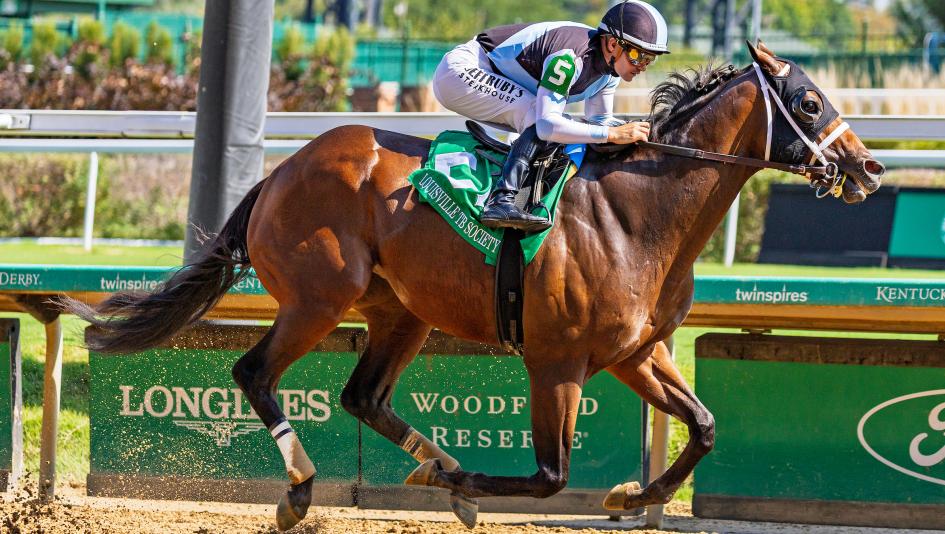
U.S. Thoroughbred racing is the global leader when it comes to producing elite dirt sprinters, and that makes sense because sprint races on dirt have long been the meat and potatoes of the sport in this country.
Indeed, the only winner of the Breeders’ Cup Sprint who was bred or based outside of North America was Sheikh Albadou in 1991. He was bred in Great Britain and raced exclusively in Europe before the 1991 Breeders’ Cup, which he prepped for in France with a second-place finish in the Group 1 Prix de l'Abbaye de Longchamp.
The other 41 Breeders’ Cup Sprint winners were U.S.-breds, so let’s try to narrow the focus for this year’s $2 million, three-quarter-mile Cygames Sprint Oct. 31 at Keeneland.
For the last few years, I used a 25-year sample of data as the source for these trends, but for the 2026 Breeders’ Cup I’ve narrowed the focus to 15 years. I did this for two reasons.
Let’s start fresh with a 15-year sample and try to find some key trends that will be useful for evaluating this year’s Breeders’ Cup Sprint and then take a look at the prospective field in search of the most likely winner and live longshots.
Speed Specialists
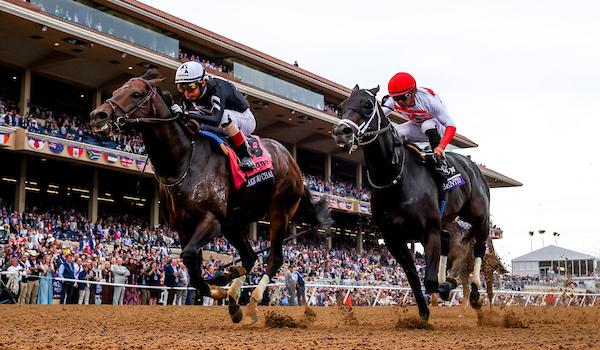
One time-tested tenet of handicapping is betting on horses cutting back in distance from route races to sprints, but that does not apply to the Breeders’ Cup Sprint. This is a race dominated by specialists who averaged 6.36 furlongs per start for the last 15 winners from 2011 to 2025 in the year of their Sprint win. The median distance raced is 6.375 furlongs.
In the last 15 editions, only one Sprint winner’s pre-Breeders’ Cup average start distances were above seven furlongs: 3-year-old Trinniberg at 7.14 in 2012 when his connections took a shot in that year’s Kentucky Derby. The mile-and-a-quarter Derby was his only race that year longer than seven furlongs.
Wild About 1s
One common thread among the last 15 Breeders’ Cup Sprint winners is that they win … a lot … in the year leading up to the race. The last 15 winners amassed 45 wins from 70 races that year prior to the Breeders’ Cup for a 64.3% winning percentage.
Only two winners in the last 15 years won fewer than half of their pre-Breeders’ Cup starts in the year of their win. Trinniberg was 3-for-7 in 2012 before winning the Sprint. Whitmore, runner-up in the 2018 Breeders’ Cup Sprint and third in the 2019 edition, won two of six races in 2020 before taking that year’s Sprint.
Look for a lot of 1s in the past performances.
Final Preparations
Look for runners coming out of a strong final prep race for the Breeders’ Cup Sprint. Eleven of the last 15 winners entered the race off a victory and 14 of the 15 ran first or second in their final pre-Breeders’ Cup start. Only Whitmore in 2020 was unplaced in his Sprint prep race, finishing fourth at Keeneland (that year’s host venue) when beaten by 2 ¾ lengths in the Phoenix Stakes.
Speaking of the Phoenix, four of the last 15 Sprint winners came out of that race. Five others prepped for the Breeders’ Cup at Santa Anita Park and three at Saratoga Race Course, so 80% of the last 15 race winners last raced at Santa Anita, Keeneland, or Saratoga.
What are the Odds?
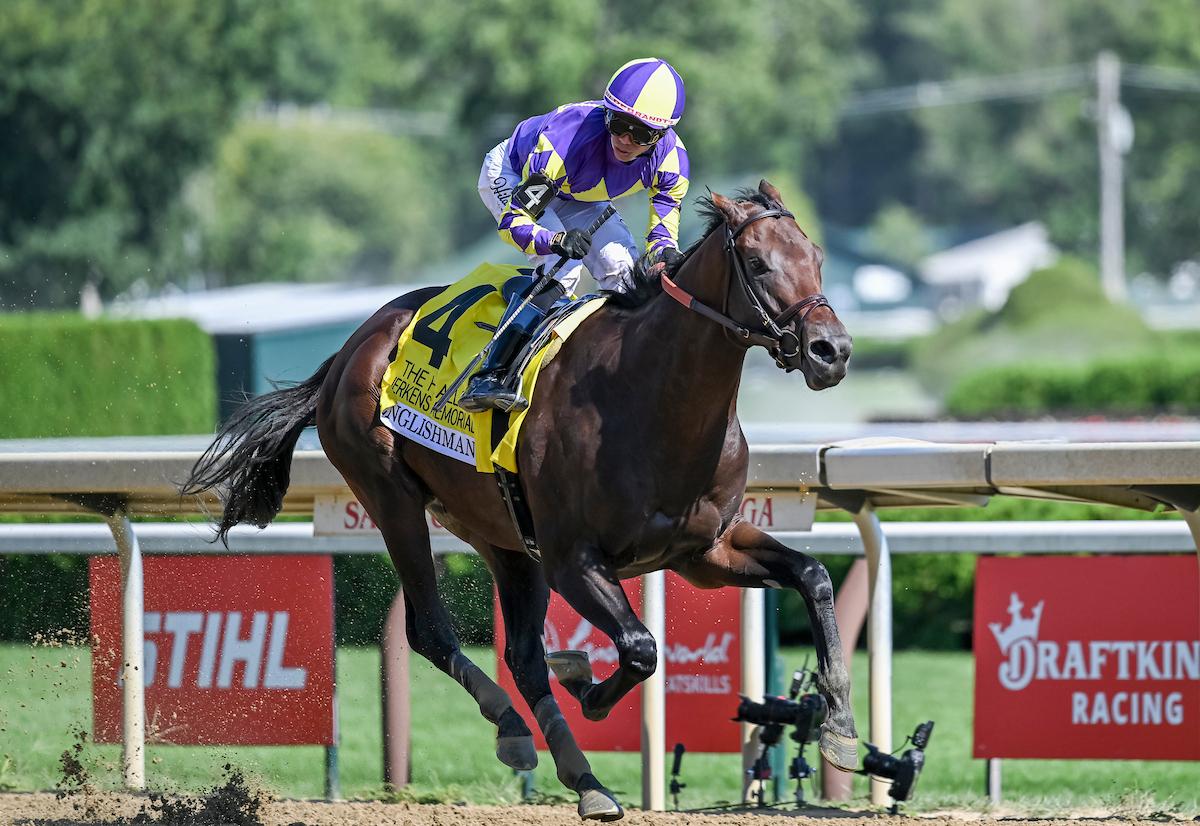 Englishman is expected to be the 2026 Sprint favorite (Eclipse Sportswire)
Longshots have had success in the Sprint this century with nine winners since 2001 paying $20 or more for a $2 win bet, but they have become less frequent in the last 15 years with only four double-digit longshot winners from 2011 to 2025 and the average win odds dipping from 8.2-1 from 2001 to 2025 to 6.9-1 with the 15-year sample.
Since 2011, there have been four winning favorites (including two of the last three years) and six Breeders’ Cup Sprint winners who went off at odds less than 3-1.
Bentornato won last year’s Sprint as the 1.7-1 favorite, and Englishman is expected to be one of the heaviest favorites of the entire World Championships in the Sprint. Should Englishman win it would be the first time this century that favorites won back-to-back editions of the Breeders’ Cup Sprint.
Longshot Love
Let’s examine the four double-digit longshot winners of the Breeders’ Cup Sprint from 2011 to 2025: Trinniberg (13.7-1 in 2012), Work All Week (19.1-1 in 2014), Whitmore (18.4-1 in 2020), and Aloha West (11.3-1 in 2021).
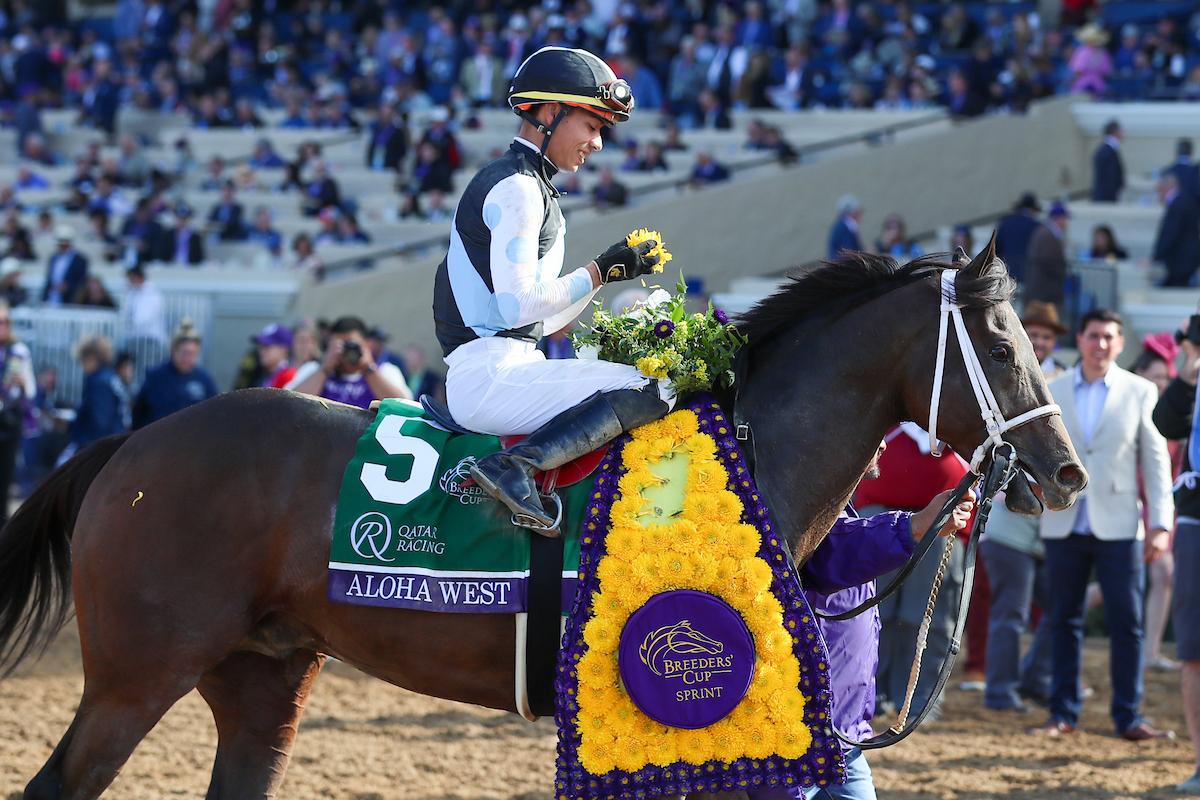
From this quartet, only Work All Week entered off a victory in his final prep, winning the Phoenix Stakes at Keeneland by a length. He won four of five starts in 2014 leading up to his Breeders’ Cup Sprint win and was a perfect example of an overlay, meaning he offered much better than fair value given his accomplishments and form.
Trinniberg was beaten by a half-length in the Gallant Bob Stakes at Parx Racing in his final prep race, while Aloha West lost the Phoenix Stakes by a neck in 2021. Aloha West is the only Sprint winner in the last 15 years who entered the race without a graded stakes win on his résumé.
Whitmore nearly won the previous two editions, finishing second in 2018 and third in 2019 after being unplaced in 2017. So, while he entered off a fourth-place finish in the Phoenix Stakes, he had proved he could compete against Breeders’ Cup opposition.
Pace in This Race
The old horse racing adage is “pace makes the race,” and the Breeders’ Cup Sprint is typically loaded with runners who are at their best using their early speed to gain a tactical advantage near the pace.
While seven of the last 15 winners profiled as pace or press-the-pace runners, only two Sprint winners set the pace (Drefong in 2016 and Bentornato in 2025) through the opening quarter-mile and two others were racing in second (Trinniberg in 2012 and Work All Week in 2014). In fact, eight of the 15 Breeders’ Cup Sprint winners were fourth or worse after the first quarter-mile and seven runners were three lengths or more behind the pacesetter.
Only one horse can be in front, so while tactical speed is advantageous, versatility and/or adaptability in terms of running style also are beneficial.
What to Expect in 2026
Using recent trends as a guide, let’s start by eliminating the pre-entrants who have won fewer than half of their starts in 2026 and enter the race off a loss: Mad House (Stoll Keenon Ogden Phoenix Stakes third-place finisher needs two defections to get into the race), Moonlight (seventh in Vosburgh Stakes), Roll On Big Joe (most recently second in Aristides Stakes in May), and Praying (winless in five starts in 2026).
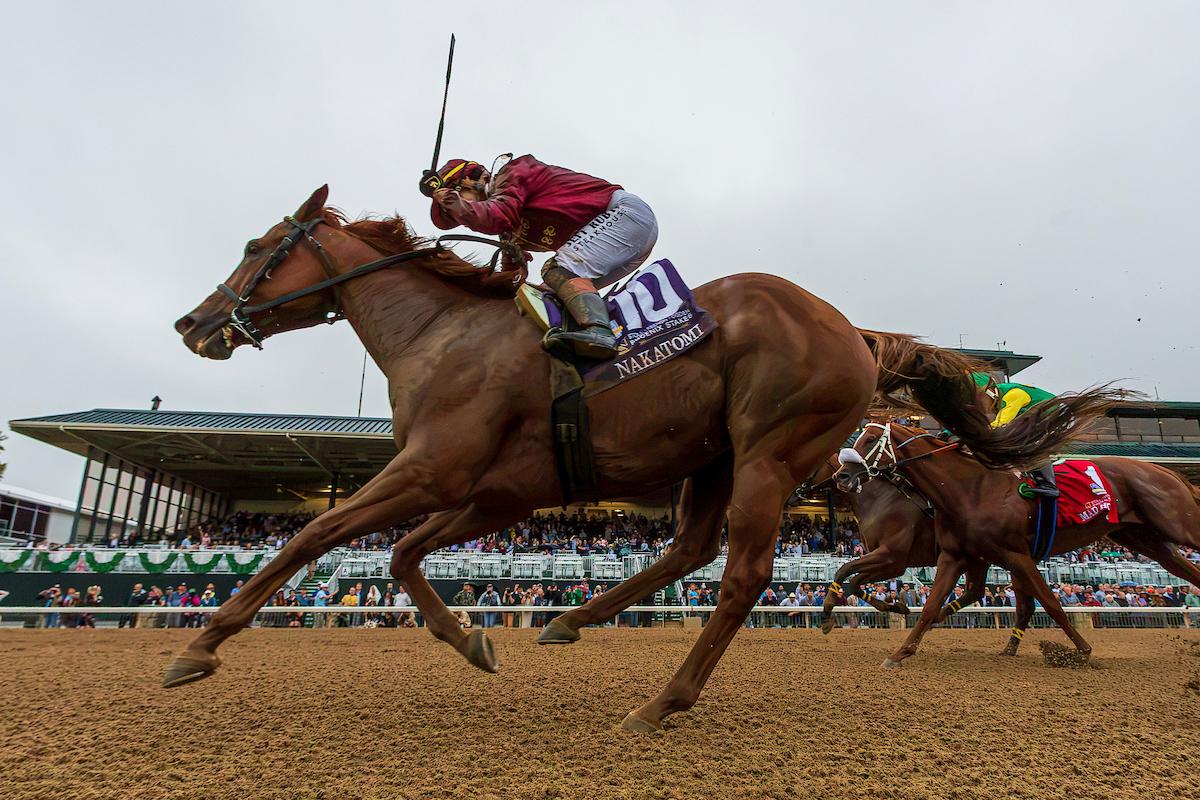
Dark Saffron, Iron Man Cal, Listenupshance, T Kraft, Nakatomi all enter off a win but have won less than 50% of their races this year. Dark Saffron last raced in Dubai in March, while Iron Man Cal enters off a Grade 2 win at Del Mar but isn’t a sprint specialist. Listenupshance and T Kraft are versatile sprint specialists, with the former entering off a Grade 2 win at Santa Anita Park and the latter shipping in after a Grade 3 win at Belmont Park. Nakatomi was third in the 2023 Breeders’ Cup Sprint, has a fondness for Keeneland, and enters off a victory in the Phoenix Stakes. He looks like the most promising of this group.
Englishman is 3-for-4 in 2026 and should be the heavy favorite coming off a win in the Grade 1 H. Allen Jerkens Memorial Stakes at Saratoga in August. The one knock is that he has averaged 7.25 furlongs in his four starts so he’s not exactly a sprint specialist. He has plenty of speed and figures to be formidable.
Perhaps Japan could deliver a second Breeders’ Cup Sprint win to horse based outside of the U.S. with T O Elvis, who dominated in a Grade 1 sprint in May at Churchill Downs in his only start this year and first race outside of Japan. T O Elvis figures to be the clear second choice in the betting.
Little Thunder and Stradale very likely will be 20-1 or higher on the morning line. Little Thunder is 2-for-4 this year and a sprint specialist. He needs one defection to get into the race and the Phoenix Stakes runner-up has never won a stakes race. Stradale is 3-for-6 this year and enters off a victory in the Grade 2 Gallant Bob Stakes at Parx Racing, but he was beaten by 20 lengths by Englishman in June at Saratoga. At their expected prices, they could be worth a swing.
Finally, two contenders who could offer significant value are Built and Hymn, who probably will be double-digit odds. Built is 4-for-7 this year and has won three of his last four races. He enters off back-to-back stakes wins at Saratoga and Churchill Downs and is a pure sprinter. Hymn also is 4-for-7 in 2026, most recently won the Grade 1 Forego Stakes at Saratoga, and profiles as a tried-and-true sprint specialist. Both Built and Hymn have tactical speed and can settle just off the pace. I view them as viable win contenders at appealing odds.


