

Breeders’ Cup Fantastic Finishes: Enable Makes History at Churchill
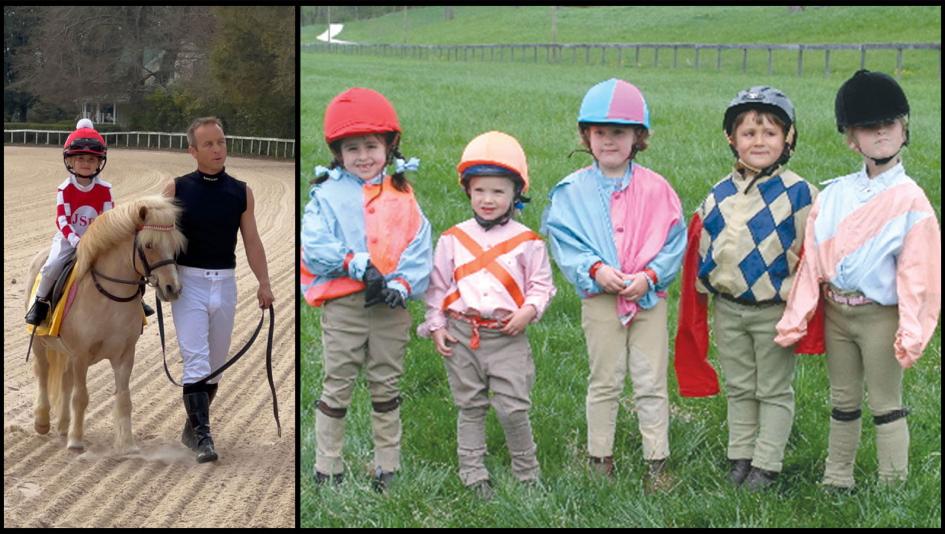
Many a young racing fan has dreamed of flying down the stretch in the saddle of a fleet Thoroughbred, flashing past the finish line a winner of a big race. Those flights of imagination feed the dreams that bring people from all over the world to the racetrack in search of the joy of victory astride a powerful equine athlete.
To get a head start on that dream, young riders can participate in pony races, where they can gain valuable experience while also fueling those competitive fires that could lead to a career in the stirrups. These pony races allow kids of all ages to get a taste of the sport while also building the skills they will need to succeed in future racing endeavors.
Pint-Sized Players
Usually held in conjunction with steeplechases, point-to-point events, or even Maryland Million Day, pony races are put on as an exhibition alongside these activities, allowing children from age five to 16 to compete on the flat and over jumps aboard ponies. Regina Welsh, who runs US Pony Racing, became involved in the early 2000s, when Mason Lampton tapped her to run what he started, a grassroots effort called the North American Point-to-Point Association. When that organization folded in 2013, she started US Pony Racing and, along with the Temple Gwathmey Steeplechase Foundation and others, puts on these exhibitions for young riders, generally focused on the Mid-Atlantic region, with events in Aiken, S.C., and elsewhere.
“Different point-to-points or bigger events have me organize the pony races at their event as an add-on to their event, like different point-to-points, different sanctioned steeplechase meets,” Welsh said. “I also have a relationship with a lot of racetracks, so you’ve maybe seen us at Pimlico, Laurel, and Maryland Million Day in the fall.”
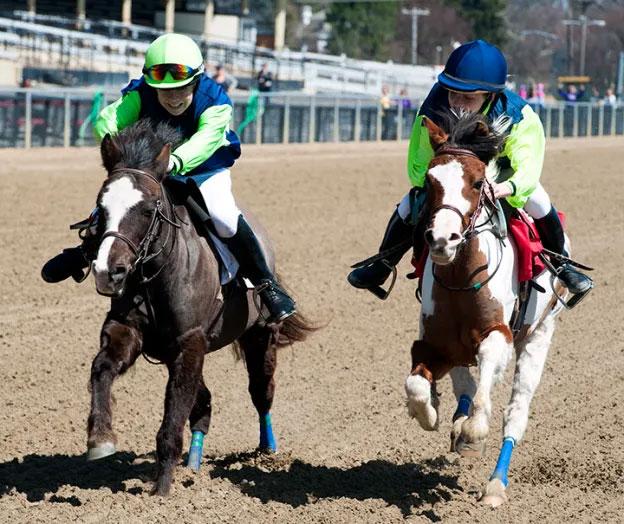
These races are sorted into divisions by size — small, medium, and large — alongside a special division for Shetland ponies. Each mount must be at least 5 years old and can be from a variety of breeds, including Welsh and others. A pony’s height determines which division they can compete in, defining small ponies as horses up to 12.2 hands, medium ponies as horses over 12.2 hands and under 13.2 hands, and large ponies as horses over 13.2 hands and no taller than 14.2 hands. Races range from a quarter of a mile up to a half-mile on the flat, and available to the youngest riders are shorter sprints on a lead line, “where parents are trotting the ponies and if you canter, you have to go back to the back. It’s actually extremely competitive,” said Rosie Napravnik, who retired from her professional riding career in 2014. She and her sister, Jazz, rode in pony races during their early years.
Alongside those flat races come a type of steeplechase competition called Fieldmaster races. Welsh explained, “they follow behind a pacesetter over a course of jumps appropriate to that level of riding for whatever area you were in. So it combines racing and fox hunting.”
Such events allow these younger riders to try steeplechasing and give them the chance to acquire a range of skills at an earlier age. As with any sport involving young players, safety is of the utmost priority.
“I have to pre-screen them all, which means that they’ve heard my spiel and that I know that their pony is going to be safe and that they know all of the rules,” Welsh said.
All participating mounts also must have certain paperwork, including a health certificate and a Coggins test.
“[Riders] are required to wear a safety vest, an overgirth, a neck strap or a yoke, safety stirrups, and an approved helmet,” Welsh said. “Riders also cannot use whips or spurs, just hands and heels.”
These pony racing events not only give young riders a chance to try their hand at racing on a smaller scale but also expose this next generation of equestrians to the range of competitive opportunities that await them in their adult years.
Real World Riders
Sometimes fans might see some familiar faces at these exhibitions, as Napravnik and her husband, trainer Joe Sharp, have brought their boys to several pony races along with their friends Brian and Jaime Hernandez’s three children. These are among the many accomplished riders who either competed themselves or have encouraged their own kids to participate.
“Rosie kind of grew up doing it and she knew a few of the organizers,” said Hernandez, who won the 2024 Kentucky Derby on Mystik Dan and Kentucky Oaks on Thorpedo Anna. “A couple of years ago, when they were having them at Aiken, they [the Sharp and Hernandez families] all kind of decided to load up their ponies and go out there and give it a try. They kind of just fell in love with it.”
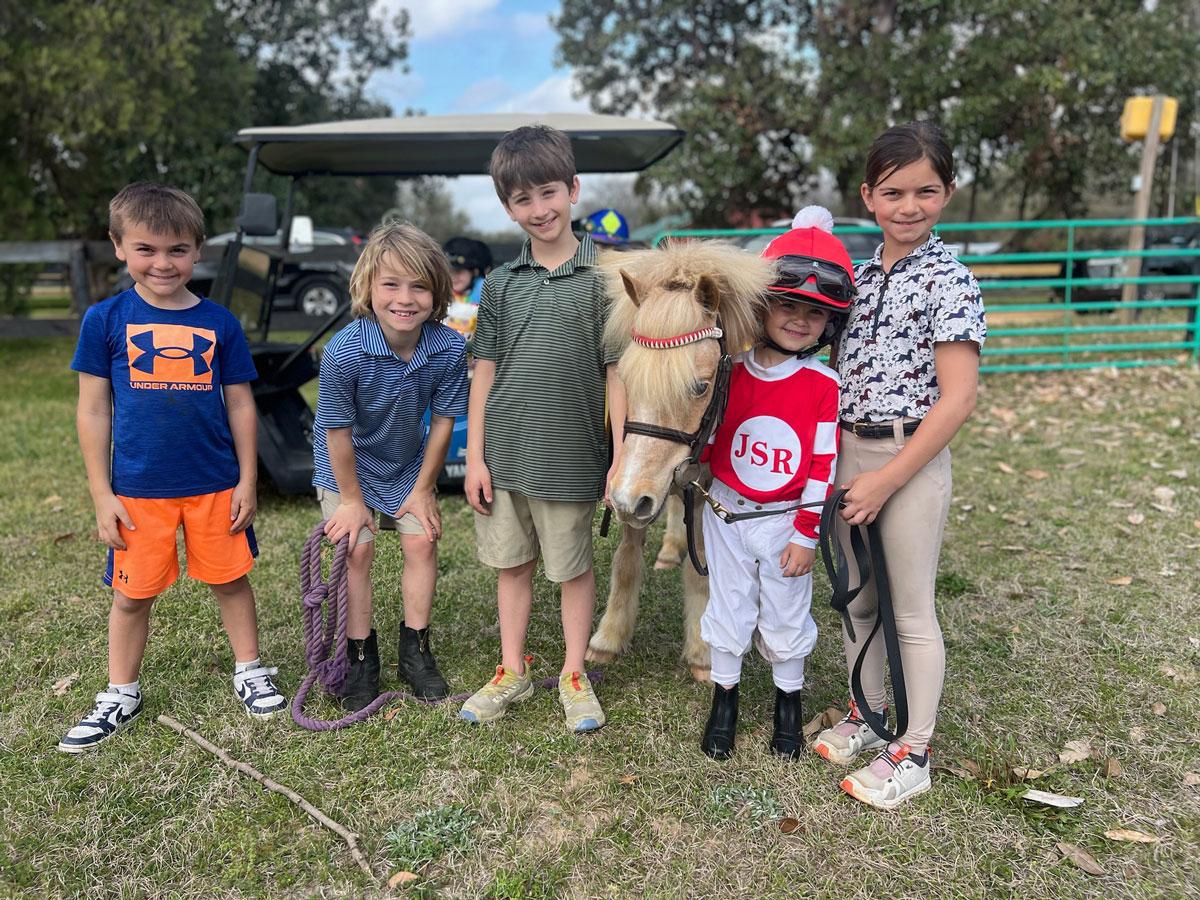
When your parents are involved with horses, whether as jockeys and trainers or as hunters and jumpers, opportunities to learn to ride come with the territory, and for the Sharp and Hernandez kids, growing up with horses means that a chance to experience the exhilaration of racing is not one to be missed. It gives them a chance to be competitive and get a preview of what a career in the sport might entail.
“If you want to be competitive, you have to have your pony fit, and you have to practice the starts and make sure you’re really on it if you want to try to win. Carson, our son, has to train his pony basically all year round to keep him fit and everything,” Napravnik shared. “I actually give them an off-season goal. You have to have a goal that you do other than racing because you only get to race a couple of times a year, and you can’t just let the pony sit around until it’s race time.
“I think it really requires a lot of commitment and responsibility from the kids, and not only that, it creates really good riders. I’m a big advocate of the idea that, when it feels safe, it’s fun. A lot of the kids, especially if they don’t have any exposure to pony racing or even going fast fox hunting or anything like that, it can be very intimidating and pretty scary.”
The competition aspect also drives the kids who try pony racing, a preview of what might be to come if they continue riding competitively in the future.
“I think they just want to win. They go out there and they’re just trying to win every time they go,” Hernandez said. “They end up having a lot of fun with it as well because it kind of turns into a little mini-vacation for them where they get off the farm here and they get to go hang out with their friends.”
For a variety of reasons, including logistics like locations and insurance, pony racing is not as widespread in the United States as it is in England and Ireland, which causes something of a disconnect between the sport and the potential pipeline of young riders pursuing a career as a jockey.
“Where do our jockeys come from? Why are there not more really successful American jockeys?” Napravnik said of the disconnect. “I think part of that, the answer to that is there’s not a lot of kids that just grow up on horseback in this country anymore. Riding lessons are one thing, you know, but like in the Mid-Atlantic area where they have the steeplechasing, a lot of the pony racing kids are offspring of the steeplechase trainers.
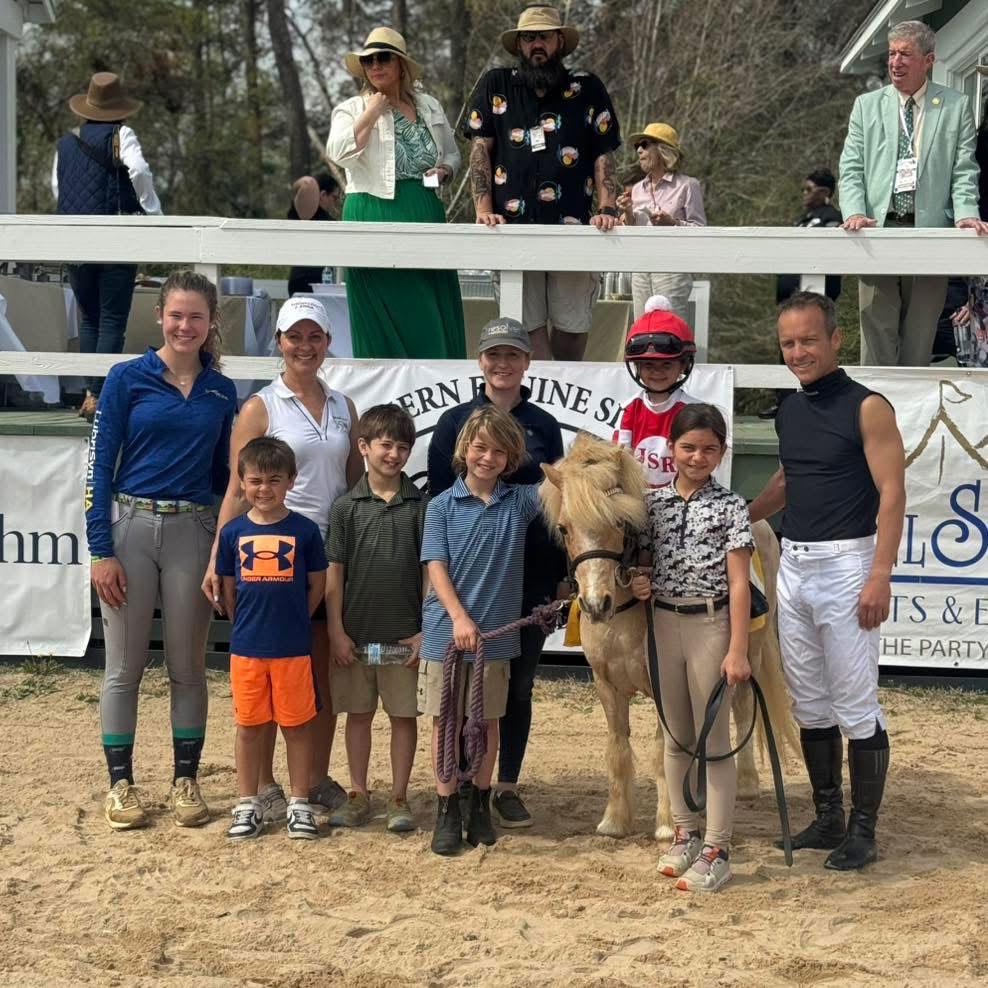
“As far as jockeys go, there’s not really a pipeline for jockeys. A veterinarian, their kids can go to school and feed into that if they were going to go into the industry. Our son can go to the racetrack and shadow my husband, Joe, and gain experience that way. But actually, the riding part of it, there’s no bringing riders up from kids into a professional career.”
Welsh, who does get some support from industry participants like the Maryland Jockey Club when they bring her in for exhibitions, wants to continue to grow pony racing in America but realizes the challenges of growing in what can be a cost-prohibitive activity.
“I would like to really see more kids have their own ponies. It’s been really hard because riding’s not getting any less expensive,” Welsh said.
Expanding the pony racing circuit would bring more exposure for racing.
“Anytime you can get more exposure for the sport, it’s always a good thing. And I think that if more kids got to do it, you know, they’d enjoy it more,” Hernandez said. “Because when you see those kids riding and stuff like that, you see how much they put into it and how much they actually enjoy it, it would just kind of put more eyes on the sport more than anything.”
Most of all, these exhibitions not only give the pint-sized participants a taste of the thrill of competition but also the chance to bond with their parents both on the track and off, sharing a glimpse of what inspired both Napravnik and Hernanadez to ride professionally and build top-tier careers in the saddle.
“Pony racing was probably the best, most fun thing in my childhood, and now, as a parent, it’s even more fun,” Napravnik said. “I wanted to be able to share that with them. And then I realized that my son probably is going to end up getting his jockey’s license at some point, and that really scares the living daylights out of me.”
Even with those risks in mind, pony racing is not just a pastime — it’s a legacy in the making, one small stride at a time.

Silver Charm: As Tenacious as They Come