

Breeders’ Cup Fantastic Finishes: History Denied, Stardom Found

Sylvia Rideoutt Bishop did not set out to become the first Black woman licensed to train racehorses in the United States. Horses were a part of her, and she wanted to make her living training them. Her perseverance not only made her a pioneer, but it also sparked a legacy that influenced generations of people who followed her into the game, ensuring that her name would live on long beyond her days on the racetrack.
For the Love of the Horse
Born Oct. 5, 1920, Sylvia Rideoutt was one of 17 children of James H. and Bertha Snowden Rideoutt of Charles Town, W. Va. As a young child, her mother had health issues for a time that saw several of the Rideoutt children live with foster parents while their father worked two jobs to support the family. Sylvia went to live with family friends William and LaVinia Payne, who operated the historic Payne’s Hotel in Charles Town.
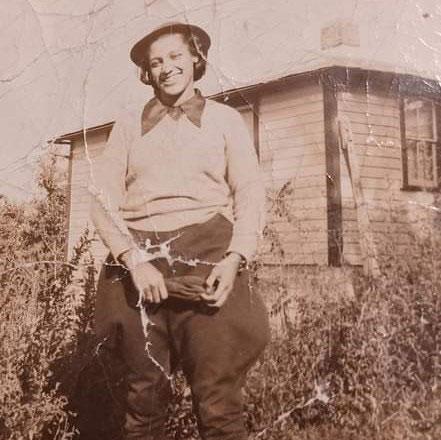
It was her foster parents who helped ignite young Sylvia’s horsey side. A family photo shows her in the saddle of a paint pony, a big smile splashed across her face. At the height of the Great Depression in 1933, West Virginia’s legislature approved pari-mutuel wagering, and later that same year, Charles Town racetrack opened to the glee of the aspiring horsewoman. At age 14, during the track’s first full year of operation, Sylvia rode her bicycle to the backside and worked as a hot walker and groom, learning the ins and outs of working with Thoroughbreds.
“Then I rode my bike back and got home before my foster parents got there, so they didn’t know what I was doing,” Bishop told the Daily Racing Form’s Joe DeVivo in 2002. She opted to leave school after the 11th grade to go to work at the racetrack as an exercise rider and at the pub located inside Payne’s Hotel.
Over the next decade, she worked for trainers like John V. Bishop, whom she would marry in 1945, and her brothers-in-law Gene Smith, Wash Berry, and John Berry. She learned all she could as she ponied, groomed, and mucked stalls. Confident in her skills, she took West Virginia’s test for a trainer’s license and passed. In 1954, in an era when Jackie Robinson, Claudette Colvin, and Rosa Parks were front-page news, Sylvia Rideoutt Bishop quietly made history at Charles Town.
In Pursuit of Her Calling
In the mid-1950s, Bishop had to deal with the era’s attitudes toward not only Black people, but also toward women. Nevertheless, she remained resolute.
Her daughter LaVerne recalled an incident at the racetrack when white patrons yelled racial slurs and told her mother, “‘yeah you can’t train no horses,’ and this, that, and the other. When she walked up through the grandstand, somebody spit on her.”
In the face of that prejudice, Bishop stayed determined, focused on the job that she loved.
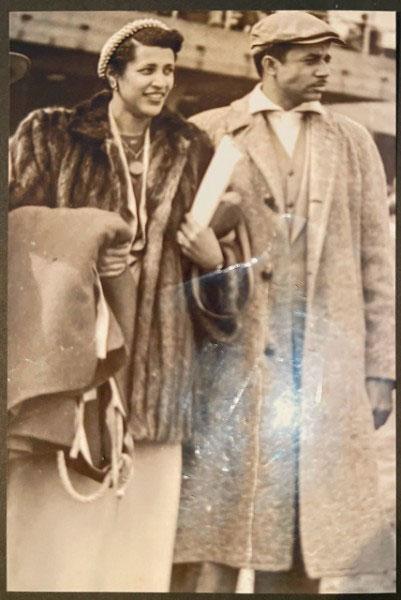
“She knew she wanted to do this,” LaVerne recalled, “and she wouldn’t let anybody get in her way.”
Said Sylvia in 2002: “I was tough, but you had to be if you wanted to succeed.”
She had her defenders among her fellow horsemen, including Barney Bast, whom LaVerne remembers her mother was friends with during this era.
“I was treated better inside the racetrack than outside it,” Bishop told Daily Racing Form’s DeVivo. “Everyone on the backstretch was always very respectful to me.”
That extended to owners, other trainers, and jockeys. Though her barn was small—she usually had about 10 horses at any given time and four or five employees—her clients included Nelson Bunker Hunt, Tyson Gilpin, and William Bushong. Bishop made the Mid-Atlantic region her home, racing not only at Charles Town, but at nearby Shenandoah Downs, the Maryland half-mile circuit, Laurel Park, and even Boston’s Suffolk Downs.
“I remember, when I was young, my dad used to take her to the airport on Florence Spring Road. She would fly out to different tracks when she had horses there,” LaVerne said.
Bishop and husband John also owned horses, including her favorite horse, Chalkee — her first winner as a trainer in October 1959. Chalkee was a daughter of Christian Stable’s Bar Keep out of the Chaldese mare Chalkette and earned Bishop her first victory in 1959 at Charles Town.
“She was a good one. She made money for her,” LaVerne remembered. “That horse was her heart.”

Perhaps the best of all her runners was Bright Gem. He won 6 of 13 starts and earned $11,700 during his 5-year-old season in 1962, including the lone stakes win of Bishop's career in the Iron Horse Mile at Shenandoah Downs, also located in West Virginia. Though Sylvia did have success, purses at the tracks Bishop frequented were often limited, leaving the Bishops with restricted funds at times.
To supplement the family’s income, the Bishops also lived in and worked at Payne’s Hotel, where Sylvia managed the pub until her foster mother’s death in 1962, when she inherited the property. John had retired from training and started working as an entertainment promoter. The area, including Payne’s, played host to a number of musical acts, including a young Ike and Tina Turner, over the decades that she owned the property. Bishop sold the hotel in 1999.
A Pioneer Recognized
The financial ups and downs of racing forced Sylvia Bishop to take a hiatus from training to work elsewhere. In the 1970s, she worked for Doubleday Book Company’s factory making books and, according to records, did not have another starter until 1987, when she returned with the mare Half Quacked at Charles Town. She continued owning and training horses until 2000, when she capped off her more than 60 years on the racetrack with Lust of Gold’s turn in a seven-furlong claimer at Charles Town.
Arthritis made getting around a challenge for Bishop, who was nearly 80 when she retired. In her final years, she mentored other trainers, including her grandson Michael Jr. Those years also saw her finally receive the recognition her place in the sport so richly deserved. Ebony Magazine had already profiled her in December 1961, and then she was recognized at an African American Heritage Society tribute at Pimlico in 1991. Though she appreciated the recognition, she was not one to seek out the limelight.
“She was proud of herself, but she was not one to brag or that type of stuff,” remembered LaVerne. “She wasn’t one that liked to be in the spotlight.”
Sylvia Rideoutt Bishop passed away Dec. 27, 2004. Her obituary shared a quote about her career: “When I began training back in 1938, men were definitely shocked and surprised to see me. The fact that I was a woman, and on top of that a Black woman, was almost too much for some of those fellows.”
“But I loved horses and horse racing far too much to let my dream go,” she said. “I knew from the beginning I would have to take the bitter with the sweet.”
She did just that over the decades she spent in the sport and persevered through whatever life and society threw at her. In recognition of her life and career, she was inducted into the Hall of Fame at Charles Town. In 2012, the track added the Sylvia Bishop Memorial, a seven-furlong race for filles and mares 3 years old and older, to its stakes calendar. In 2024, the city of Charles Town and Hollywood Casino at Charles Town Races erected a plaque commemorating Sylvia Bishop’s career on North Charles Street in the city’s downtown area in tribute to their hometown trailblazer.
Legacy Secured
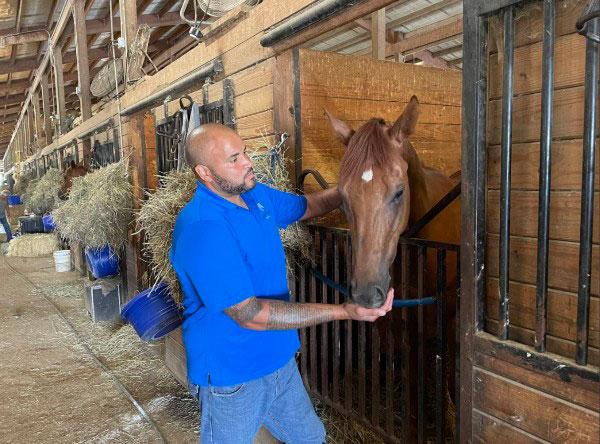
As the first Black woman licensed to train in the United States, Sylvia Rideoutt Bishop is undoubtedly a pioneer. Like many pioneers — as well as great horsemen and women — she also has a family and training tree that keeps her memory alive. Her daughter LaVerne graciously helped out this writer as she sought to craft a story about the trailblazer that was her mother. Her grandson Michael E. Jones Jr. trains horses at his grandmother’s home base of Charles Town, and granddaughter Michelle helps with his stable as well. LaVerne’s own grandchildren also know about Grandma Sylvie.
“My granddaughter picked a magazine up, and my great-granddaughter was looking through it. She said, ‘Does this book have Grandma Sylvie in it?’ And there she was,” LaVerne shared.
And how does the family feel about all of the accolades and recognition 20 years after Bishop’s death? “We’re delighted with everything that’s been happening,” her daughter said. “Very proud.”