


Looking for Next Year’s Kentucky Derby Horses? Start Now at Saratoga
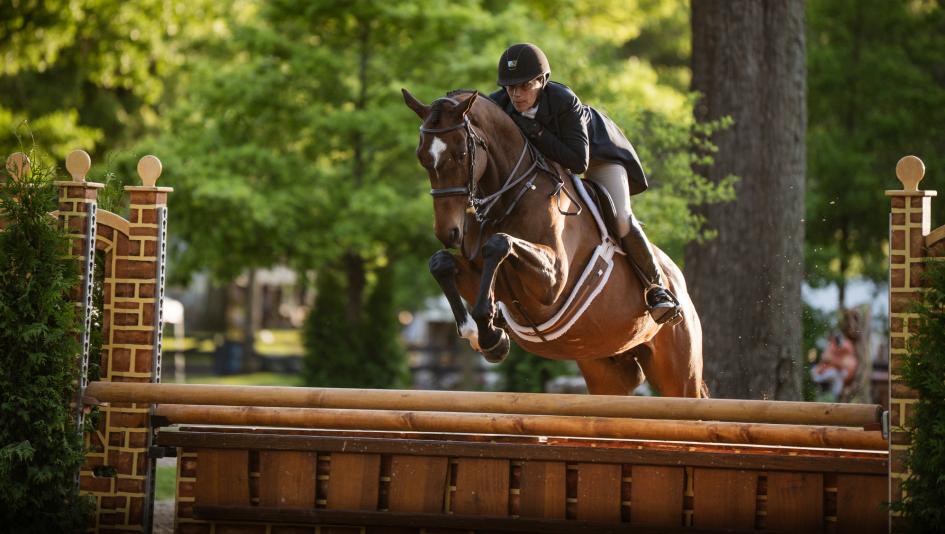
For 173 years, horses have been jumping around the Upperville showgrounds in Virginia. That’s 21 years longer than the Kentucky Derby has existed.
Despite its long history, this year Upperville is embracing something entirely new. Sixty Thoroughbreds participated in the inaugural $25,000 Upperville Thoroughbred Hunter Derby. For a breed most commonly associated with racetracks rather than show rings, the event felt like the start of something much bigger than a horse show.
For those like me who didn’t grow up around horses and certainly weren’t horse girls, the equine world is an endlessly fascinating place. One of the things I love most about racing is that every time I think I’ve seen all of it, another corner of the horse world opens up. Over the years, I’ve been lucky enough to explore many facets of racing, from wagering and breeding to ownership and media. This week, that corner of the horse world was the hunter ring.
The Upperville Colt & Horse Show, held in Virginia, is the oldest horse show in America. Walking the grounds reminded me a little of the backyard at Saratoga. People sat casually in lawn chairs beneath tents, vendors lined the pathways, and families gathered to watch the competition. It was quieter than a racetrack, but the competitive spirit was every bit as intense.
I was there to see one main attraction: the inaugural $25,000 Upperville Thoroughbred Hunter Derby.
If you’re anything like me and know very little about horse shows, you may be wondering why that’s such a big deal.
Dayle Elderedge, a seasoned horse show judge and member of the United States Hunter Jumper Association’s Thoroughbred Task Force, helped paint the picture.
“People are really excited because Thoroughbreds dominated years back,” she explained. “Then in the ’80s people wanted imported cars, clothes, and horses — warmbloods. You couldn’t even give away a Thoroughbred.”
As she described it, the mission of the Thoroughbred Task Force is to create a “renaissance for the Thoroughbred” and bring the breed back into the spotlight.
For my fellow racing fans who know more about the backside than the show ring, here’s the crash course I needed:
The course is designed to emulate traditional fox hunting. Jumps are decorated with flowers, brush, and natural-looking elements, with some obstacles even built from logs. In the Upperville Derby, competitors navigated 11 jumps.
Before competition began, riders walk the course to study distances and plan their strategy. Some even bring their horses along to familiarize them with the surroundings. During this portion, I watched one Thoroughbred casually bend down and start eating the decorative brush from one of the jumps — a little pre-competition fuel.
Once competition starts, each horse gets one opportunity to complete the course. Unlike racing, where the fastest horse wins, hunter competition is about style, rhythm, and presentation. Judges evaluate jumping form, movement, manners, and overall type. Horses should maintain a smooth, consistent pace between jumps, with fluid, efficient movement. Over a fence, judges look for straightness, balance, and proper form.
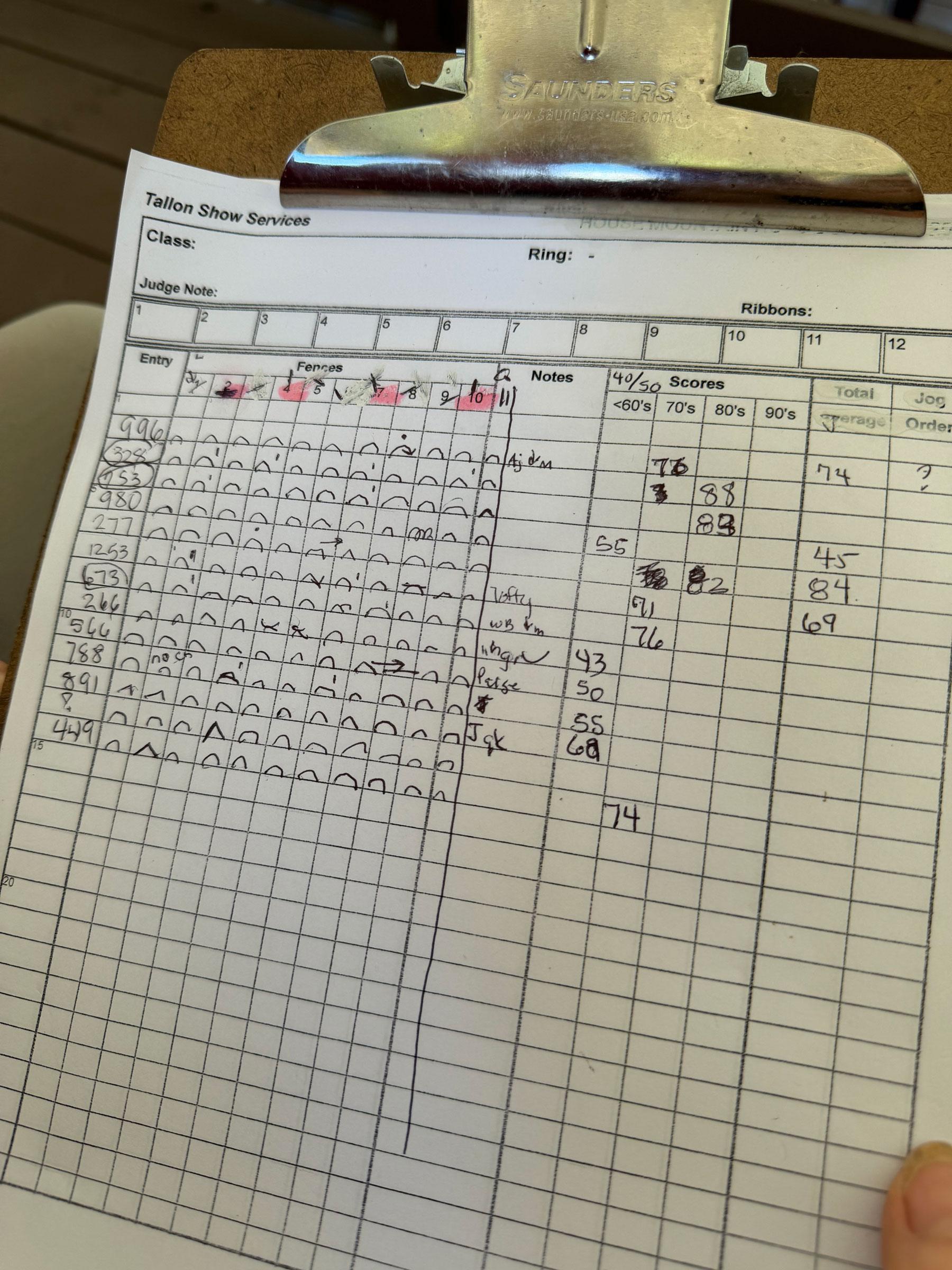
Knocking down a rail is costly. Dayle explained that once a rail falls, the highest score a horse can receive is a 45. To make the handy round (finals), competitors generally needed scores in the high 70s.
As I watched Dayle score rounds, her judging sheet looked like hieroglyphics to me. Every mark represented a detail of the performance — a particularly fluid jump, a mistake, or a deduction. While obvious errors are easy to spot, much of the judging involves evaluating the quality and beauty of a horse’s movement.
After the first round, the top 12 competitors advanced to the finals, where the course was reset to a more challenging configuration. They would get one final chance to add to their overall score.
As the competition unfolded, I found myself rooting for Gio Lemon and rider Caden Nolt.
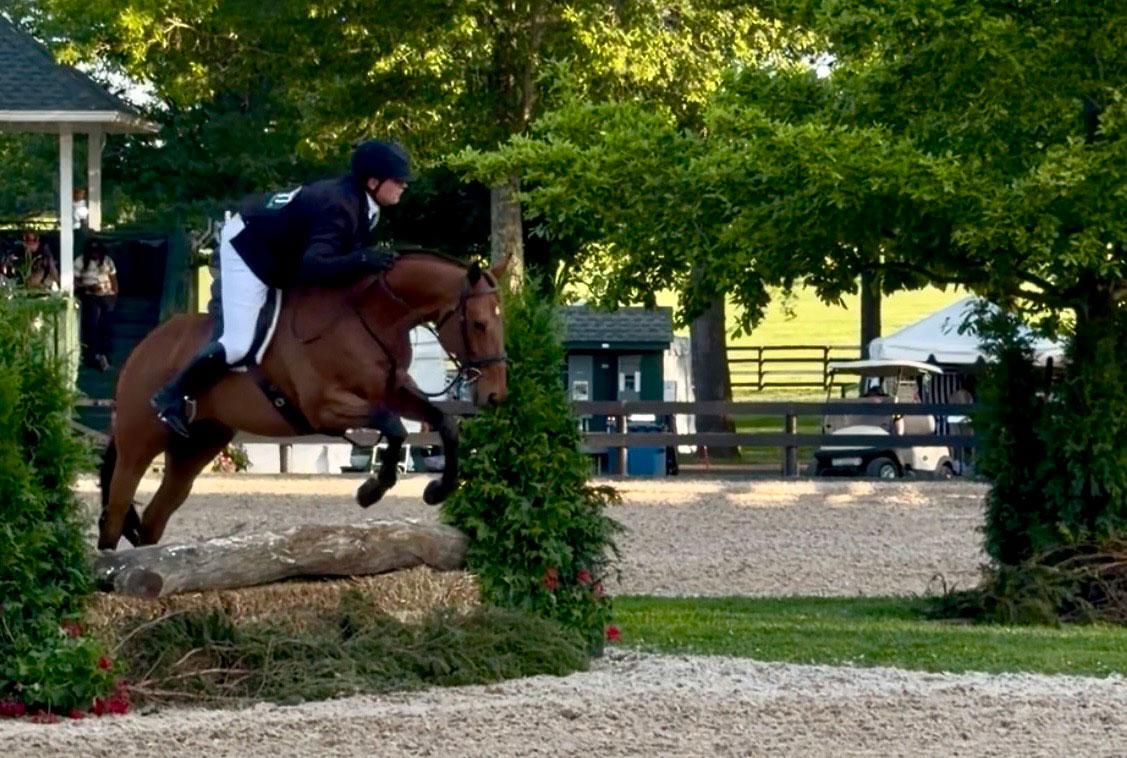
Gio Lemon earned more than $56,750 on the racetrack before transitioning to his second career. He is also missing an eye. Watching him confidently navigate the course was a reminder of just how versatile Thoroughbreds can be after their racing careers. Nolt ultimately finished second and was the highest-placing junior rider in the field.
The winner was 14-year-old Thoroughbred Kensington Court, ridden by Susan Lyman, who also serves on the Thoroughbred Task Force and was instrumental in bringing the competition to life.
Kensington Court’s Final Round in Upperville Thoroughbred Hunter Derby
We’ve all watched Thoroughbreds glide across a racetrack and marveled at their beauty, but there was something uniquely captivating about watching these same sleek, powerful athletes float over fences with such grace and precision.
Thoroughbreds are sometimes stereotyped as difficult or high-strung, so I asked Dayle whether she thought they faced a disadvantage in the show world.
Not at all.
In her view, Thoroughbreds are the smartest and classiest horses out there, qualities that make them exceptionally well-suited for the hunter ring.
That conversation led to what may be the most important part of this story.
Horse racing is unique because it depends on equine athletes. As it should be, horse welfare remains a constant and necessary conversation within our sport. Most racing careers end by age 5 or 6, leaving the majority of a horse’s life still ahead of them.
There are countless organizations doing incredible work to retrain and rehome retired racehorses, but this initiative feels different.
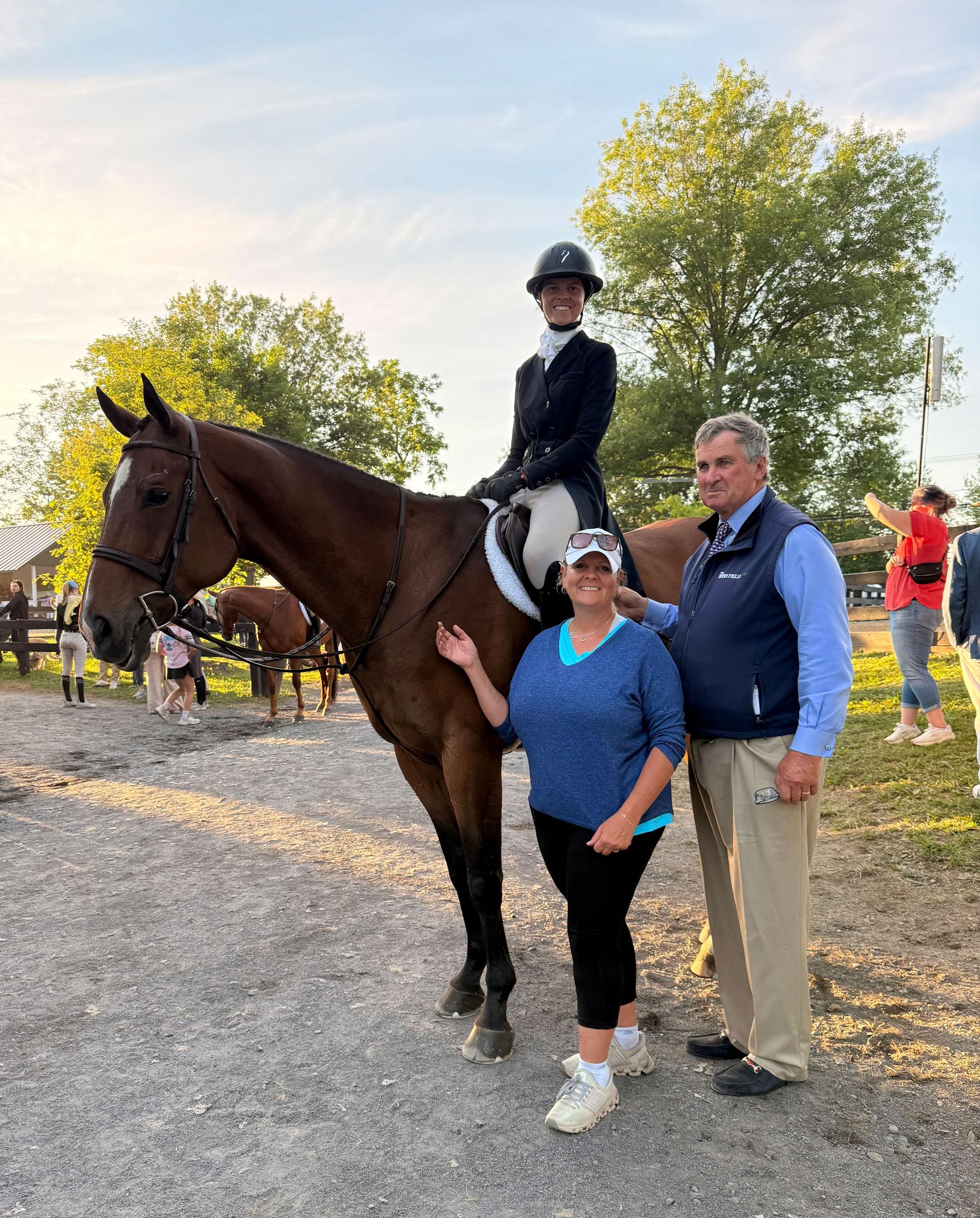
This isn’t simply about finding homes for Thoroughbreds after racing. It’s about creating demand for them.
Carrie Brogden of Machmer Hall, a major force in the Thoroughbred breeding industry, was instrumental in organizing the inaugural Upperville Thoroughbred Hunter Derby. She told me that for years she noticed a recurring phrase in advertisements from people searching for show horses: “No Thoroughbreds.”
She set out to change that. Following the launch of the Upperville Derby, she began seeing ads that started with the exact opposite message: “Looking for a Thoroughbred.”
Brogden has long believed that if you create meaningful opportunities with significant prize money for Thoroughbreds in the show ring, riders, owners, and trainers will follow. Based on the inaugural running, that theory appears to be working. The class attracted 60 entries and even generated a waiting list.
Since this was my first horse show, I didn’t have much context for comparison. So, I asked several attendees how the quality of competition stacked up against a typical warmblood Derby.
The consensus was simple: it looked like any competitive hunter class. There were great horses, average horses, great riders, average riders, and everything in between.
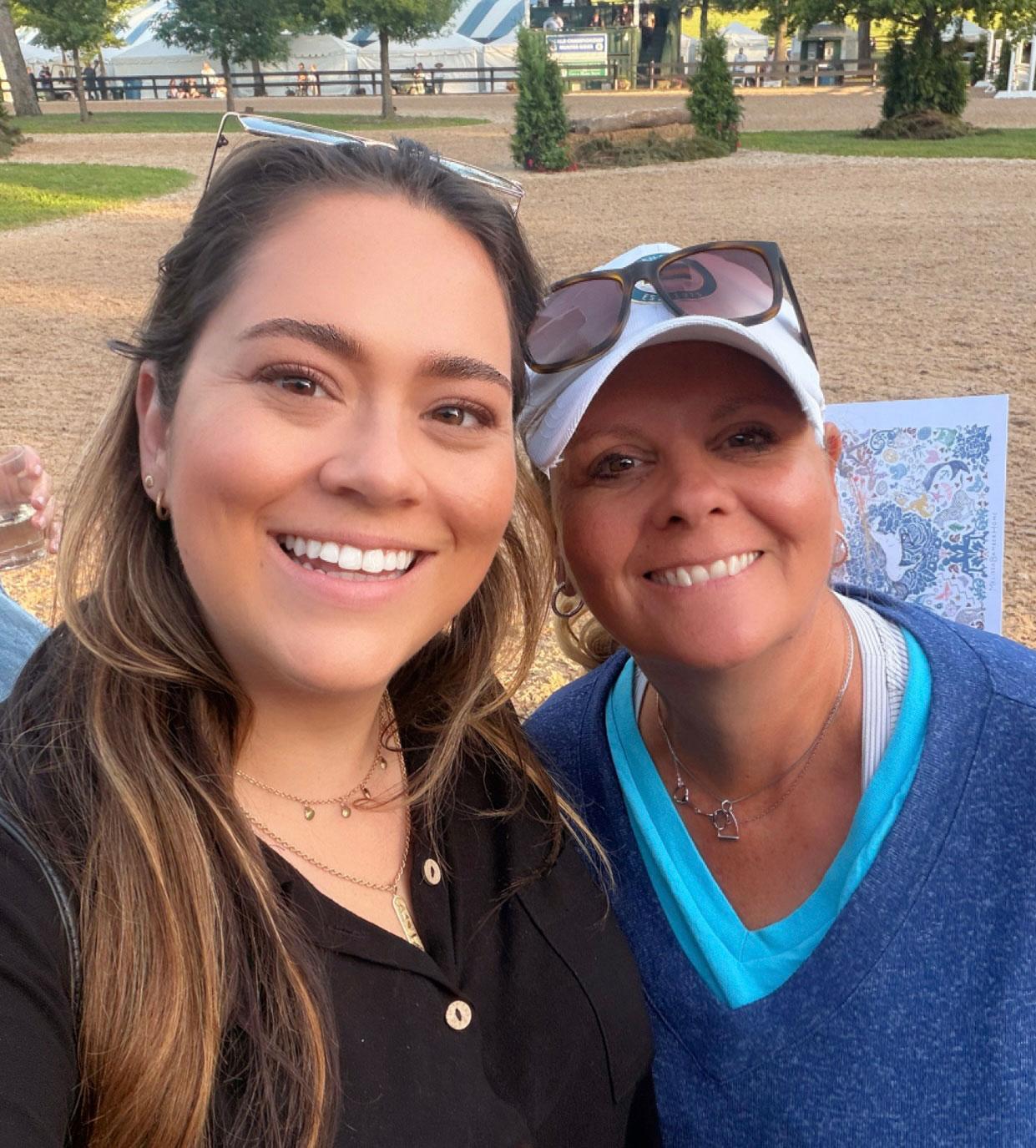
That may be one of the most encouraging signs of all. The fact that the inaugural event produced a level of competition comparable to established warmblood classes suggests there is real potential for Thoroughbred divisions to become a fixture at horse shows around the country.
When I asked Brogden how she felt about the event, she didn’t hesitate.
“WE SLAYED IT!” she shouted.
It’s hard to argue with her. What took place at Upperville felt bigger than a horse show class. It felt like the beginning of a cultural shift that could expand opportunities for thousands of retired racehorses while introducing a new audience to the athleticism and versatility of the Thoroughbred.
If this momentum continues, horse girls and boys across the country may soon be actively seeking Thoroughbreds for their next show prospect.
A Thoroughbred renaissance indeed.
Thank you to the Upperville Horse Show for doing a wonderful job presenting the class, Jacqueline Mars and Anne Hormel for donating the prize money, and Anne Hormel for donating the beautiful trophy. A special thank you to Kathy Doyle-Newman, member of the Thoroughbred Task Force, who recommended having the Thoroughbred Hunter Derby to the Horse Show committee.