



Breeders’ Cup Fantastic Finishes: History Denied, Stardom Found
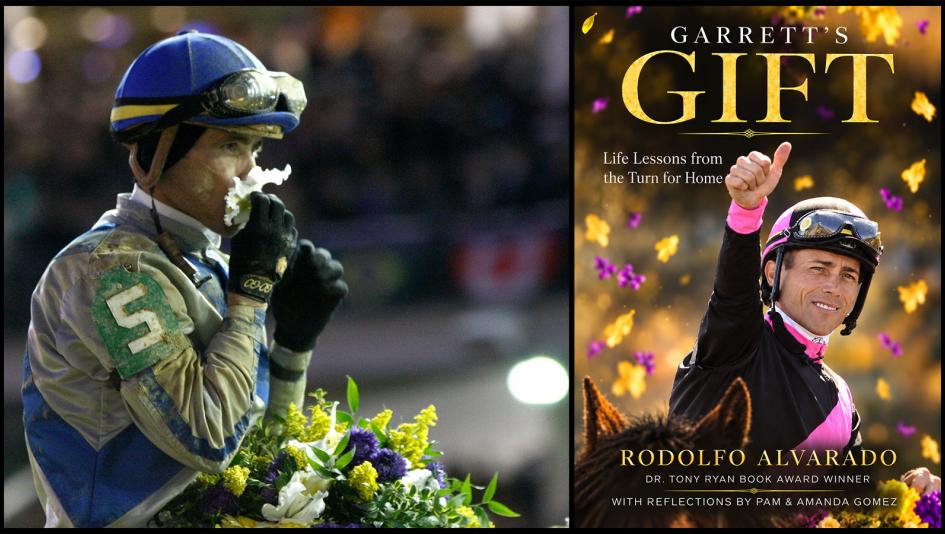
As the 10th anniversary of Garrett Gomez's death approached, I found myself watching the 2010 Breeders' Cup Classic again.
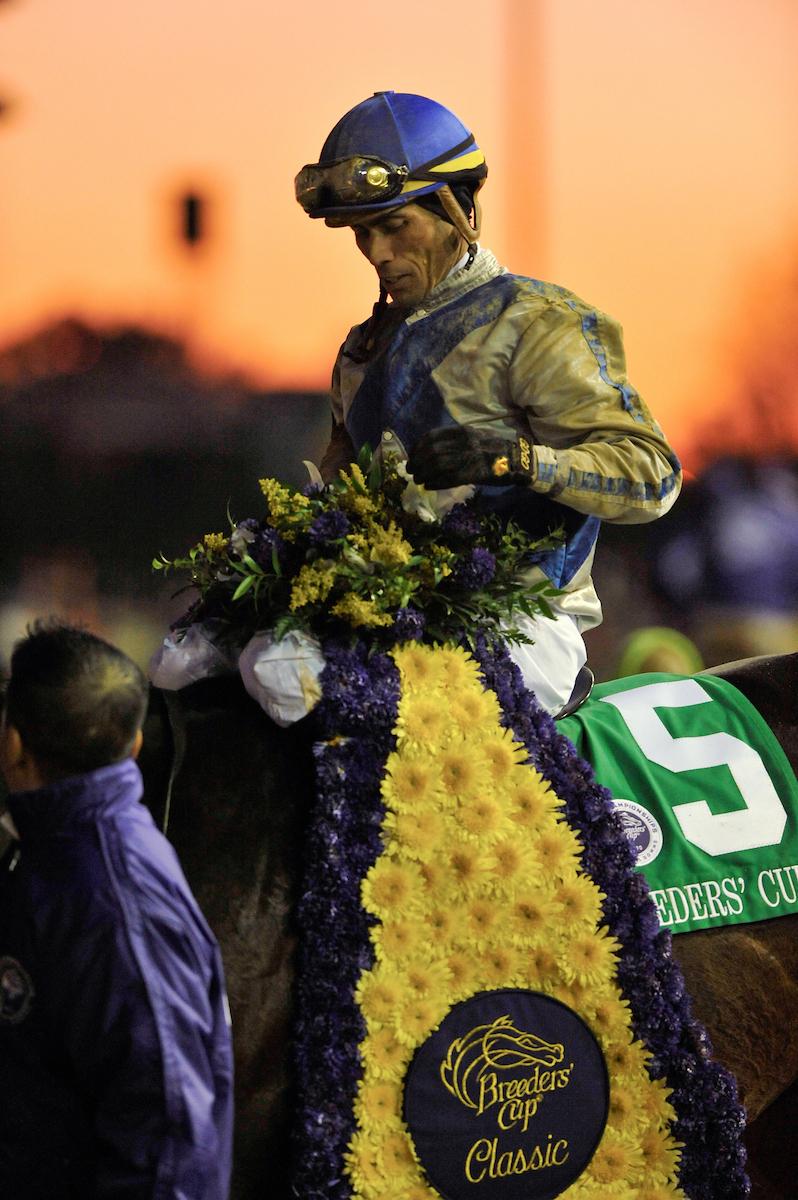
Like every racing fan, I knew what was coming. Blame would turn for home with Garrett quietly waiting. Zenyatta would launch the breathtaking rally that had become her trademark. Trevor Denman's call would rise with the drama unfolding before him, and in one of the sport's most unforgettable finishes, Blame would hold on by a head, handing the great mare the only defeat of her remarkable career.
I had watched the race many times before, but this time I wasn't watching the horse. I was watching Garrett. I watched the patience with which he allowed the race to come to him, the moment he committed Blame to the stretch, and what happened after they crossed the finish line. Garrett celebrated the victory, but he also acknowledged Zenyatta. Even in that extraordinary moment, he understood what he had just been part of.
Watching him brought me back to a collection of recordings Garrett and I began making in 2010, when we spent countless hours talking by telephone while I was working on his biography. We talked about racing, certainly, but also about addiction and recovery; marriage and fatherhood; mistakes and second chances; and the person he was still trying to become. When our work together ended, the recordings went into a shoebox. Over the years I returned to them from time to time, especially around the anniversary of Garrett’s passing, when hearing his voice offered a way of remembering the friend behind everything that had been written about him.
This time was different. I wanted to write a tribute marking the 10th anniversary of Garrett's death, and I thought listening to him again might help me find the words. After watching the Breeders' Cup replay, I knew exactly which recording I wanted to hear first: the conversation we recorded just days after Garrett and Blame defeated Zenyatta. I wanted to hear him talk about that afternoon, not only about winning the race, but about the respect he held for both horses and what it meant to have been part of something extraordinary. I wasn't looking for another book. I was looking for my friend.
I poured a cup of coffee, slipped on a pair of headphones and pressed play. Within moments Garrett was there again, talking with the same warmth I remembered from those evenings when California and Michigan were connected by nothing more than a telephone line. Before long, he was talking about Blame, and what struck me wasn't how much he remembered about winning. It was how much he remembered about the horse beneath him.
Garrett told me that as Zenyatta came charging toward them, he wanted Blame to know she was there. He wanted his horse to see her, to feel the challenge coming, because he trusted what Blame would do when another horse came to him. After the finish, his thoughts turned toward Zenyatta as well. Garrett understood what that mare meant to racing, and the respect he showed her after defeating her said almost as much about him as the victory itself.
I had heard the story before, but this time I heard something else. I began taking notes for the tribute, and as one recording led to another, those notes started changing. A story about Blame wasn't simply about winning anymore. It was about patience, trust, and knowing when to ask for everything. When Garrett spoke about his wife, Pam, and his daughter, Amanda, I began thinking about my own wife and children. When he talked candidly about recovery, responsibility, and the person he had once been, his words began reaching places in my own life that had nothing to do with horse racing.
Then I came across Garrett talking about Lookin At Lucky. When we began our conversations in March 2010, Garrett was preparing to ride the colt on the road to the Kentucky Derby, one of the few great races still missing from his remarkable career. Garrett had no idea what lay ahead for either of them. He was simply a jockey with another gifted horse beneath him and another chance at the Derby still waiting somewhere down the road.
I knew what happened next. Garrett didn't, and that simple difference changed the way I heard everything that followed. The voice in my headphones belonged to a man still looking forward. There were horses waiting to be ridden, races waiting to be run, a wife and daughter he loved, and another Kentucky Derby still waiting somewhere beyond the turn. Whatever I knew about the years ahead had no place inside the hope with which Garrett was speaking.
Somewhere along the way, I stopped taking notes about Garrett Gomez and began taking notes about what he had left behind. I resisted it. I actually closed my notebook and remember thinking, ‘No, Garrett. That's not why I came back.’ I had returned to write a tribute, not another book. I wanted to remember my friend, say something meaningful on the 10th anniversary of his death, and be finished.
But every time I pressed play, another story sent me somewhere I hadn't expected to go. Garrett once described the person he had been during his addiction as “selfish and self-centered,” admitting that when he was trying to get high, he didn't care. Years into recovery, however, he described himself very differently. “I am,” he said, “a loving, caring somebody who wants to do the right thing.” Then came a sentence I could not shake, “Today, I get to say I have feelings.”
Those weren't the words of a man trying to teach me how to live. Garrett wasn't speaking for some future audience or deliberately leaving behind words of wisdom. He was simply telling me the truth about the man he had been and the man he was trying to become. I had heard many of those words before, some of them more than once over the years, but enough life had passed for me to hear something in them now that I hadn't been capable of hearing the first time.
It also forced me toward a question I would have preferred not to ask. Thirty-seven years ago, after a terrible night that ended with my 3-year-old daughter looking at me as though she no longer recognized her father, I made a promise to stop drinking. By the grace of God, that promise held. Sobriety gave me back my marriage, allowed me to watch my children become adults, and gave me years of life I could not have imagined that morning.
Garrett found recovery, too, and listening to him again made the question unavoidable: Why did mine hold while his ultimately did not? I don't know, and the older I become, the less interested I am in pretending that I do. We were two men who had known addiction, who had been given time, and whose stories eventually ended very differently. Mine is still being written. Garrett's ended alone in a hotel room.
That truth belongs in his story, and I don't believe Garrett would have wanted it softened. Neither do I. But one hotel room deserves honesty; it does not deserve the last word. The man speaking through my headphones was alive. He was laughing, dreaming about the Kentucky Derby, talking about Pam and Amanda, recovery and horses, mistakes and second chances. His life contained failure and contradiction, but it also contained years reclaimed, races brilliantly ridden, people deeply loved, and lessons he never knew he was leaving behind.
So, I kept listening, and the tribute slowly disappeared as the pages on my desk multiplied. Notes became ideas, ideas became chapters, and eventually I understood what was happening. I wasn't writing another biography of Garrett Gomez. I was writing about what can remain when a life ends, about the lessons hidden inside ordinary conversations, and about how sometimes enough time must pass before we become capable of hearing them.
Then, somewhere in all that listening, I found myself back where this journey had begun: watching Garrett aboard Blame in the Breeders' Cup Classic. Only now I wasn't thinking about the finish. I was thinking about the turn for home, that instant when Garrett and Blame straightened into the stretch and everything still hung in the balance. Zenyatta was coming. The finish line was ahead. Nothing had been decided. Garrett could not know what the next few seconds would bring; he could only trust the horse beneath him, everything that had brought them to that moment, and whatever remained possible between there and the finish.
And there it was.
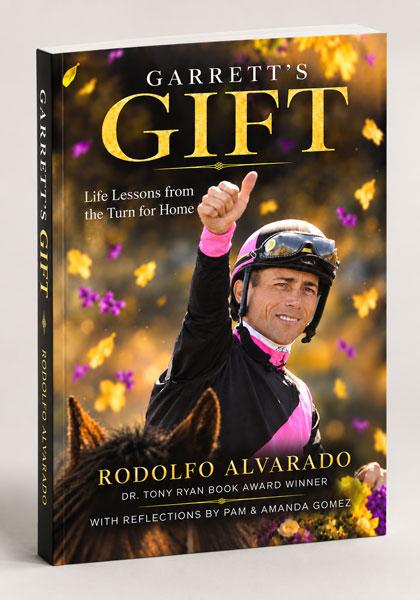
I had spent all that time listening to a man who, in those recordings, was still somewhere on his own turn for home. Garrett didn't know what waited beyond it any more than he knew, aboard Blame, how that Breeders’ Cup Classic would end. He was still riding, recovering, loving his wife, Pam, watching his daughter, Amanda, grow, making mistakes, dreaming about the Kentucky Derby, and believing there was more life ahead. I knew the finish. He knew only the possibilities still before him. What I had begun to understand was that the gift wasn't waiting at the end of Garrett's story. It had been there all along—in the way he lived while the outcome was still unknown. That's when I knew what the book had to be called: “Garrett's Gift: Life Lessons from the Turn for Home.”
The turn for home wasn't the finish. Garrett had spent his life understanding that distinction. A race could be perfectly ridden to that point and still be lost; another could appear hopeless and suddenly open before you. It was the place where everything that had brought you there met everything still possible ahead — and where, for a few breathtaking seconds, you had no choice but to trust, commit, and ride.
That was the Garrett I kept hearing in those recordings, and it was important to me that the book begin with the people who knew him in ways I never could. His wife, Pam Gomez, and his daughter, Amanda Gomez, introduce readers to the husband and father they loved. From there, Garrett's own voice carries us back into those conversations while I listen across the years and try to understand what his words mean to me now.
But the more I listened, the more I wondered whether those conversations might have a life beyond the book. Garrett had spoken with extraordinary honesty about addiction, recovery, failure, family, and the difficult work of becoming someone different from the person he had once been. In talking with Pam, we came to the same conclusion: Garrett's voice should be heard. If something he said could reach even one person struggling with addiction or help one family understand what someone they love is going through, then sharing those conversations would be worth it.
We also knew where any proceeds from the recordings belonged. They would support Next Level Equine, founded by Pam to help retired Thoroughbreds transition from the racetrack to meaningful second careers, with Garrett and Pam's daughter, Amanda, serving as head trainer. There was something fitting about that choice. Garrett had spent so much of his life aboard Thoroughbreds and now his words could help give some of those horses another turn for home.
I never finished the tribute I intended to write. Instead, I discovered a conversation that refused to end. It became “Garrett's Gift,” and I can think of no better way to honor my friend than to invite you into that conversation.
Rodolfo Alvarado is the author of “Garrett's Gift: Life Lessons from the Turn for Home,” with reflections by Pam Gomez and Amanda Gomez. Published by Caballo Press of Ann Arbor, the book is now available for preorder at www.caballo-press.com. The original recorded conversations between Alvarado and Garrett Gomez that inspired the book are available at www.garrettgomezinterviews.com. All proceeds from the interviews support Next Level Equine. Founded by Garrett's wife, Pam Gomez, with their daughter, Amanda Gomez, serving as head trainer, Next Level Equine helps retired Thoroughbreds transition from the racetrack to meaningful second careers.