


Royal Delta: A Three-Time Champion Worthy of Her Astronomical Sale Price
Coinin, now a 5-year-old off-track Thoroughbred, has spent nearly his entire life in the hands of Alcina Rawles. She bred him, trained him, and was his exercise rider throughout much of his racing career.
When racing proved not the right fit, Rawles was there for the next chapter, too.
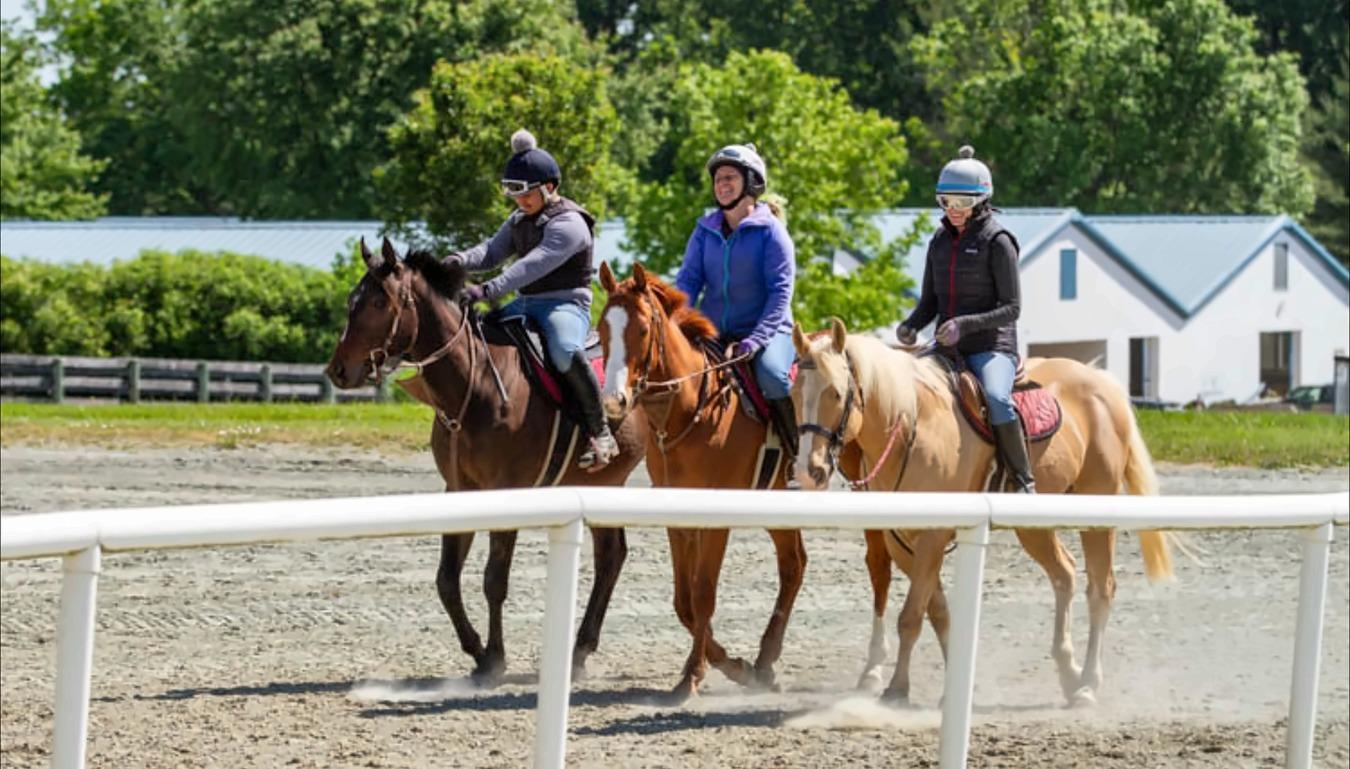
That continuity reflects her broader role within the Thoroughbred industry. Her work spans from conditioning active racehorses at Fair Hill Training Center through the retraining, rehabilitation, and responsible placement of off-track Thoroughbreds through Pastured Place, a nonprofit aftercare program based in part at her Meadow Spring Farm in Oxford, Pa.
Coinin’s Journey From Racetrack to Second Career
Coinin’s story began with his dam, Cailin Alainn, whom she purchased for $2,500 at the 2015 Keeneland September yearling sale and was one of the first horses Rawles trained after receiving her trainer’s license.
Rawles co-owned the mare with her assistant, Megan Calibey, and regularly rode her during morning exercise through a racing career that included one victory and seven other to-three finishes.
After the mare retired in 2020, Rawles and her assistant decided to breed her once and the result was Coinin. From there, Rawles helped with nearly every step of his racing career, getting him both Delaware- and Virginia-certified, breaking him, and exercise riding him through much of his time on the racetrack.
When Coinin made it clear that racing wasn’t for him, Rawles listened, and retired him last year. Instead of immediately asking him to start something new, she turned him out and gave him time to decompress, knowing he probably needed it.
“He made it very clear he did not want to be a racehorse,” Rawles said. “He is a very lovely, talented horse in many ways, but he also has a whole lot of temper and a whole lot of opinions. I felt like he needed time to mature mentally and understand that the job he had disliked was behind him.”
That patience became especially important with a horse who was never shy about expressing himself.
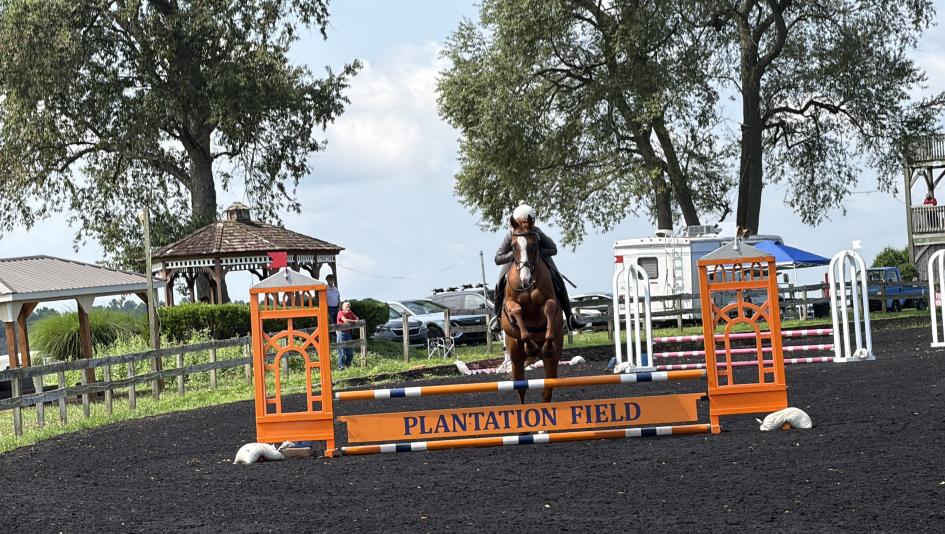
When Rawles began retraining Coinin, she experimented rather than forcing him into a predetermined discipline, exposing him to different experiences and paying attention to what suited him best.
He began showing promise in both the hunters and jumpers, eventually schooling fences in the 2-feet-6-inches to 2-feet-9-inches range.
“He’s not the type of horse you can kind of try to force into a box he doesn’t want to be in,” Rawles said. “He’s pretty athletic, but he’ll let you know when he doesn’t want to participate.”
The original goal was to take Coinin to this year’s Retired Racehorse Project Thoroughbred Makeover, where he was entered to compete in the hunter and jumper divisions. But Rawles ultimately scratched him for reasons unrelated to the horse, as a home reconstruction project left her without enough time to finish his preparation and make the trip to Kentucky.
While Rawles hopes Coinin will eventually become her personal riding horse, or perhaps return to the Thoroughbred Makeover in a graduate competition, she remains committed to his care no matter where his second career leads.
“I bred him, so he’s my responsibility,” she said. “And I love him, even if he is a difficult child at times.”
Racing and Aftercare Under One Roof
That sense of responsibility toward Thoroughbreds in her care extends well beyond just Coinin.
Rawles still trains horses for racing at Fair Hill, while Meadow Spring Farm also handles racehorse layups and serves as the adoption base for Pastured Place. Her experience gives her an unusually direct view of a Thoroughbred’s entire trajectory — from preparing them for the racetrack to deciding what kind of life best suits that same horse after the track.
“[A horse] that I own or train has a home with me for life if need be, because they are my responsibility,” she said.
Some of the horses in her care have been rehomed and gone on to new careers with wonderful new owners. Others remain with Rawles, whether they can take on a second carer or they simply need a place to spend the rest of their lives.
Pastured Place applies the same philosophy on a larger scale. One of Rawles’s racing clients formed the 501(c)(3) to ensure any horses from the owner’s racing operation had a responsible place to go when their racing career ended. The program has since expanded to accept horses from outside the owner as well.
Rawles estimated that roughly 120 horses are currently within the program. About 50 are sanctuary horses that will remain in permanent care, divided between the Pennsylvania location and another facility in Maryland.
For horses who are adopted out, placement does not end Pastured Place’s responsibility. The organization continues to monitor where they go and will take them back if an adopter can no longer keep them. Pastured Place has also helped cover major veterinary expenses when treatment could prevent a horse from being euthanized for a condition that was otherwise treatable.
For Rawles, that commitment is not separate from racing — it is part of racing responsibly.
“I love racing, and I do understand the flaws in racing and where our weaknesses are,” she said. “It’s nice to be able to contribute and try to help those weaknesses become more of a strength and more common down the road, hopefully.”
Showing What OTTBs Can Do
Pastured Place regularly supports trainers taking horses to the Thoroughbred Makeover, including covering expenses and entry fees.
Rawles intentionally looks for variety in the horses and disciplines represented. The program has sent horses into western classes, jumpers, polo, and other disciplines, emphasizing that off-track Thoroughbreds don’t fit one mold.
“We just really try to kind of showcase that you can have OTTBs for a junior or amateur, and you can have OTTBs do other disciplines that aren’t eventing,” she said.
Pastured Place horses have reached Thoroughbred Makeover championships in multiple disciplines in recent years, including barrel racing, eventing, competitive trail, and dressage. Rawles also took one of her own former racehorses to the event in 2025, where he qualified for the championships in both dressage and freestyle.
Other Pastured Place graduates continue to climb the eventing levels.
“We have two horses in the program that are running at the two-star level, with hopes of moving up to Intermediate next year and eventually targeting the three-star level,” Rawles said.
But success in a second career doesn’t always mean ribbons, championships, or upper-level competition.
Sometimes it means finding the discipline where a former racehorse thrives. Sometimes it means recognizing that a horse needs more time. And sometimes, as with Coinin, it means accepting that the right home may be the one he already has.
“All of those outcomes are part of the same responsibility — one that begins while a Thoroughbred is racing, but does not end when he crosses the wire for the last time,” she said.


