


Breeders’ Cup Fantastic Finishes: A Distaff Duel for the Ages
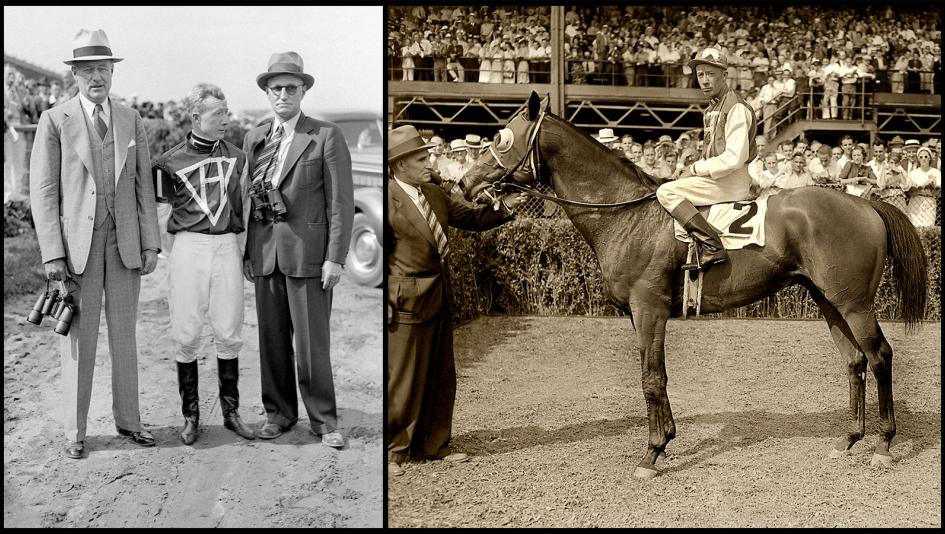
His name is familiar because of his connection to a beloved Thoroughbred, but the story of Red Pollard goes beyond his time with Seabiscuit. He endured a life filled with ups and downs, but his love of the horse kept him going even in the darkest of times. Pollard’s perseverance and his special connection with “the Biscuit” made him an important part of the team behind the superstar.
Years after his time on the racetrack, the film “Seabiscuit” re-introduced racing fans to the gutsy racehorse and the rider he bonded with, but behind the film's feel-good narrative lies a more remarkable life: a battered jockey who refused to let his broken body keep him out of the saddle.
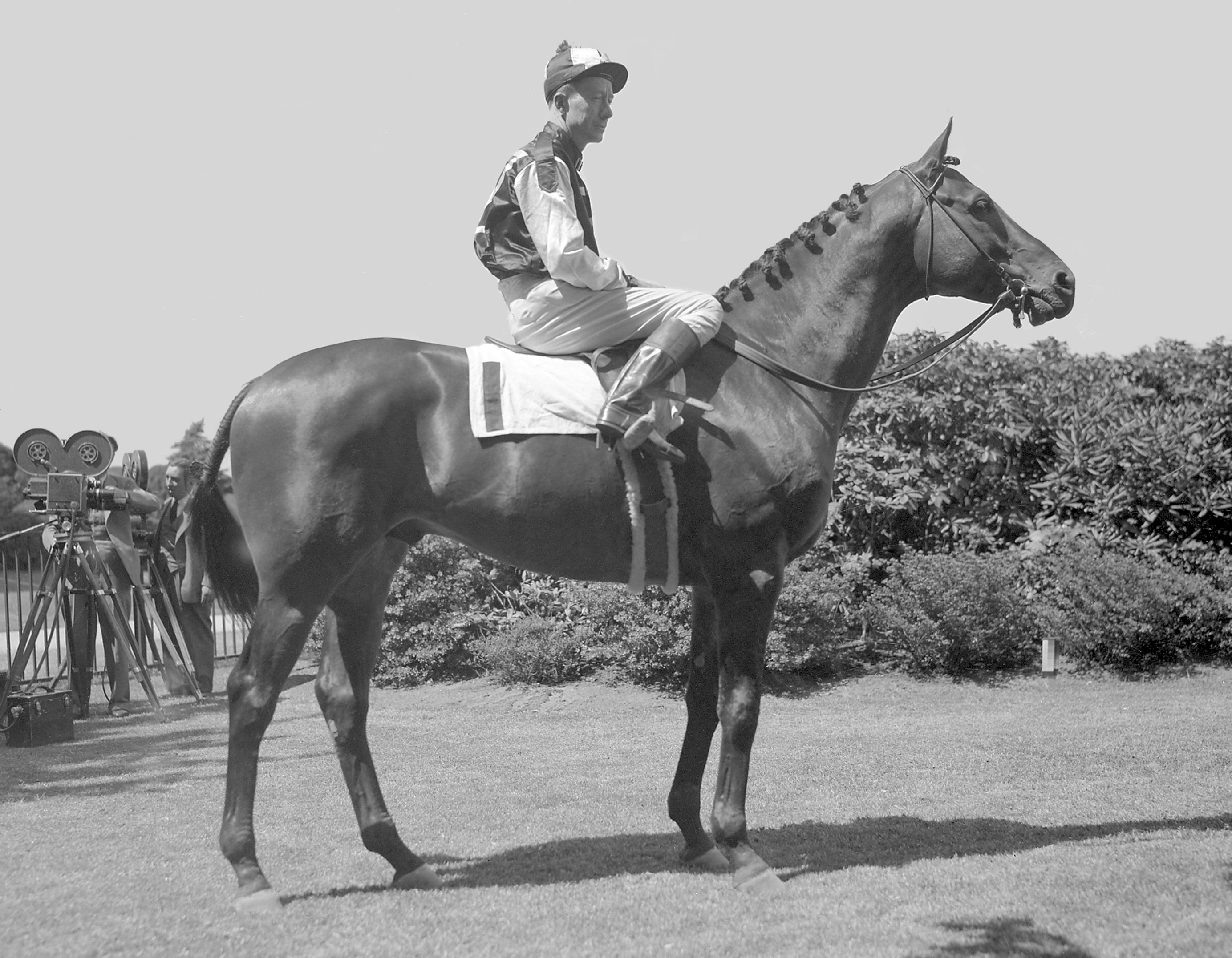
John Michael Pollard was born to parents John Aloyisius and Edith (Lord) Pollard on Oct. 27, 1909, the second of seven children. The family lived comfortably in Edmonton, Alberta, where his father and his uncle Frank had built a brick factory on the North Saskatchewan River. Their home was filled with music and books, which were lifelong companions for the red-headed young Johnny. In 1915, the river flooded, threatening the family’s home and washing away the Pollard brothers’ factory. The family was bankrupt within months, losing everything but their home.
To make ends meet, John took a job as an auto mechanic while young Johnny trained his pony Forest Dawn to pull a toboggan so he could take work delivering groceries. Those hours riding his pony led him to local stables, where he would barter his labor for a chance to ride other horses. At age 15, he persuaded his parents to allow him to pursue life as a jockey. Despite his mother’s doubts, they were still in dire financial straits and allowing their son to try his hand at that ambition would mean he could escape the situation they were in. They allowed him to travel with a family friend, who brought the 15-year-old with him to a half-mile track in Butte, Mont.
The man disappeared, leaving Johnny to fend for himself. He somehow survived as he traversed the bull-ring circuit in search of rides on these informal half-mile tracks. At 5’6”, he was taller than most of his fellow jockeys, but still lithe in his teenage years, he was able to ride at 101 pounds, and his bookish personality made the racetrackers he encountered like him. His red hair earned him the nickname “Red,” a moniker he would carry with him the rest of his career.
It took Red more than a year to win his first race, which he did at a fair in western Canada. With his first win, he was a bug boy, riding for “Acey” Smith and going between racetracks around Vancouver, B.C.; Tanforan near San Francisco; and Tijuana in Mexico. To supplement his meager income, he competed as an amateur boxer, losing more fights than he won, but sending whatever money he scraped together to his family back home in Alberta.
Over time, Pollard gained a reputation for working with ailing and anxious horses. His time on the rough and tumble bush tracks had given him insight into the mind of these athletes and his patience and kindness brought out the best in them. That skill would come in handy more than a decade later when Pollard met a bay gelding named Seabiscuit.
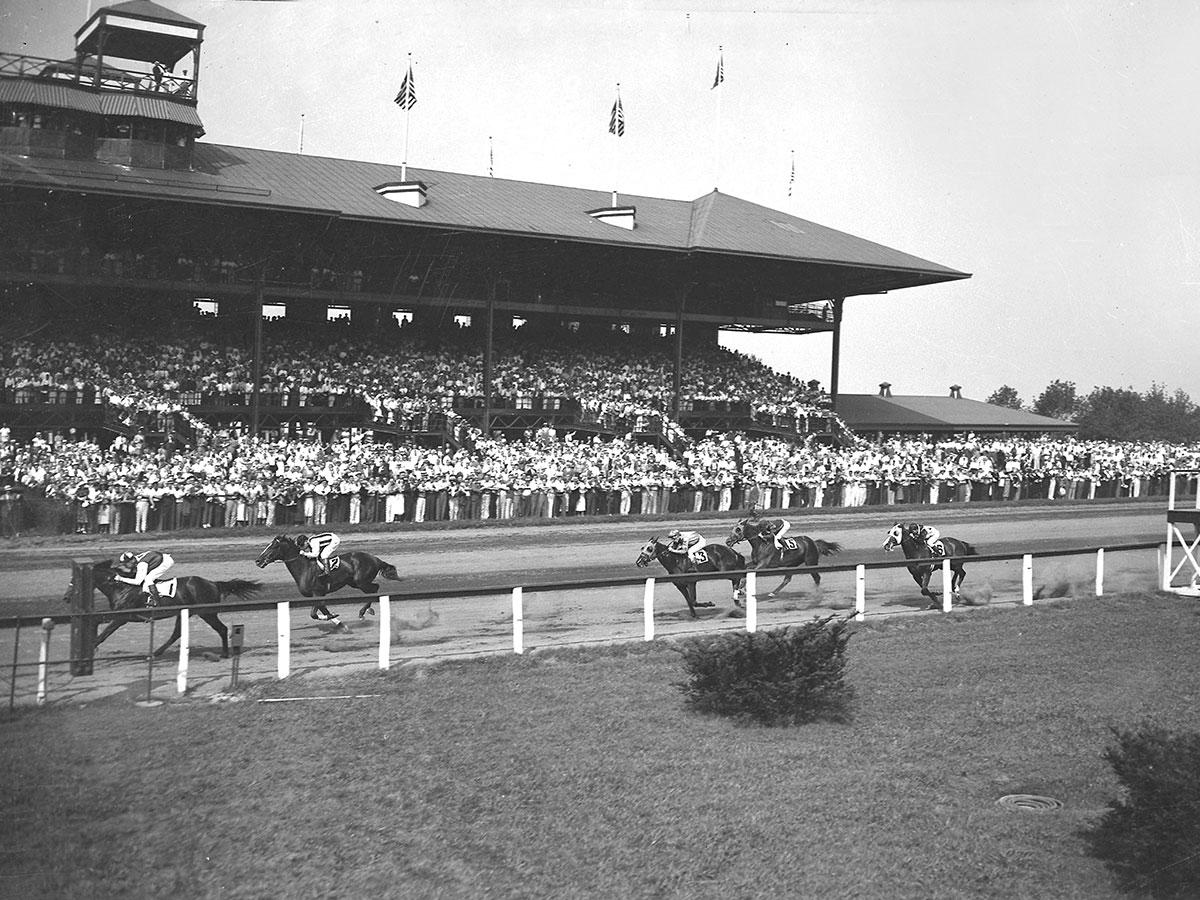
Laura Hillenbrand shares their first meeting in her book “Seabiscuit: An American Legend.” It was 1936. Franklin Delano Roosevelt was in the midst of his campaign for re-election as President of the United States. His New Deal had helped alleviate some of the suffering that the Great Depression had visited upon the United States, but he knew he needed more time to pull the country back from the brink. Omaha had scored the third Triple Crown the year before, and War Admiral was racing toward his own Crown the following year. Seabiscuit, on the other hand, had been racing for the legendary Wheatley Stable, but had not had a stellar start to his career.
His pedigree predicted greatness: his sire, Hard Tack, was by Man o’ War and his dam, Swing On, was a daughter of Whisk Broom II, the horse who had lowered the world record for 1 ¼ miles to 2:00 in 1913. But the plain bay colt had not shown anything close to his progenitors’ excellence in his 2-year-old season, racing 35 times and winning only five races. His trainer “Sunny Jim” Fitzsimmons saw potential in the colt, but it was not until Tom Smith got his hands on Seabiscuit, whom Gladys Phipps sold to Charles Howard for $7,500, that all of that latent potential was unlocked.
When Pollard met Seabiscuit in August 1936, Smith was still rehabilitating the colt’s spirit, which had been affected by the heavy racing schedule and lack of attention to his quirks. Smith put Pollard on the horse and came away with insights that let the trainer know that the bookish rider was the right fit for the burgeoning superstar. The red-headed jockey would ride Seabiscuit a total of 30 times over the next few seasons and won 18 of those starts, including his 1940 Santa Anita Handicap victory, the Hall of Famer’s final start.
Despite numerous injuries from his days in the saddle, Pollard persevered as a jockey, though he did retire for a time – even trying his hand at training – but he always returned to riding. His wife, Agnes, who had been his nurse while he recovered from the broken leg that kept him out of Seabiscuit’s match race with War Admiral, raised their two children, Norah and John, in Rhode Island while Pollard toiled away on the New England circuit. He eventually called it a day when the endless list of injuries caught up to him at age 46. Pollard took jobs around the racetrack, sorting mail in a track’s mailroom and working as a valet, but his alcoholism and physical issues saw him finish his life in a nursing home. He died March 7, 1981, and Agnes followed two weeks later.
More than two decades after Red Pollard’s death, Tobey Maguire played the Canadian Hall of Famer in a popular film adaptation of Hillenbrand’s book. New generations learned of the connection between rider and horse, the bond between Pollard and Seabiscuit that was an integral part of the equine icon’s Hall of Fame career. That link between the two is a testament to what horses and racing can do for those who make it their life, a soul-deep love that transcends time and place.

Silver Charm: As Tenacious as They Come