


The Incomparable Cigar: A Trainer’s Ability to Transform an Athlete into a Champion
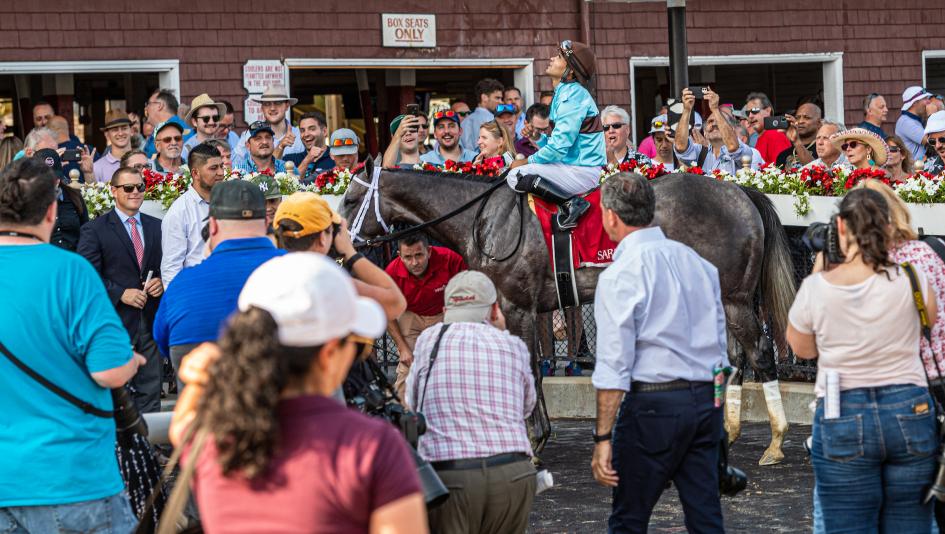
The names carry the gravity of history, racehorses such as Artful, Tanya, Frizette, Jean Beraud, and Burgomaster along with historic venues like Saratoga Race Course and Belmont Park.
William Collins Whitney continued a line of prominent persons who started in this country’s colonial era and included men and women who wove the family’s name deep into society as well as the nation’s military and economy. Though his time in racing was shorter than that of successive generations, this Whitney’s legacy in racing included the names above and many more, a sporting foundation that made the Eton blue and brown silks a familiar sight in winner’s circles everywhere.
The Whitney family’s American roots date to the 17th century, when John and Elinor Whitney emigrated from London to Watertown, Mass., where they settled and founded a family who would come to dominate the sport of horse racing.
William Collins Whitney was born nearly two centuries later, the second of four children for James Scollay Whitney, business executive and politician, and Laurinda Collins, whose family was part of the founding government of the Plymouth colony. William completed his education at Yale University and then studied law at Harvard before being admitted to the New York bar in 1865.
He married Flora Payne in 1869 and then built a family of five children with her, including his oldest son, Harry Payne, and middle child, William Payne, both of whose names will be familiar to anyone who knows the history of horse racing. William Collins Whitney’s own involvement with the sport, though, would have to wait as he had other roles to play before his turn as a breeder and owner.
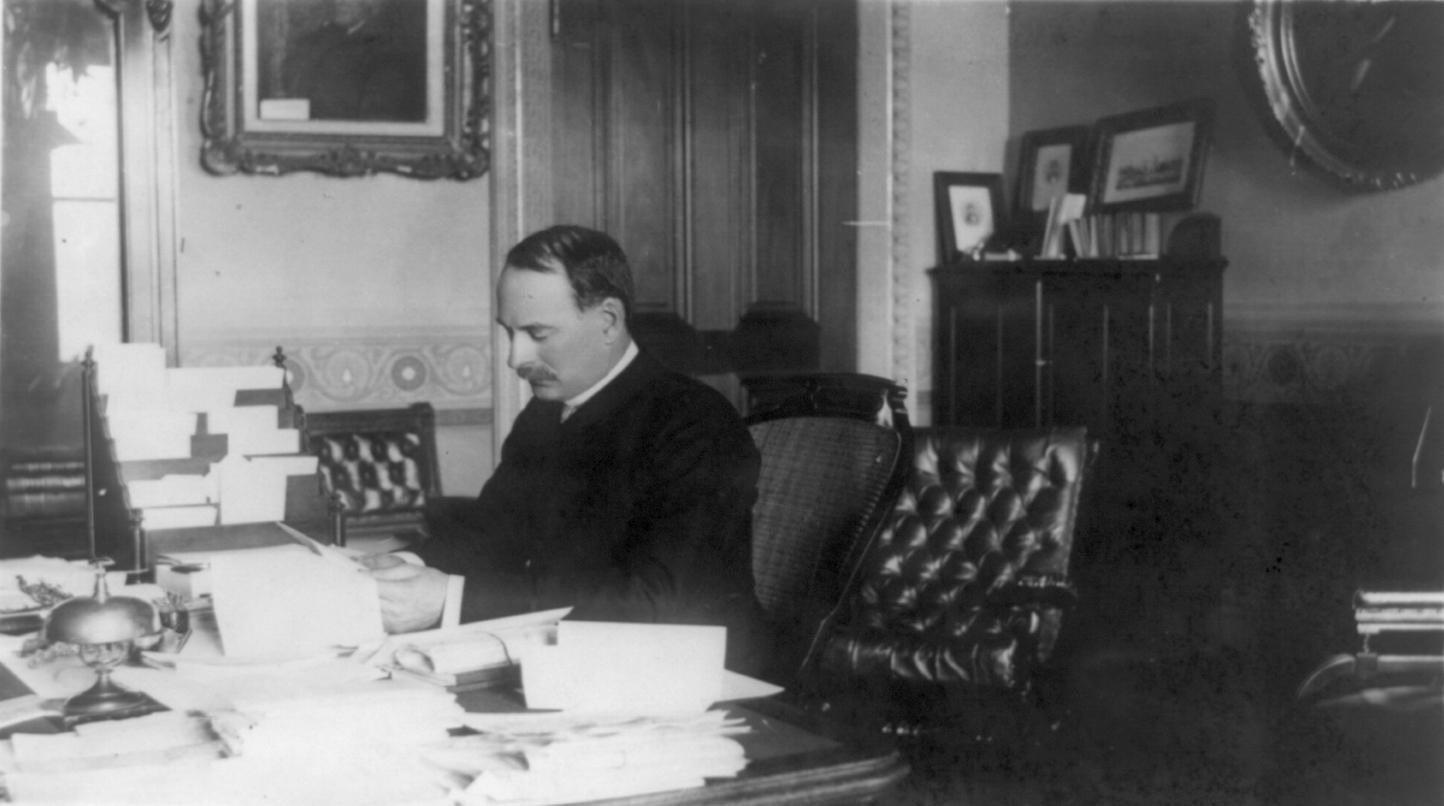
Like his father James, William became politically active, first as a director of schools for New York City and then served as the city’s corporation counsel and managed its legal affairs. He went on to serve as Secretary of the Navy during Grover Cleveland’s first administration (1885-1889) and spearheaded the upgrade of the country’s fleet, including steel steamships and modern naval guns.
Once his tenure in Washington was done, Whitney then was a partner in the formation of the New York Loan and Improvement Company in 1890, which developed the Washington Heights section of the city. He also was part of Cleveland’s campaign that brought him a second term as President and then joined brother Henry Melville Whitney in organizing the Dominion Coal Company and the Dominion Iron and Steel Company, which would later be sold to James Ross, father of Commander James Kenneth Leveson Ross, who raced America’s first Triple Crown winner Sir Barton.
With his business and political dealings settled, William Collins Whitney turned to a common sporting endeavor for a man of his era: horse racing.
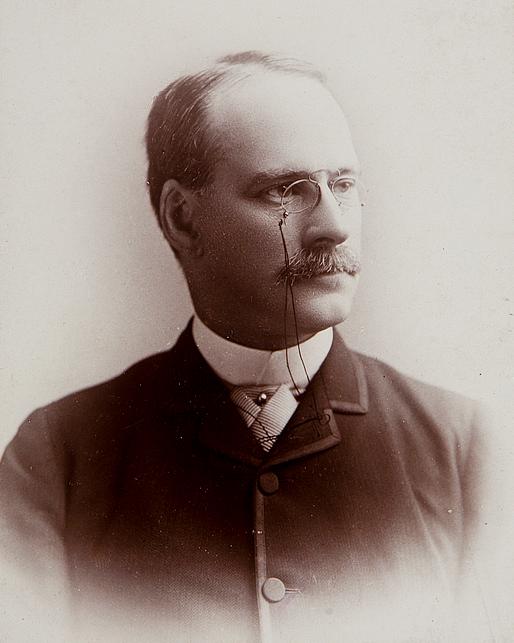
In the last decade of the 19th century, Whitney turned to using his fortune much as peers like James R. Keene, John E. Madden, and August Belmont II did: to breed and own the best Thoroughbreds. His involvement with the sport was short-lived, but it was enough to leave a significant impact.
He started his journey into racing by becoming a founding member of The Jockey Club, established in 1894, along with Belmont, Keene, and two dozen others. Whitney registered his silks, Eton blue with a brown cap, and started a buying spree that would add up to a million dollars’ worth of horses before he was done. He also built stables for up to 84 horses and a one-mile training track on his Westbury estate in Nassau County and brought Sidney Paget, brother to Whitney’s son-in-law Almeric Hugh Paget, on as his racing manager.
To start his racing career, he bought 10 horses and then raced them in Paget’s name to start. Whitney also hired Sam Hildreth as his trainer in 1898. The son of an itinerant trainer who mostly raced in the Midwest, Hildreth grew up with Thoroughbreds and racing, spent time as a blacksmith, and then turned to owning and training horses. His start in the East came not in New York, as his stock was not up to the quality of that circuit, but in New Jersey, where he raced on the state’s outlaw tracks. His success caught the attention of Whitney, who brought him on to train his nascent Westbury Stable, including his first big purchase, the colt Jean Beraud.
Named for the French artist, the colt was by His Highness, the first horse to win $100,000, out of Carrie C., daughter of the undefeated Sensation. He was bred and owned by John Daly and was already a stakes winner when Paget purchased him for $40,000 in the summer of his 2-year-old season.
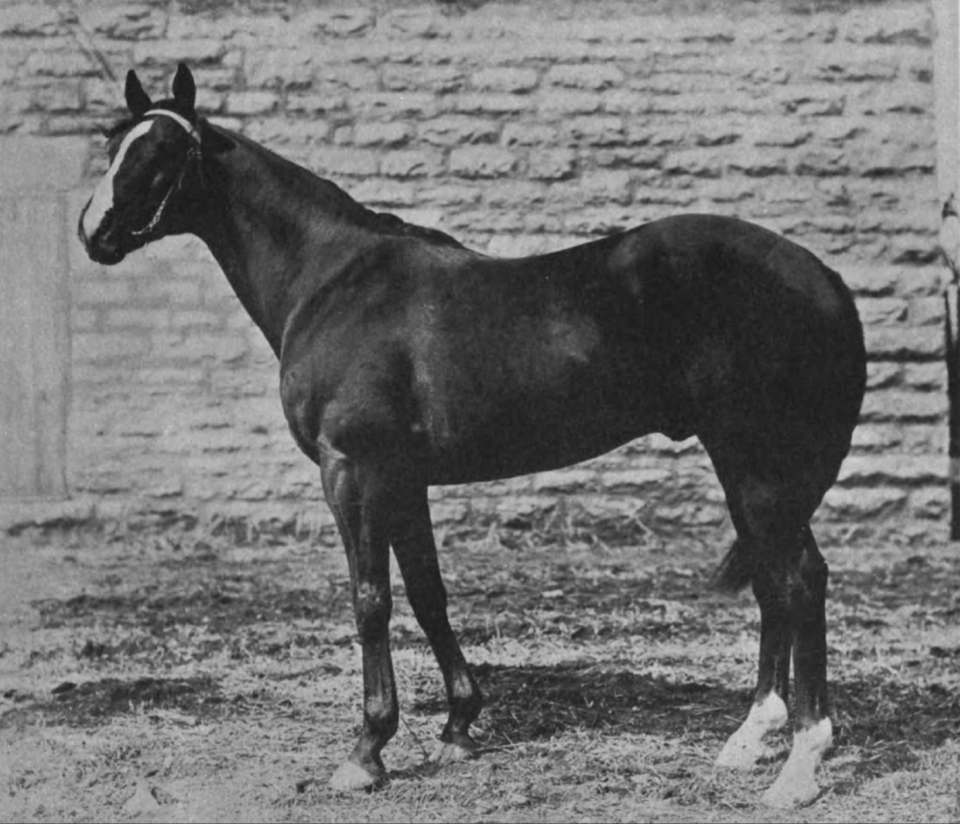
In 1899, Jean Beraud added the Belmont and Withers Stakes at age 3, and then the Brookdale Handicap as a 4-year-old. During these early years, Whitney also bought the steeplechaser Shillelah, a popular son of Duke of Magenta; the gelding fell during a race and unfortunately had to be euthanized. Saratoga officials would later name a steeplechase race for Whitney’s lost racer.
Even though Whitney came into the sport late in life, he wasted no time in expanding his investment beyond a few horses in New York. He also sent potentials to England as well, with the goal of winning the Derby at Epsom. To that end, he leased stakes winner Volodyovski from Lady Meux and won the 1901 Derby with the colt, the second American to do so after Pierre Lorillard won with Iroquois 20 years earlier. Whitney would try again the following year with Intruder, a son of Meddler bred at his La Belle Stud in Kentucky.
In his privately printed 1902 book, “The Whitney Stud,” the former Secretary of the Navy shared the breeding stock that he had accrued in depth, including a bevy of broodmares and the stallions Hamburg and Meddler. A Hall of Famer and leading sire, Hamburg had been the most expensive juvenile ever sold in 1897 when John E. Madden sold him to mining magnate Marcus Daly for $40,001. Daly died in 1900 and Whitney bought the stallion at his stable’s dispersal sale for $60,000. He also purchased the imported Meddler for $49,000, and among the foals that he produced for the blue and brown was Tanya, the second filly to win the Belmont Stakes, a milestone that happened a year after Whitney’s death in 1904.
Aside from his stakes winners and stallions, this most important contribution to the sport may be the classic upstate racetrack that became synonymous with successive generations of Whitneys.
When Saratoga Race Course opened in 1863, its backers included John Morrissey, William Travers, Leonard Jerome, and others, but by 1891, Morrissey was gone and competition from a plethora of other racetracks left the Spa wanting for horses and bettors. Gottfried Walbaum, the man behind the infamous Guttenberg racetrack in New Jersey, purchased a 90% share of the track that year, and from there, the former playground of a generation of wealthy owners descended into infamy. Distressed by its fall, Whitney, Richard T. Wilson, Andrew Miller, and others pooled their money to buy Saratoga Race Course with the goal of returning it to glory.

Over the next few years, the Spa’s new leadership made improvements to the racetrack and invested in its future, with Whitney’s name and reputation attached to it all as president. When his friend August Belmont II wanted to build a new racetrack in the New York area, Whitney was among the investors who helped him create Belmont Park, another venture that signaled his commitment to racing.
Even though his sporting interest was only a few years old, his investments were many and deep, encompassing bloodstock, facilities, and more. This included his sons Harry Payne and William Payne Whtney, who both inherited the bug and planted their own seeds in the sport.
A ruptured appendix and a subsequent infection put a sudden end to this patriarch’s tenure in racing in 1904. A man of many phases, William Collins Whitney went from Ivy League educated lawyer to political leader to businessman to patron of the equine and established a legacy with his Eton blue and brown that continued well into the 21st century.