2026 River City Stakes at a Glance

A.P. Indy’s significant influence on modern Thoroughbred racing continues through his descendants and should be felt for generations to come.
However, he secured his place among the sport’s greatest racehorses long before becoming one of its most influential sires.
But behind both his championship racing career and remarkable breeding legacy was an exceptionally intelligent horse with a distinctive personality that left a lasting impression on those who knew him.
In “A.P. Indy: Champion Racehorse and Breed-Shaping Sire,” veteran turf writer Lenny Shulman brings both sides of the legendary Thoroughbred to life, tracing his journey from a carefully planned mating to racing stardom while revealing the horse behind his extraordinary accomplishments.
Published by the University Press of Kentucky, the book is among the inaugural titles in the new “Racing Royalty” series, which aims to introduce a new generation of readers to some of the sport’s most recognizable horses.
For Shulman, writing about A.P. Indy was particularly meaningful because long before the book’s conception, the horse had become one of his personal favorite racehorses.
“A.P. Indy was one of a very few sports heroes that I’ve had in my life,” Shulman said. “He came along right when my interest in horse racing was being rekindled after a long dormant period. I was immediately attracted to him, his name, his talent — there was just something special about him.”
Bred by William S. Farish III and William S. Kilroy, A.P. Indy was seemingly destined for greatness. By Triple Crown winner Seattle Slew and out of the accomplished mare Weekend Surprise, by Secretariat, he represented an exceptional pedigree. His $2.9 million purchase price at the 1990 Keeneland July selected yearling sale, a few months after Weekend Surprise’s son Summer Squall won the Preakness Stakes, reflected the considerable expectations surrounding him.
Shulman recounts how those high expectations translated into success — but not without setbacks.
One of the book’s most compelling passages recounts trainer Neil Drysdale’s difficult decision to scratch A.P. Indy from the 1992 Kentucky Derby because of a hoof problem.
The book opens in Drysdale’s makeshift office at Churchill Downs, where he must deliver the disappointing news to owner Tomonori Tsurumaki, who had traveled from Japan with his family to watch the highly regarded colt compete. Despite the immense expectations surrounding A.P. Indy, Drysdale refused to jeopardize the horse’s future.
The setback cost A.P. Indy his only chance to compete in the Kentucky Derby, but it didn’t define his career.
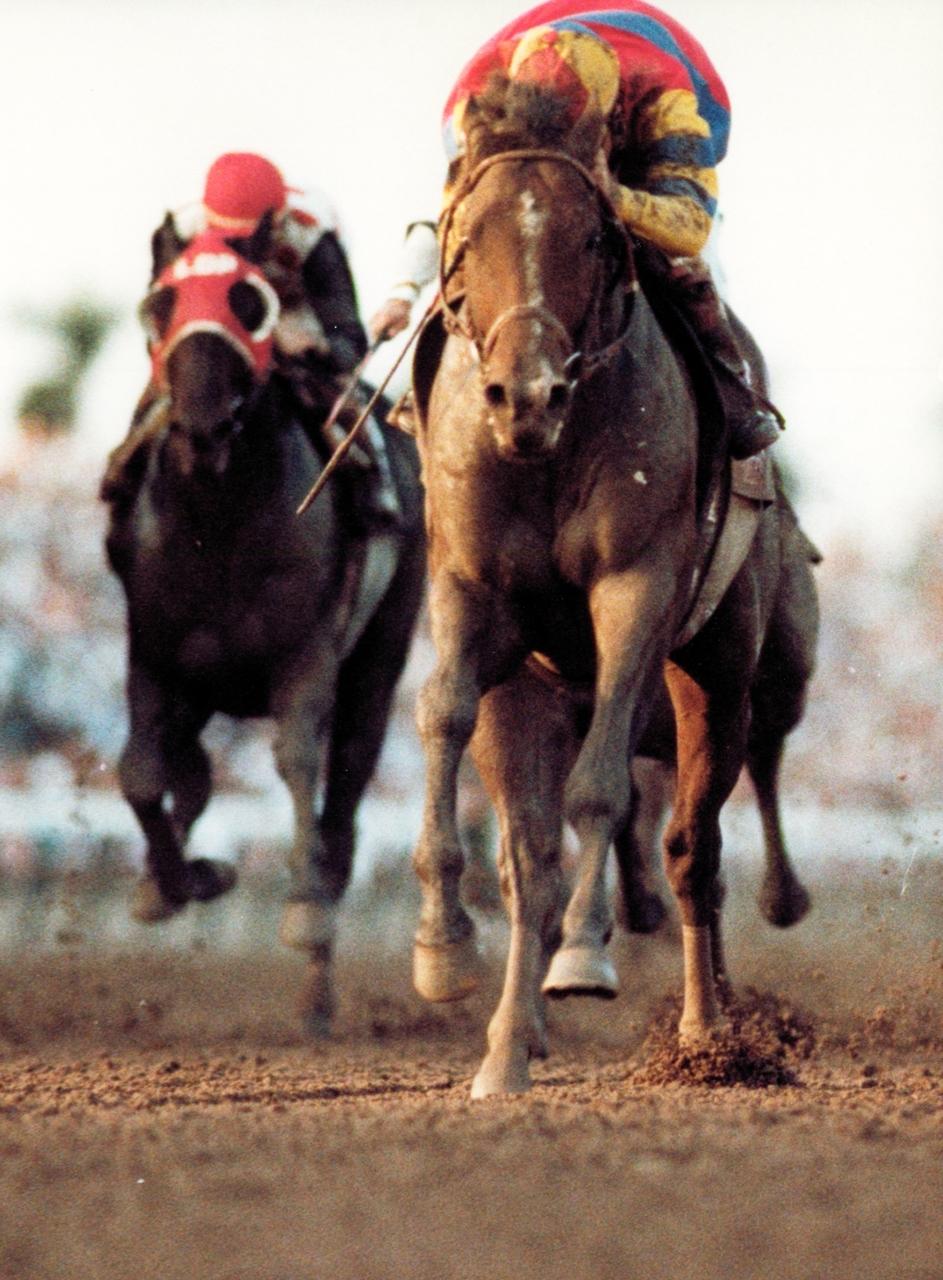
A.P. Indy returned to the racetrack to prove what he couldn’t on Derby day, capturing the Belmont Stakes and Breeders’ Cup Classic while earning 1992 Horse of the Year honors.
Shulman takes readers through the details of those defining races while exploring the people and decisions behind them, including Drysdale’s continued commitment to protecting the horse’s long-term well-being.
The Derby scratch also left one of racing’s most intriguing and debated questions unanswered. Shulman says many knowledgeable horsemen believed A.P. Indy possessed the ability to sweep the Triple Crown.
“The consensus among a lot of respected racing people, those smarter than me, was that he would’ve been a Triple Crown winner,” Shulman said, while acknowledging that such speculation can never be proven. “But again, that’s one of those what-ifs.”
After his racing career, A.P. Indy became an equally formidable icon in the breeding shed at Lane’s End Farm.
His offspring includes 2007 Belmont Stakes winner Rags to Riches, 2006 Preakness Stakes winner Bernardini, and 2003 Horse of the Year Mineshaft. His influence also continued through subsequent generations, notably through his grandson Tapit, who led the general sire list multiple times and sired Belmont Stakes winners Tonalist (2014), Creator (2016), Tapwrit (2017), and Essential Quality (2021).
Shulman believes one of A.P. Indy’s greatest contributions was restoring an important element to American Thoroughbred breeding.
“In a word, it’s stamina,” he said. “Breeders had increasingly emphasized speed before A.P. Indy entered the Thoroughbred breeding industry.”
At a time when speed-oriented stallions such as Mr. Prospector and Storm Cat were especially influential, A.P. Indy also showed the value of producing horses that could excel at classic distances.
And his influence extended beyond his sons and grandsons. His daughters also became accomplished producers, establishing him as an important broodmare sire and further expanding his presence in Thoroughbred pedigrees.
Among his most memorable offspring was Rags to Riches, who became the first filly in 102 years to win the Belmont Stakes in 2007.
For Shulman, those achievements represent more than impressive breeding statistics. They show how thoroughly A.P. Indy influenced American Thoroughbred breeding, with his bloodlines still appearing in the pedigrees of successful racehorses decades later.
While A.P. Indy’s racing record and breeding achievements are central to the book, Shulman considers the horse’s character the most important element of his story.
Through interviews with people involved in A.P. Indy’s life, such as those who raised and trained him or farm employees who cared for him in retirement, Shulman found a consistent theme: A.P. Indy was exceptionally intelligent.
“I think that’s really kind of an undervalued thing when we talk about great racehorses,” he said. “Intelligence doesn’t always come up, and I think it’s critical to their success.”
That intelligence was evident in his racing style. A.P. Indy seemed to understand exactly what was required of him, often doing just enough to win rather than winning by overwhelming margins.
Shulman recalled conversations with jockey Eddie Delahoussaye, who rode A.P. Indy throughout his racing career and understood the colt’s independent approach.
“Even attempting to encourage him with the whip had little effect,” Shulman explained. “A.P. Indy appeared content to run his own race, responding when necessary but seldom expending more effort than the circumstances required.”
That trait may also have led some observers to underestimate his ability.
“He knew what his job was, and he didn’t want to win by 20 lengths. If he won by a half-length, he was quite satisfied with that,” he says.
But intelligence did not necessarily make A.P. Indy an easy horse to handle during his racing days.
In one particularly memorable account from the book, Annabel O’Callaghan, who worked as a hotwalker for Drysdale at Del Mar, recalls being warned about the colt’s temperament. One day, while checking his water bucket, she leaned over the webbing at the front of his stall. A.P. Indy lunged forward, grabbed her shoulder, and bit her.
Drysdale also remembered the colt’s unusual confidence, particularly his apparent lack of fear around people, including veterinarians.
Yet the horse who could be intimidating on the ground at the racetrack underwent a remarkable transformation after retiring from racing.
Shulman says that while many stallions become increasingly difficult to handle after entering the breeding shed, A.P. Indy seemed to settle into his new lifestyle with surprising ease.
“He was the exact opposite to be around on the ground once he retired,” Shulman said. “He became a puppy dog and an incredible horse to be around as a breeding stallion.”
That transformation was especially apparent in the book’s account of A.P. Indy’s relationship with longtime groom Asa Haley, who became his constant companion at Lane’s End.
Haley initially heard warnings about the stallion’s difficult reputation on the ground. During their earliest interactions, A.P. Indy would sometimes grab his arm with his mouth, but Haley eventually recognized the behavior wasn’t meant to hurt him.
As their relationship developed, they built an extraordinary understanding and a deep bond.
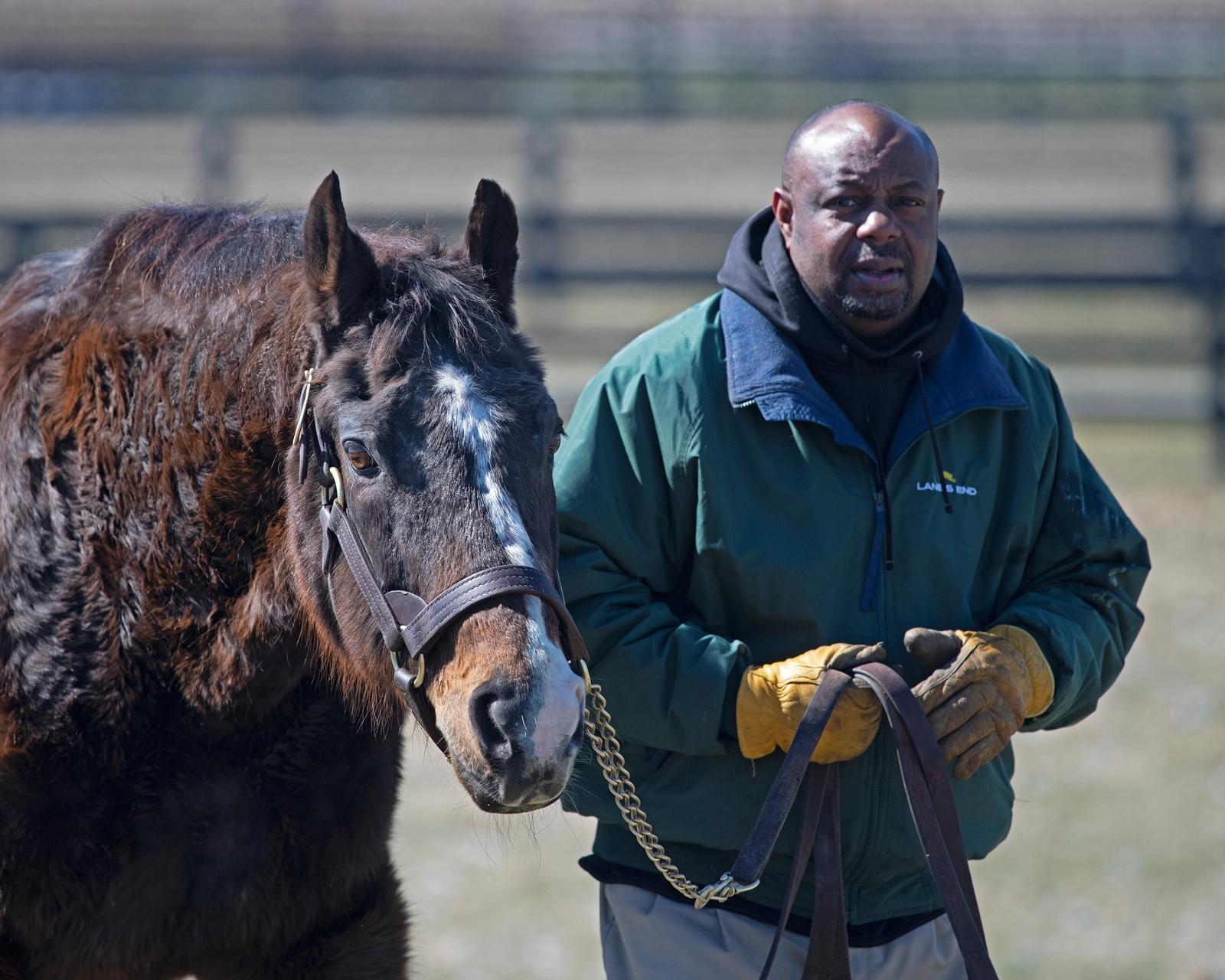
Haley described a horse who responded to his subtle gestures, like automatically lifting his feet when asked and coming running from his paddock when Haley whistled.
In the book, Haley reflected on the horse’s intelligence and willingness to cooperate, noting that A.P. Indy seemed to understand ordinary conversation and rarely needed to be asked something twice.
Their relationship also extended well beyond routine care. Haley became particularly adept at recognizing even subtle changes in the stallion’s body condition, something Lane’s End staff valued as A.P. Indy grew older.
Shulman views that partnership one of the book’s most meaningful stories.
“That’s really one of the real heartwarming facets of this book, is just the relationship that Asa had with this horse and being able to share that,” he said.
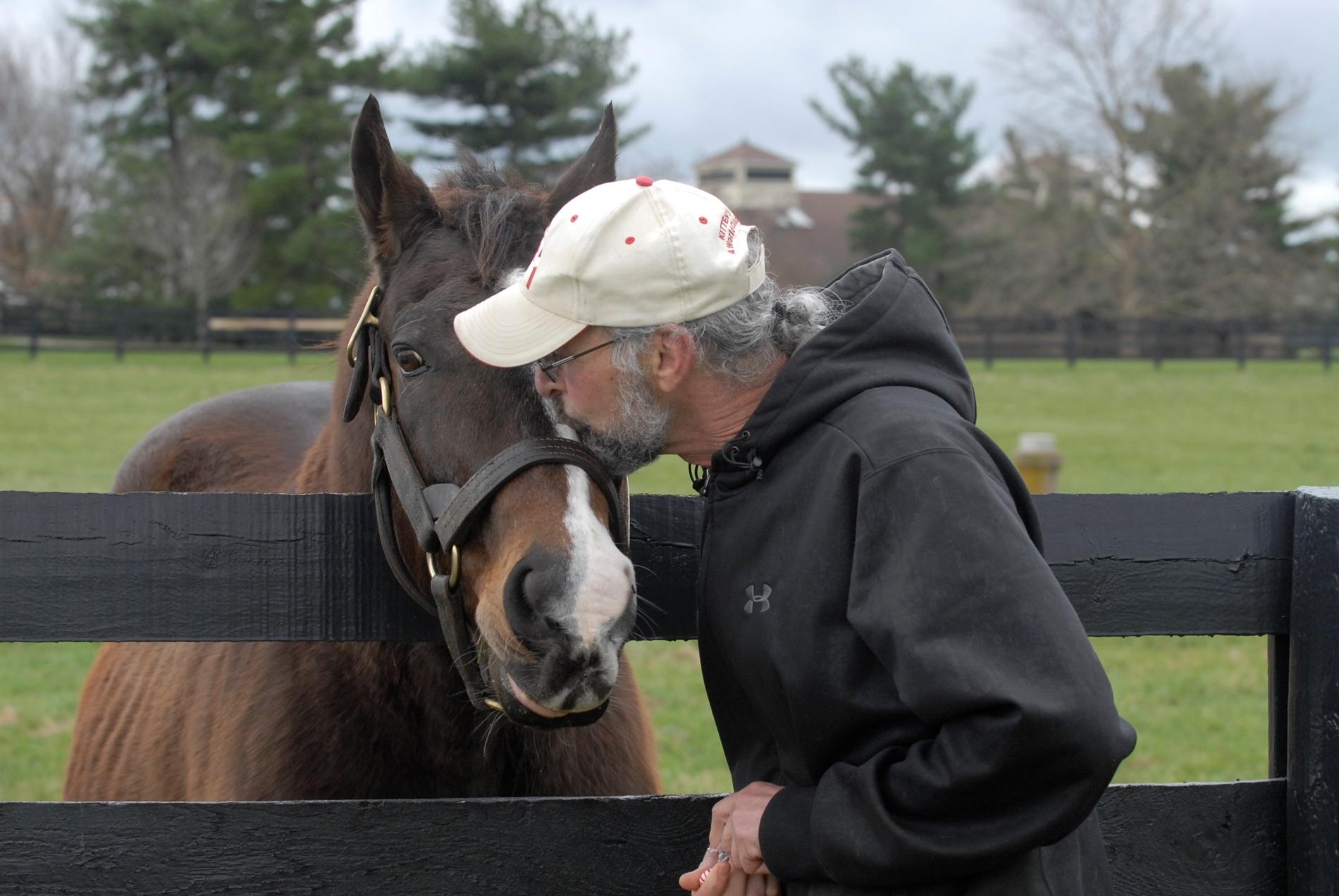
Shulman himself was among A.P. Indy’s regular visitors, having followed the horse since his racing days. Even while living in California, he made trips to Kentucky to see him. Later, he moved just a short drive from Lane’s End, giving him more time to observe A.P. Indy away from the demands of racing and breeding.
In the chapter titled “A Character,” Shulman describes the afternoons spent feeding the stallion peppermints and watching him graze, occasionally receiving attention in return.
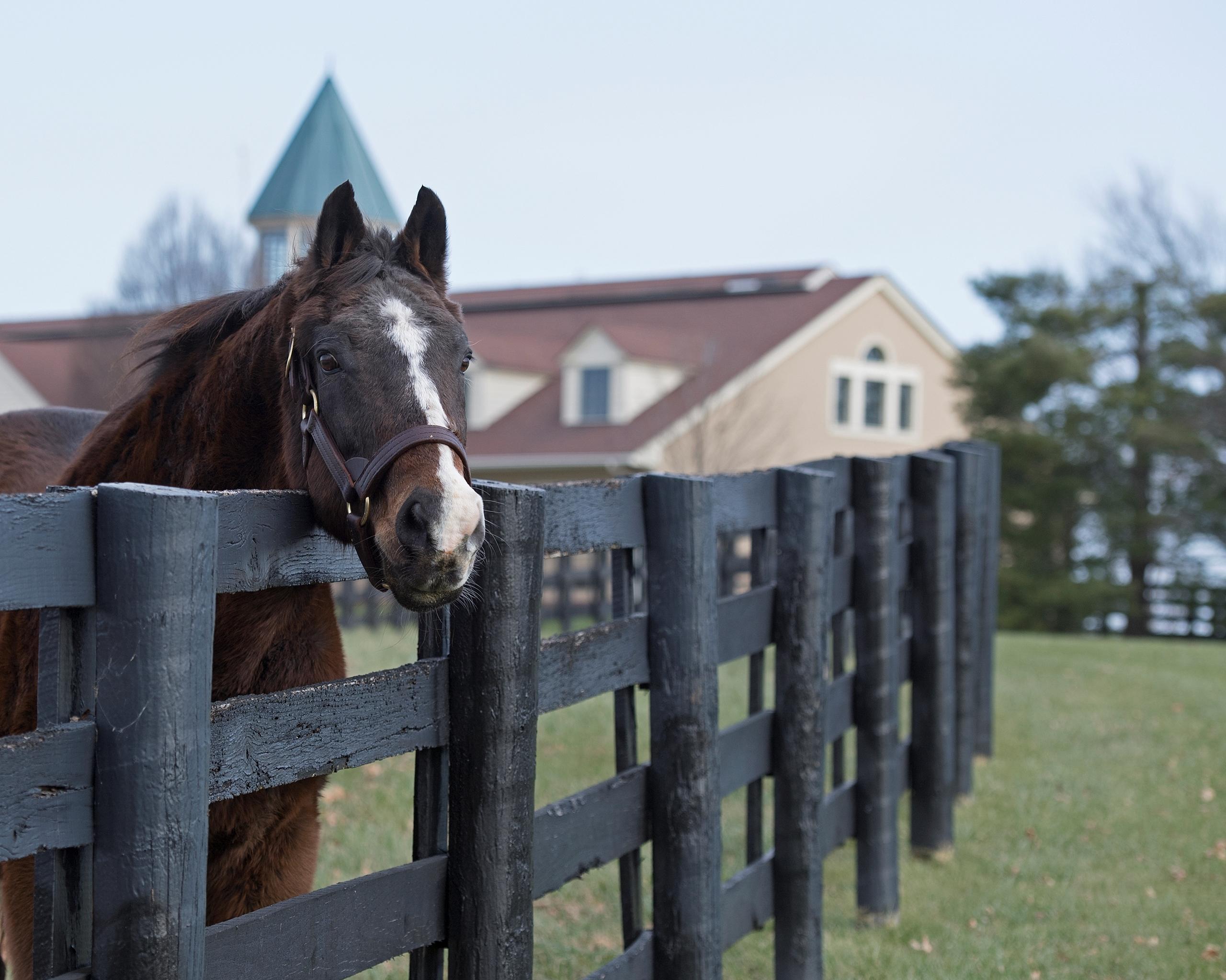
“Sometimes A.P. Indy would approach the fence to interact with me. Other times, he seemed entirely uninterested, standing in his stall with his back turned despite my attempts to get his attention. But one of my favorite habits of his was how he would position his head directly over the name plaque on his paddock fence, almost as if he were posing for photographs.”
Those small observations offer a perspective rarely possible when recounting the life of an influential racehorse.
“The part of this book that I’m proudest of is not the retelling of his race career or his achievements as a stallion,” Shulman explained. “I’ve really tried to describe and impart who he was. Not just what he did, but who he was as a unique individual.”
The closing chapters are particularly moving because of this first-hand experience with A.P. Indy.
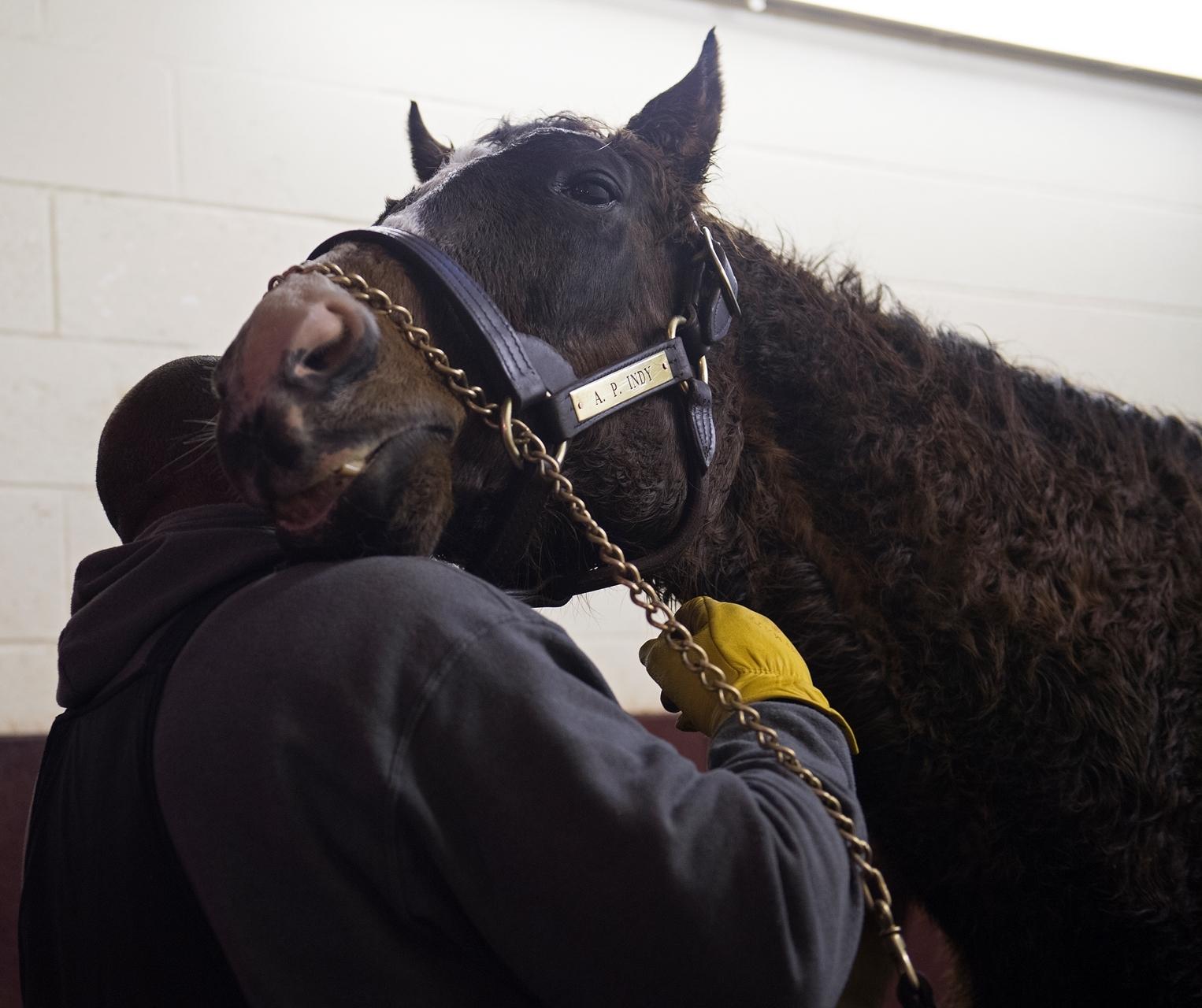
When A.P. Indy celebrated his 30th birthday in 2019, journalists and photographers gathered at Lane’s End to document the aging champion. His back had begun to sway, his winter coat was thick, and he needed specially prepared meals and softer peppermints because his teeth were declining.
Still, the horse kept receiving visitors and fan mail, along with a carrot cake an admirer baked for his birthday, proving just how important he had become to so many.
Shulman also recounted A.P. Indy’s final days in February 2020, when Haley recognized that the 31-year-old stallion was nearing the end of his life.
His passing deeply affected those who spent years caring for him. Former Lane’s End farm manager Mike Cline recalled the emotional scene, describing how even longtime horsemen who rarely showed their emotions were moved to tears.
For Haley, who remained beside A.P. Indy until the end, the loss was especially profound.
A.P. Indy was buried beneath the bronze statue erected in his honor at Lane’s End, a lasting tribute to a horse whose importance extended well beyond the racetrack and breeding shed.
A.P. Indy’s story also marks the beginning of a broader publishing effort to preserve the history of influential Thoroughbreds.
Jennifer Kelly, editor of the “Racing Royalty” series, developed the concept after recognizing an opportunity for the University Press of Kentucky to expand its offerings in equine history.
The series draws inspiration from BloodHorse’s “Thoroughbred Legends” collection, published through Eclipse Press in the early 2000s. That collection featured 24 horses and remains popular among racing enthusiasts.
“I thought it would be great if the [University Press of Kentucky] could emulate that model but make it their own,” Kelly says.

Rather than revisit the same subjects, “Racing Royalty” focuses on more recent generations of influential racehorses and each horse’s story behind their accomplishments.
“We really wanted to focus on horses from the last 30 years that people might recognize the names of, as well as racing fans who are in their 20s and 30s and are just getting into the sport,” Kelly explained.
Beginning with A.P. Indy and Holy Bull, the series seeks to provide accessible biographies that place each horse’s career, connections, and influence within the larger history of Thoroughbred racing.
Kelly also envisions the series eventually including influential European and Australian Thoroughbreds, broadening its reach beyond American racing history.
The goal is to produce approachable books that readers can finish in a day or two while gaining a deeper appreciation for the horses, people, and achievements that have shaped the sport.
That mission aligns with what Shulman hopes readers take away from his tribute to A.P. Indy.
“I think what makes this a little different is the time that I got to spend with him on a personal level,” he said. “If there is one thing to take away, it would be that you’re going to know who this horse was as well as what he did.”
“A.P. Indy: Champion Racehorse and Breed-Shaping Sire,” by Lenny Shulman, is published by the University Press of Kentucky as part of its “Racing Royalty” series.