


Silver Charm: As Tenacious as They Come
· EN ESPAÑOL
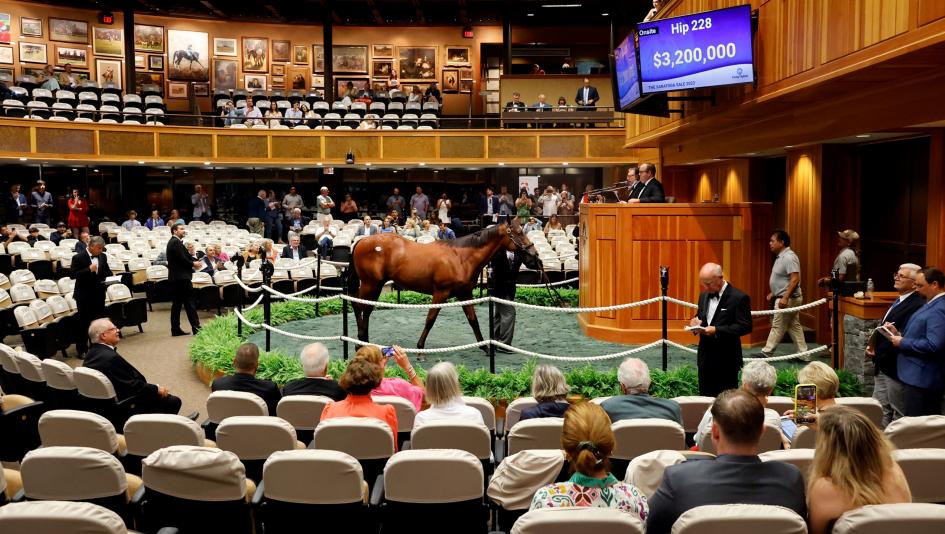
Over the course of two days Aug. 10-11, approximately 200 colts and fillies will go through the sales ring, their hoof steps echoing the thousands who have come before and the dreams that go forward with them. As each yearling dances to the tune of the auctioneer’s patter, a drama plays out, spotters gesturing frenetically as bids crisscross the arena.
Each year, these mini-dramas unfold inside the Humphrey S. Finney Sales Pavilion throughout the two days of Fasig-Tipton’s Saratoga Sale, where buyers go in search of their next star racehorse while fans enjoy speculating on the future of each equine athlete.
William B. Fasig and Edward A. Tipton formed their namesake auction company in 1898, originally selling high-class road and carriage horses in addition to both Standardbred and Thoroughbred stock. The Saratoga Sale itself dates back to 1917, when the auction company teamed with Kentucky breeders to sell select yearlings in the racetrack’s paddock.
Fast forward nearly 110 years later, and the roster of horses that have come through the Fasig-Tipton sales ring mirrors a list of the century’s best racehorses, from Man o’ War himself in 1918 to great sires like Raise a Native and Danzig to classic winners like Go for Gin and Funny Cide.
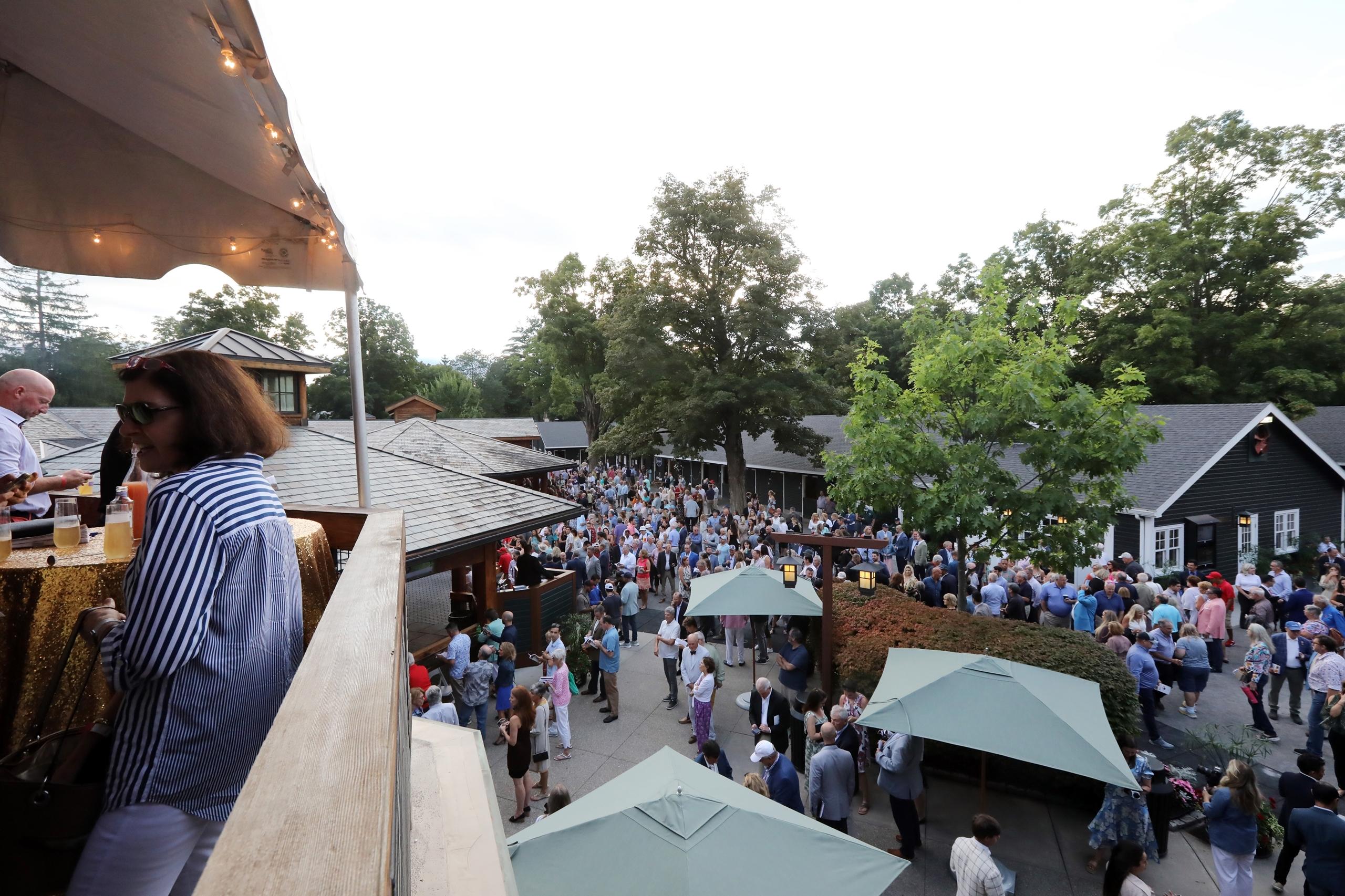
In the 21st century, the Saratoga Sale represents a destination for buyers, sellers, and fans alike. As Fasig-Tipton Executive Vice President Bayne Welker puts it, “this sale is unique amongst other North American sales. It has a different feel and a different location. And when you’re able to blend that with the race meet that’s going on, with the vibrancy of the town, it makes for a different spark in the air.”
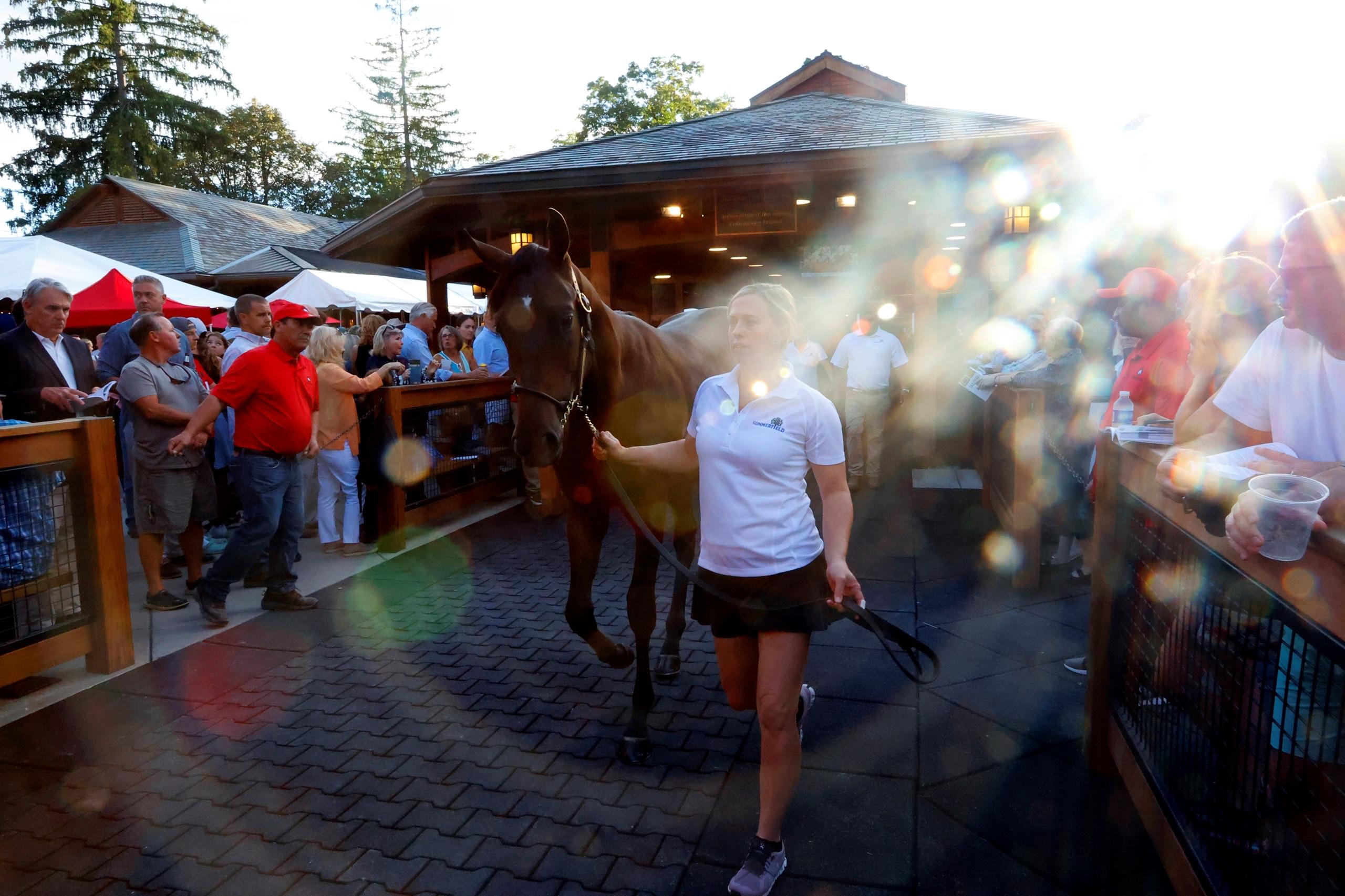
As the auction plays out inside the sales pavilion, those in attendance outside can watch yearlings circle through the walking ring as they await their turn while enjoying cocktails from the bar and food and drink from the concession stand. Registered clients can make dinner reservations and enjoy food from local caterer Mazzone Hospitality. A pre-sale cocktail party held the Saturday before allows buyers and sellers to capitalize on the equine excellence seen on track on Whitney Stakes day as they walk the grounds and see the young horses that may be winning their own Grade 1 races in the years to come. Sunday also offers a chance for people to take in Fasig-Tipton’s seven acres of grounds while observing each consigner’s offerings and pondering the possibilities within.
“Which one of these horses did I get to watch walk through that ring or watch walk through that back walking ring will be the next champion that’s going to show up at Saratoga the next year or the year after,” Welker said. “That just adds a color and a flair and an energy that’s just kind of hard to replicate anywhere else.”
The Saratoga Sale’s two days are just a tip of the iceberg when it comes to the process of selecting yearlings to go from the farm to the ring as buyers like trainers Mark Casse and Michael McCarthy and sellers like D.J. Stable’s Jon Green prepare for this equine extravaganza.
 Follow the action at the Saratoga Sale!
Fasig-Tipton starts its preparations for each year’s sales as early as January, when it asks for nominations for its July Sale, Saratoga Sale, and then the Saratoga New York-Bred Yearlings sale. Anywhere from 2,500 to 2,700 applications come in, so the company examines each applicant’s pedigree and sales history and selects the yearlings they want to inspect. Teams of inspectors then travel to each region to look over candidates, identifying the yearlings that fit the criteria for each sale.
These teams are “a kind of talent scouts when we’re out there. We’re seeing these horses in their early stages. So, we have to have that eye to be able to look and know what this horse is going to fill into,” Welker explained.
For the Saratoga Sale, Fasig-Tipton is looking for “first and foremost an athlete, what we think in our minds are going to be two-turn dirt horses. That is pretty much the bread and butter of the Saratoga catalog.”
The sale’s results over the last decade have echoed that emphasis on classic-distance prospects. Both Seize the Grey and Journalism, the 2024 and 2025 Preakness Stakes winners, respectively, came out of this sale, as did Sierra Leone, the 2024 Breeders’ Cup Classic winner and champion 3-year-old male. Other graduates include graded stakes winners like Barnes, Shred the Gnar, and Hope Road. Offering that level of potential means that prices can climb upward of seven figures with ease.
“Honestly, it’s such a difficult sale to buy at because there are so many good horses and there are so many people there looking to buy that the competition is extremely fierce,” D.J. Stable’s Green said. “In the past, we’ve gone and looked and gotten a shortlist and vetted horses out and then have gotten completely blown out of the water because the prices are insane.
“But it’s that kind of a quality sale, and enough good graduates have gone on to tremendous things that people know they can find the horse that they want at that sale.”
How then do buyers like Casse and McCarthy, who are shopping for clients like Live Oak Plantation’s Charlotte Weber and others, decide who to bid on? What is the process they employ ahead of this two-day extravaganza of equine talent?
Casse’s history with Fasig-Tipton’s Saratoga Sale goes back decades to his childhood trips to the capital region with his father, Norman.
“We sold horses there. My dad had an RV, and we would stay in the parking lot. And every morning my breakfast would be there at the snack bar, and then lunch would be at that snack bar that they have at Fasig-Tipton,” the trainer remembered.
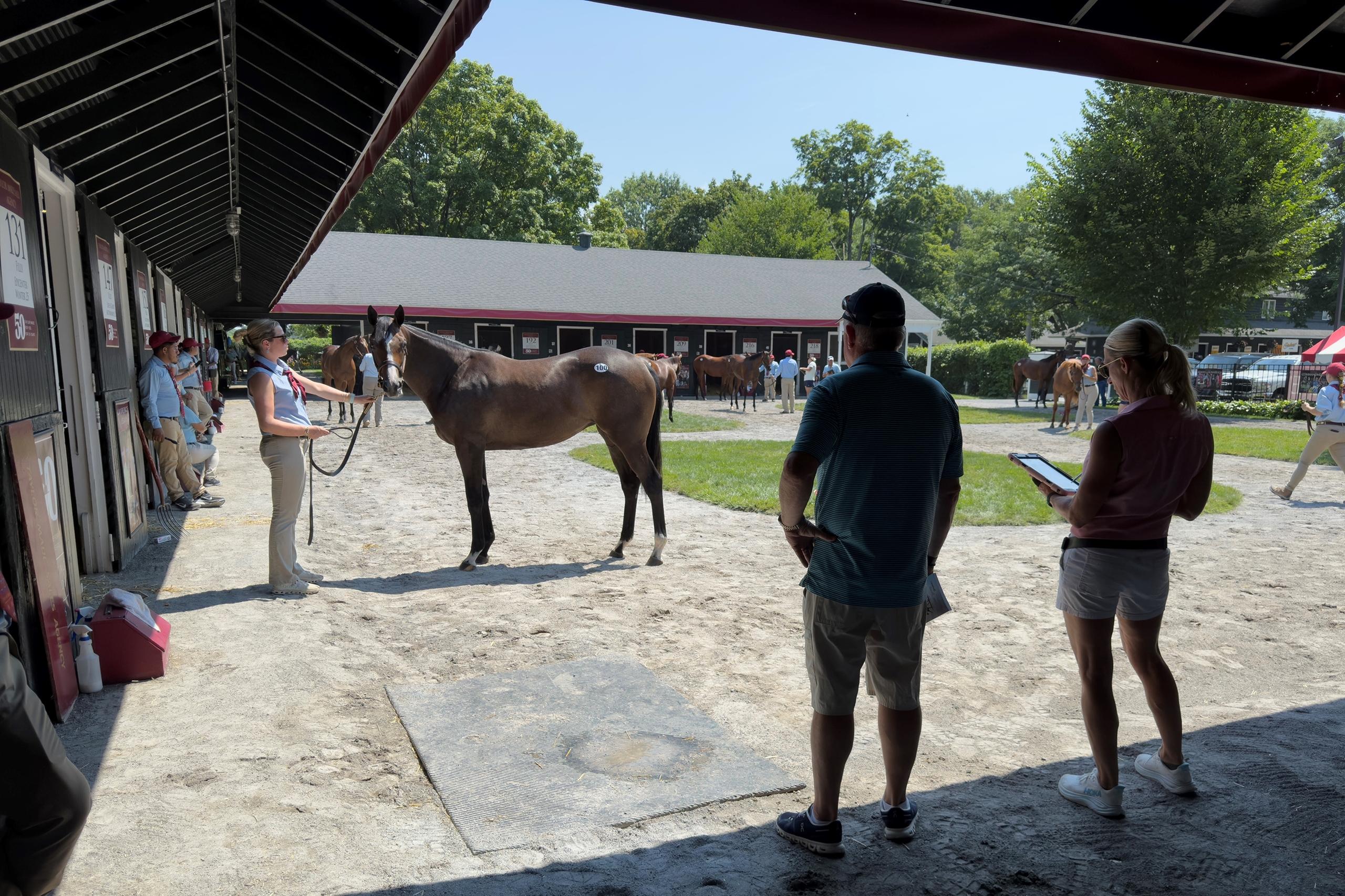
In his time going to the sale for his clients, the dual Hall of Famer has developed a system that starts with each horse’s pedigree.
“I have sires that are on my no-fly list. I won’t even look at them. And then there are some sires that I gravitate to, so I try to look at them,” Casse said. “This is a boutique sale. It’s a smaller sale, and we’ve had very good luck here.”
McCarthy has been coming since his days as an assistant to Hall of Fame trainer Todd Pletcher, and he has established his routine ahead of his trip east.
“I peruse the book, so you’ve got a little idea. Here, you’re going to get robust pedigrees and some incredible physicals, but I would much rather go by physical first,” McCarthy said.
“Obviously your vet reports will be part of your vetting and things like that will kind of narrow your list down a little bit. If an owner has, let’s say, two horses that he’s interested in, he’ll kind of leave it up to me being on the grounds, and, seeing which one we like best on the end of the shank.”
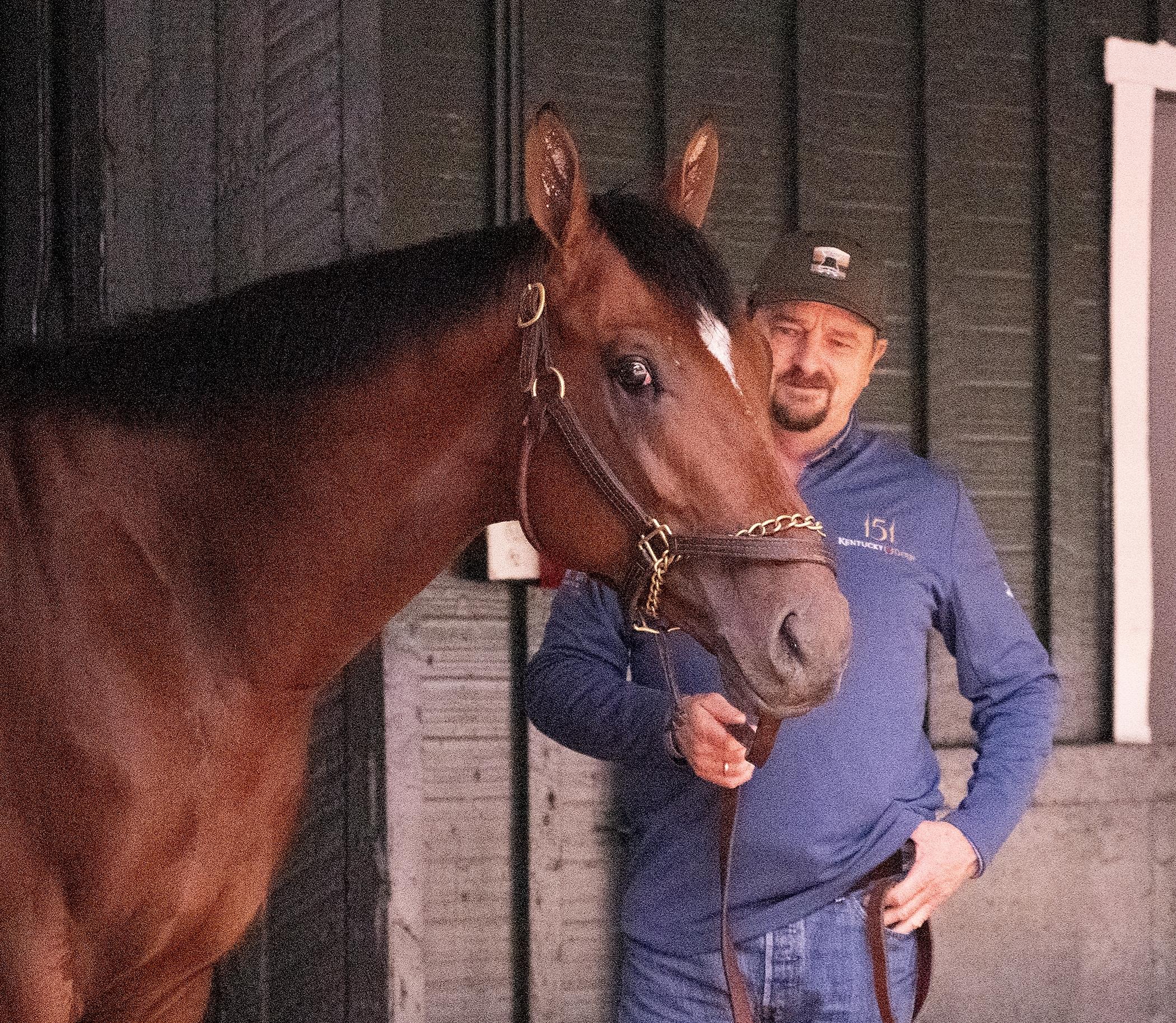
For sellers like Green, watching a yearling they have bred and prepared for this select sale go through the auction ring can be as intense as race day itself.
“It is about as nerve-wracking an experience as you can have in the horse industry,” Green said. “And that includes waiting for horses to run, watching them go into the starting gate, and watching them run around the oval. At least with past performances and other metrics, you have a pretty good idea of whether or not your horse can compete in that particular race.
“With the sales, you don’t have that ability to handicap quite as succinctly as you do with a racing form or with the sheets or with the Beyer numbers. So you’re going into it, and you’re saying, ‘I think we’re in the right place because we have checked all the boxes.’ But it doesn’t necessarily mean that if we have the best horse that the right people with the most interest are going to land on your horse, because they have certain things that they’re looking for physically.”
Ultimately, Fasig-Tipton’s Saratoga Sale is more than a collection of the best yearlings that breeders across North America have to offer. It is a front-row seat to the sport’s future, a real-time chance to witness the next great racehorse taking a turn in the sales ring.
The whole endeavor, from the many turns around the sales ground for potential buyers to that moment on center stage where the numbers go up, up, up, is a drama unique to horse racing.
“If you’re sitting in the pavilion and you’re watching the horses being sold, there’s a language between the auctioneers and the bid spotters and that has a pageantry to it,” Welker said. “Where else would you go and a horse brings seven figures and gets a round of applause? For most people, they go as fans first and foremost, for the love of the horse, then to see kind of the pageantry and the drama of those two nights.”

Silver Charm: As Tenacious as They Come
Silver Charm: As Tenacious as They Come