


Breeders’ Cup Fantastic Finishes: Enable Makes History at Churchill

The Preakness Stakes will be hosted by Laurel Park for the first, and perhaps only, time in 2026 as Pimlico Race Course undergoes renovations forcing the temporary relocation of the second jewel of racing’s Triple Crown. As a result, some horseplayers may find themselves at a disadvantage handicapping a very familiar race at a very unfamiliar racetrack.

For this reason, right now is the ideal time to get to know Laurel Park handicapping a little better and brush up on what it takes to win throughout Laurel’s 14-race cards on Friday and Saturday.
The 2026 Preakness Stakes will be run on Saturday, May 16 at its normal distance of 1 3/16 miles as a part of a May 15-16 weekend of racing and wagering that will feature 15 stakes races run at a variety of distances on both turf and dirt. Therefore, handicappers should take a look at the statistics for various types of races at Laurel to gain an advantage, not only Preakness weekend but all year long.
Preakness-Relevant Handicapping Trends at Laurel
The Preakness’s 1 3/16-mile distance has almost never been used at Laurel and therefore there are almost no apples-to-apples statistics to go on for this year’s race. For a hint at preferred running styles at the Preakness distance at Laurel, the best we can do is look at statistics for races run at the next-closest distance of 1 1/8 miles on the main track.
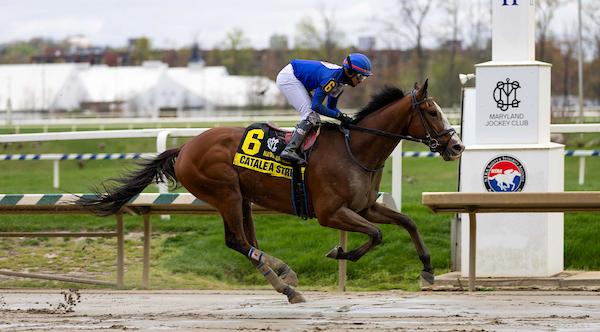
Dating back to the start of 2024, there have been a total of 65 races run at Laurel at the 1 1/8-mile distance. In terms of running styles, both speedsters on or close to the lead and late runners rallying from four or more lengths off the pace did well in those races with speed horses winning 24 of the 65 races (37%) and closers winning an equal 24 times. Stalkers racing between 1-4 lengths off the pace won a lesser 17 of the 65 races (26%). Laurel’s 1 1/8-mile races use the main finish line, while the 1 3/16-mile distance uses the alternate finish line in the stretch. Therefore, one would surmise that that chances for front-runners at the Preakness distance would skew much more in favor of speed than the 1 1/8-mile raw figures would suggest.
If you are looking for a running style tip specific to the Preakness (run at 1 3/16 miles at Pimlico), it may be worth noting that the trend the last two decades has tilted toward horses with speed or at least tactical speed. Only five Preakness winners the last 21 years have come from more than four lengths off the pace, including Journalism (2025), Rombauer (2021), Exaggerator (2016), and Afleet Alex (2005).
Looking at post positions, the inside three post positions have had a strong advantage in Laurel in two-turn route races run at 1 1/8 miles the past two-plus years with starters from posts 1-3 winning 36 of the 65 races to account for 55% of the races at the distance. Whether or not this is relevant for the Preakness, however, is debatable since Laurel’s 1 1/8-mile routes have had an average field size of just 6.36 horses per race while the Preakness is very likely to feature a full (or close to full) 14-horse field.
Additional Laurel Handicapping Trends
The Preakness is not the only game in town. With so much great racing and wagering coming up at Laurel, it also pays to learn some other handy handicapping trends at the track at various distances on both turf and the dirt.
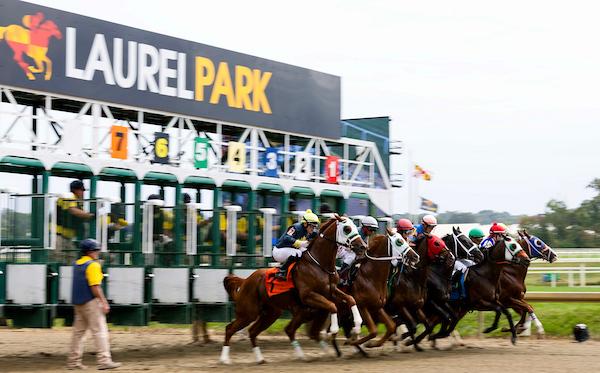
Laurel’s main track distance of one mile, run around one turn, is one of the most prevalent distances in Maryland racing. There have been 399 races run at the distance at Laurel since the start of 2024. In terms of post positions, it is the inside three posts that offer the greatest advantage with 193 of the 399 winners (48%) breaking from posts 1-3. When looking at running styles, both speed horses and stalkers have had the best results. Closers from four or more lengths behind have been at a disadvantage with a win percentage of just 26% (102 winning closers in the 399 races).
Overall, based on the statistics, it should be noted that while Laurel’s main track plays much fairer than the majority of racetracks, including Pimlico’s speed-favoring layout in terms of preferred running styles, the track does still favor speed horses over horses with stalking or closing running styles. With a sample size of 1,000 dirt sprints dating to the start of 2024 at Laurel, 46% of the winners raced on or close to the pace within a length of the lead, 34% stalked from between 1-4 lengths off the pace, and 20% closed from more than four lengths behind. Therefore, a horse’s chances to win diminish the farther off the pace the horse races.
Post positions in Laurel dirt sprints in a 1,000-race sample dating back to the start of 2024 have been remarkably fair with no meaningful bias for horses breaking from inside, middle, or outside posts.
Laurel Turf Racing
Under clear weather conditions, a good part of Laurel’s day-to-day racing will be contested on the turf and this certainly will be true Preakness weekend with many turf stakes races on the weekend stakes schedule.
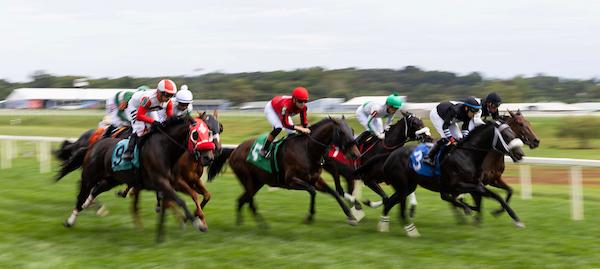
Let’s start by looking at Laurel turf sprints, which are almost all run at 5 ½ furlongs. Horseplayers unfamiliar with Laurel will be relieved to know that it is almost impossible for a turf course to be any fairer in terms of running styles and post positions than in Laurel’s turf sprints, which feature nearly identical win percentages for speed horses, stalkers, and closers, and nearly identical win percentages for horses breaking from inside, middle, and outside posts in a 292-race sample dating back to the start of Laurel’s turf racing season in spring of 2024.
During the same timeframe the last two years, Laurel has run a total of 333 turf races at various route distances including one mile, and some strong handicapping angles can be gleaned from the route statistics relating to both running styles and post positions.
First, Laurel’s turf routes strongly favor closers, who win nearly half of the track’s grass races at one mile or longer. Closers have won 164 of Laurel’s 333 turf routes the last two years (49% of the races) for a big advantage over speed horses who won 23% of the races, and stalkers who won 28% of the races.
The second turf route handicapping angle involves post positions. Guess what? Laurel’s turf route posts are fair with nearly identical win percentages for the inside, middle, and outside post groupings. Why is this a handicapping angle? It’s because outside posts in turf routes at most tracks are disadvantageous the farther out you go, but there is no evidence of this at Laurel. So, when most handicappers zig and avoid betting outside posts in Laurel turf routes, you should zag and look for live overlays from the outside posts.

Silver Charm: As Tenacious as They Come