



Breeders’ Cup Fantastic Finishes: Enable Makes History at Churchill

What happens when fantasy sports meets horse racing? StableStakes is working to find out.
Rather than focusing on a single race, StableStakes gives fans a reason to follow the action throughout the day. As races unfold, fantasy scores update in real time, standings shift, and leaderboard positions change with every result.
 Play free! Try StableStakes today
There’s a familiar entry point into sports these days: pick a few players, sweat the action, and watch your lineup rise or fall in real time. It’s a formula that’s hooked millions across football, basketball, and beyond.
Horse racing? Not so much. At least not yet.
A new fantasy horse racing platform called StableStakes is looking to change that, introducing a new way for fans to play, compete, and stay engaged throughout an entire race card. The goal isn’t to replace traditional wagering or handicapping, but to add a new digital layer of engagement that feels intuitive to modern sports fans while lowering the barrier to entry for newcomers.
At its core, StableStakes offers two primary formats: a salary cap lineup game and a pick’em-style contest built around over/under projections and head-to-head matchups.
The structure may feel familiar to players who have engaged with fantasy sports platforms, but StableStakes adapts those concepts specifically for horse racing.
“I’ve borrowed inspiration from formats that have worked well in other sports,” said StableStakes founder Rawleigh Ralls. “But this is built from the ground up for racing.”
The pick’em format, dubbed “Pickz,” serves as the most accessible entry point. Users select a handful of over/under props tied to jockeys, trainers, or other connections. For example: will a jockey score more or fewer fantasy points than a projected total based on their mounts that day?
Hit all your picks, and you win. Miss a few, and you’re out. Simple.
The salary cap game, meanwhile, leans more into strategy. Instead of drafting horses, players build lineups using jockeys, trainers, and sires. Each is assigned a salary based on morning-line odds and expected opportunity. The twist though, is when you roster a jockey, you’re effectively backing every horse they ride that day.
“You’re not handicapping one race at a time,” Ralls said. “You’re building a portfolio across an entire card.”
For example, a player might roster a jockey with eight mounts, a trainer with multiple starters throughout the day, and several sires represented across the card. Instead of relying on the outcome of a single race, they’re accumulating fantasy points throughout the afternoon as those connections compete. Every race becomes meaningful, and a strong performance late in the card can dramatically change a player’s position on the leaderboard.
That portfolio-style approach is central to the platform’s appeal.
Traditional horseplayers often rely on past performances, speed figures, and deep race-by-race analysis. StableStakes doesn’t eliminate that layer, but it doesn’t require it either.
Instead, users can lean into broader strategy concepts like volume, opportunity, and correlation.
A jockey with eight mounts might offer more upside than one riding twice. A trainer with multiple runners across a card becomes a strategic anchor. By stacking connections on a single horse, the jockey, trainer, and sire can create meaningful swings on the leaderboard if that horse delivers.
“It’s about usage and opportunity,” Ralls said. “You can be as strategic as you want to be, or you can jump in and play quickly.”
That flexibility opens the door to a broader audience, particularly those who may find traditional handicapping intimidating.
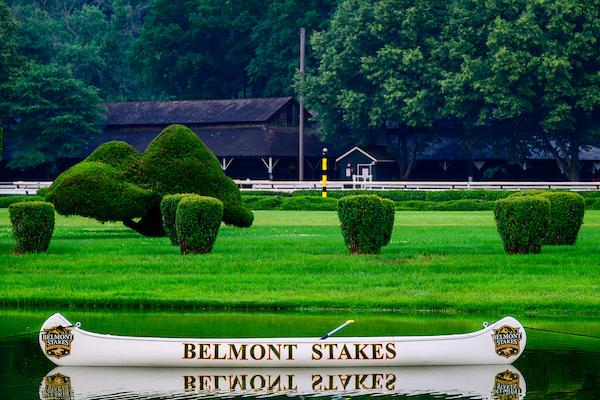
Imagine building a fantasy roster for Belmont Stakes Festival week instead of picking just one horse in a single race.
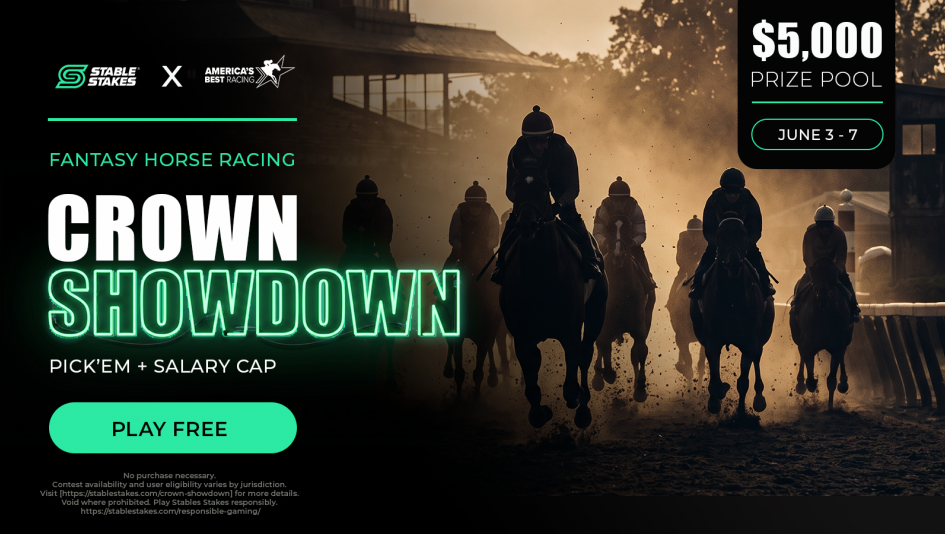
That potential to create deeper engagement is one of the reasons StableStakes recently partnered with America’s Best Racing. Through the collaboration, ABR will help introduce fantasy horse racing to its audience while promoting Crown Showdown, a free-to-play fantasy horse racing contest built around the Belmont Stakes Racing Festival June 3-7 at Saratoga Race Course with a $5,000 prize pool.

"StableStakes is the kind of innovative product that can help bridge the gap between traditional horse racing fans and the next generation of sports and gaming audiences," said Alexa Zepp, head of strategic partnerships & emerging media at America’s Best Racing. "I personally fell in love with horse racing through handicapping and betting tournaments, so seeing a platform that makes the sport more interactive, social, and approachable for Daily Fantasy Sports players is incredibly exciting."
At ABR, a major part of the mission is reaching and engaging new and younger audiences through culturally relevant content and digital storytelling, Zepp added, making StableStakes “a natural fit for that vision as it creates a fun, engaging entry point into the sport.”
StableStakes is a fully self-funded project for Ralls, a longtime racing enthusiast who grew up in Hot Springs, Ark., working around Oaklawn Park. Ralls spent time mucking stalls before building a career in finance and investment.
That background, he said, is part of what makes the project personal.
“I’ve always loved the sport, but I’ve also seen where it struggles to connect with new audiences,” Ralls said.
Positioning himself as the architect behind the platform, Ralls developed the underlying algorithm and scoring system from the ground up, designing a framework that shifts focus from individual horses to the broader ecosystem of connections.
His vision extends beyond a single game.
“This is really about modernizing how people engage with horse racing,” Ralls said. “Creating something that fits how fans already interact with sports today.”
Additional formats are already in development as part of a broader platform strategy.
The concept behind StableStakes is rooted in a larger question: how can horse racing create more consistent, day-to-day engagement?
Ralls believes the answer lies in giving fans a reason to tune in, even on a random weekday card.
“There are millions of people playing fantasy sports in North America,” he said. “That’s the audience I want to tap into. People who understand this type of experience but may not have a reason to watch racing regularly.”
Because lineups are tied to entire race cards, users have a stake in every race, not just one or two.
“You’re watching everything,” Ralls said. “And you know exactly who you’re rooting for or against in each race.”
The platform also integrates live race video and real-time scoring, allowing players to watch races unfold while tracking fantasy points, standings, and leaderboard movement throughout the day.
That creates a more dynamic experience. Leaderboards can shift dramatically throughout the day, especially when longer-priced horses outperform expectations.
“You can go from last to first in a couple races,” Ralls said. “That’s part of what makes it fun.”
StableStakes is launching with access to races from several major circuits, including the New York Racing Association and 1/ST Racing tracks such as Gulfstream Park and Santa Anita Park. Additional partnerships are in progress.
The platform also integrates live video and real-time results, allowing users to follow along seamlessly.
For now, the focus is on growth and iteration.
“The short-term goal is simple. Get people playing and see if they come back,” Ralls said.
That includes both paid contests and free-to-play options using in-game currency, lowering the barrier for entry.
Fantasy horse racing games have existed in various forms, but many have leaned heavily on traditional handicapping or required selecting individual horses.
StableStakes takes a different approach, emphasizing connections and cumulative performance. It’s an angle that could resonate with both existing fans and newcomers.
 Play StableStakes Crown Showdown free
“We’ve had really positive feedback so far,” Ralls said. “But it’s still early. Now we need scale.”
Instead of checking in for a single race, players remain invested throughout the card as scores, standings, and leaderboard positions change in real time. For a sport that often struggles to keep casual fans engaged between marquee events, that’s exactly the kind of sustained interaction StableStakes is working to create.
The platform could represent a meaningful step toward expanding racing’s audience, particularly among younger, digitally native fans.
“It’s not about replacing handicapping,” Ralls said. “It’s about giving people another way in.”
Fans interested in trying the format for themselves can participate in the free-to-play Crown Showdown contest during the Belmont Stakes Racing Festival.
In an industry always searching for its next generation of fans, that new layer of engagement could prove to be a bet worth making.

Silver Charm: As Tenacious as They Come