


August Belmont II: The Man Who Bred Man o’ War
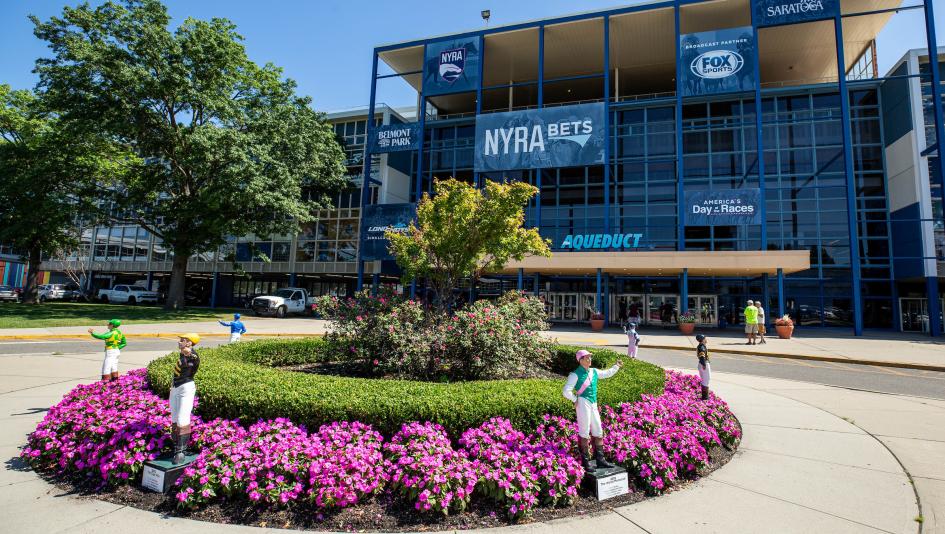
From its earliest days on the fringes of American horse racing, Aqueduct Racetrack has persisted through the ups and downs of the sport in New York City. Once a so-called “outlaw,” the “Big A” has played host to Triple Crown winners, legendary battles, and at least one world leader. As we prepare to say goodbye to this Gotham sporting staple this weekend, follow the evolution of this track from a rough diamond into a shining gem.
Tenuous Takeoff
“It was only a six-furlong track when it opened,” the old trainer remembered. “And The Jockey Club wouldn’t give it recognition until it was made a mile. It looked like a shanty on stilts, and for a lawn, it had a sort of boardwalk affair.”
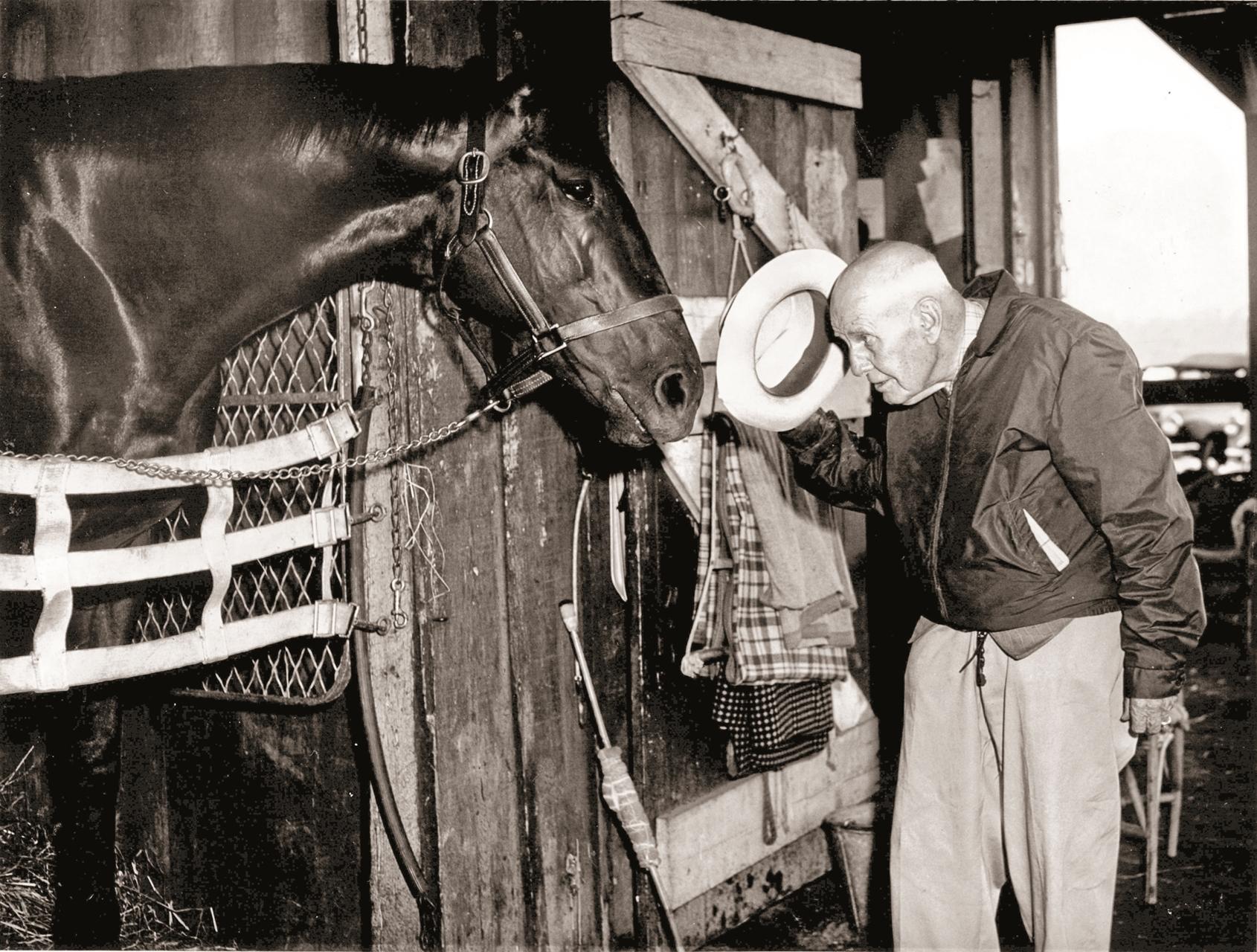
James E. “Sunny Jim” Fitzsimmons, the Hall of Fame trainer of two Triple Crown winners and a slew of other champions, was part of the crowd of “about 700” present on Sept. 27, 1894, opening day at Aqueduct, a fledgling racetrack built on 23 acres the Queens County Jockey Club leased from farmer Nicholas Ryder, who still had crops planted in the infield during the track’s early days. Named after its proximity to the conduit that delivered water to the city’s Ridgewood Reservoir from Hempstead Plain, its founders — Thomas J. Reilly, the son of a horse dealer and local politician; Francis J. Reilly, a Bronx deputy fire chief; and Robert A. Tucker, a Brooklyn businessman who met the famed Dwyer brothers as a young man — put up $50,000 to capitalize on the city’s building boom and add their own racetrack to the mix. Their erstwhile grandstand had capacity for about 2,000, those standing on the lawn in front stood on wooden boards so they would not sink into the mud, and the infield was dotted with rows of crops still being farmed.
Competition from New York’s growing number of racetracks, with five others also running during that era, challenged the new track as did its lack of sanction from The Jockey Club. Because its racing oval was only six furlongs, The Jockey Club would not add Aqueduct to its official roster until that surface was a mile or longer, so the men behind the track leased more land and redid the track to bring it into compliance with The Jockey Club’s requirements. Despite its initial challenges, the fledgling track persisted, growing in importance over the next decade, so much so that several members of The Jockey Club, including Philip Dwyer, whose famed stable had won two Kentucky Derbys and five Belmont Stakes, bought Aqueduct after Thomas Reilly’s death in 1904.
Under Dwyer’s management, the Queens County Jockey Club leased more land, rebuilt the grandstand, and expanded the racing surface to 10 furlongs, with a 1,520-foot stretch, one of the longest in the country. Racing thrived in the New York area, even with the anti-gambling lobby’s growing power, but when Gov. Charles Evans Hughes signed a series of anti-gambling legislation into law, racing in the state ended for nearly two years. When the sport returned to the Empire State, many of the racetracks that had dotted the New York City area did not reopen, but Aqueduct persevered, adding several stakes races from Gravesend’s calendar, including the Tremont Stakes for 2-year-olds, the Brookyln Handicap, and the Brooklyn Derby, later renamed the Dwyer Stakes in honor of the brothers who had been such a vital part of the racing scene in those early years.
Memorable Moments
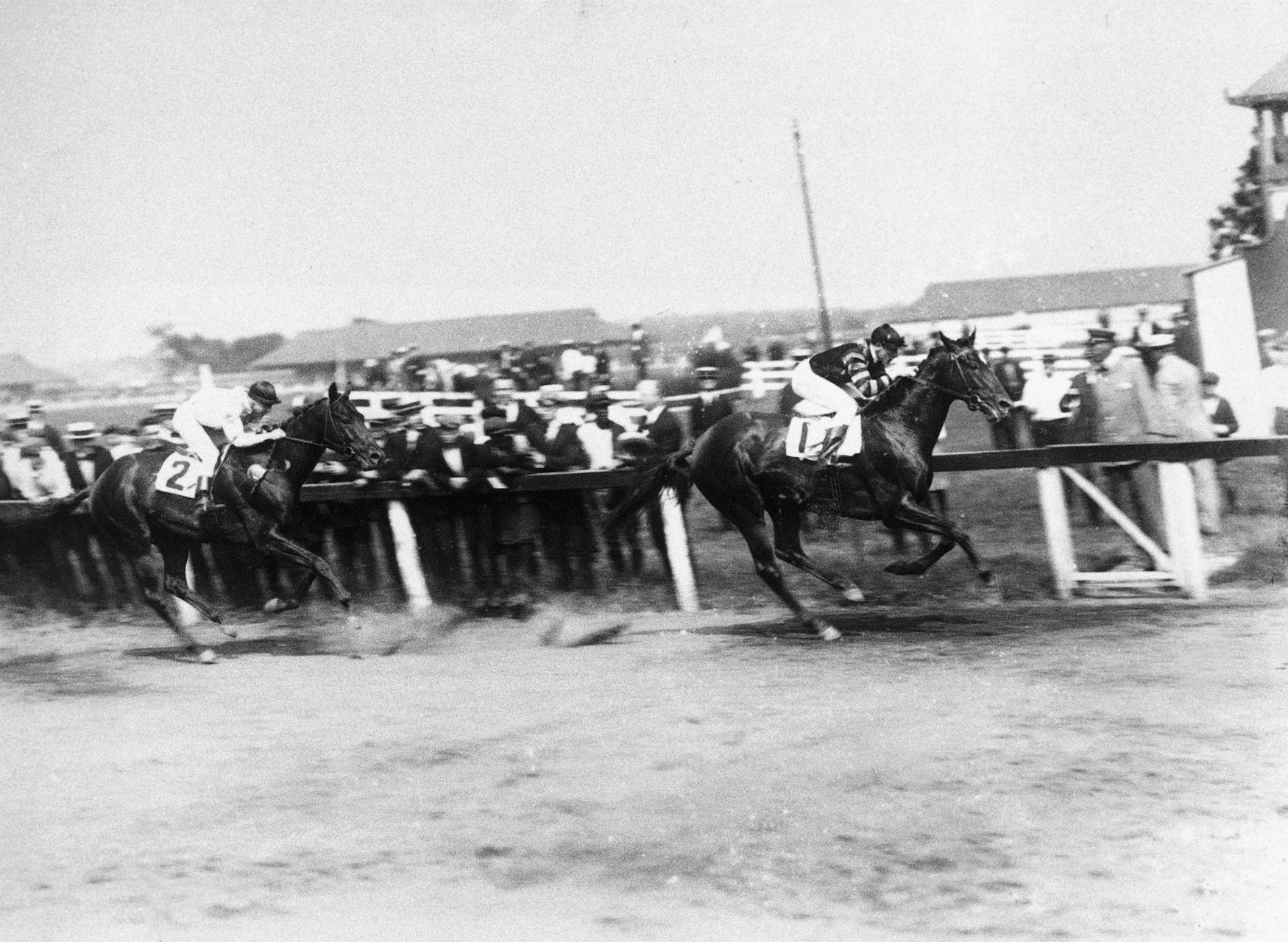 Man o' War battles John P. Grier in 1920 Dwyer (Keeneland Library/Cook Collection)
Once racing returned to the Ozone Park racetrack, Aqueduct became the site of a multitude of legendary performances, its stakes calendar a vital part of the sport’s year. Man o’ War met John P. Grier in the 1920 Dwyer Stakes, and over nine furlongs, the two battled, tit-for-tat, setting records at each pole. As they approached the final furlong, jockey Clarence Kummer tapped Man o’ War with his whip and finally the immortal icon surged in front of his spent rival, his advantage 1 ½ lengths. It would be Big Red’s sternest test in his 20 career victories.
In 1944, the Carter Handicap, named for William Carter, the tugboat captain who had contributed the purse and the trophy for the inaugural edition in 1895, featured a triple dead heat as Brownie, Bossuet, and Wait a Bit hit the wire together, the famed photo-finish image capturing the improbable result. That same decade, John Cowdin, president of the Queens County Jockey Club, led renovations to the urban racetrack and shortened the oval from 10 furlongs to a mile. As the sport continued to expand coast to coast, New York was dealing with stagnation, which led to a revitalization effort under the newly formed New York Racing Association. In 1959, the new Aqueduct opened to a crowd of 42,473, a far cry from the throng that numbered in the hundreds on the track’s opening day nearly 65 years earlier.
When Belmont Park underwent its own revitalization from 1963 to 1968, Aqueduct, nicknamed the “Big A,” played host to the Belmont Stakes and the Triple Crown attempts by Northern Dancer and Kauai King — both unsuccessful — as well as a dominant performance from Damascus in the 1967 Belmont. The latter, owned by Edith Woodward Bancroft, daughter of William Woodward, sported the white with red polka dots of Belair Stud, whose champions like Gallant Fox and Omaha had been trained by “Sunny Jim” Fitzsimmons. The “Big A” had been the trainer’s home base for much of his seven-decade career.
Stirring Sendoff
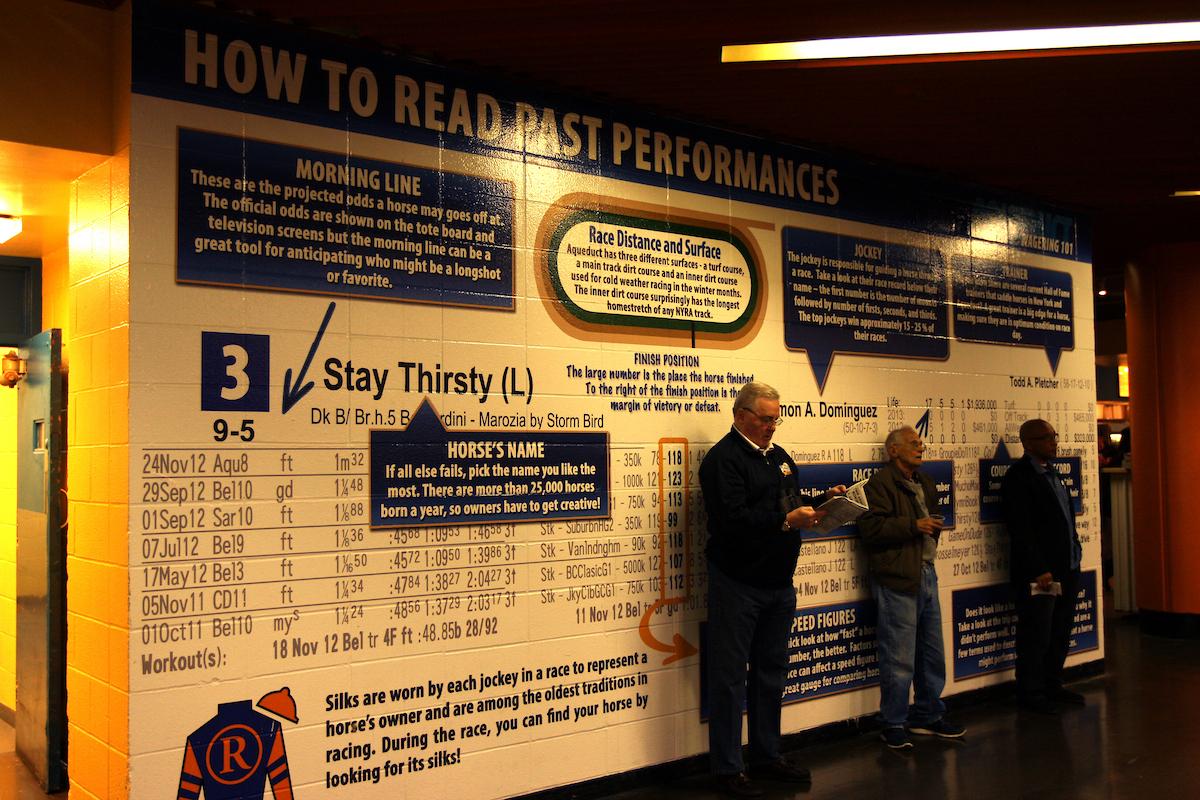 Saying goodbye to the Big A (Eclipse Sportswire)
Over the decades since, Aqueduct has played host to the second edition of the Breeders’ Cup (1985), a Papal Mass (1995), and victories by many of the sport’s most recognizable names, from horses like Kelso, Dr. Fager, Cigar, and Seattle Slew; jockeys like Angel Cordero Jr., Steve Cauthen, and Jerry Bailey; and trainers Max Hirsch, Hirsch Jacobs, and Allen Jerkens. As the economics of racing have evolved over these past two decades, maintaining two racetracks in the New York area has become tougher, necessitating a new phase and a farewell to the “Big A.”
In 2026, the New York Racing Association will say hello to the newly reconstructed Belmont Park and goodbye to Aqueduct, ending more than a century of racing in Ozone Park. This moment is a historic passing of the torch that continues New York’s heritage as a home to the best that racing has to offer while embracing a new vision for racing in the sport’s American birthplace.